Ethiopia gets the headlines in African specialty coffee. The birthplace of coffee arabica, the country of origin of flavour profiles that define the global specialty market, Ethiopia’s Yirgacheffe, Sidama, and Guji regions are names that any serious coffee person recognises. Uganda is less celebrated in the specialty coffee narrative, but it produces coffee of comparable quality — and in the specific category of robusta coffee, Uganda produces some of the finest examples in the world. Understanding Uganda’s coffee story adds a dimension to any visit that the gorillas and the birds alone cannot provide.
The Two Ugandan Coffees
Uganda produces both arabica and robusta coffee. The robusta coffee, grown primarily in the Bugisu region on the slopes of Mount Elgon in eastern Uganda, is a natural robusta — wild-growing and forest-edge cultivated rather than plantation-produced — that is distinct from the commercial robusta grown elsewhere in Africa and Asia. Bugisu robusta has a complexity of flavour that has attracted significant attention in the specialty coffee market, with profiles that include dark chocolate, dried fruit, and earthy notes that robusta from other origins rarely achieves.
Uganda’s arabica coffee is grown primarily in the Mount Elgon highland zone and in the Rwenzori mountains in the west. The Rwenzori arabica — grown at high altitude in volcanic soil, washed and dried using methods refined by small-holder cooperatives with international support — produces a cup that quality cuppers regularly rate alongside East African arabica from Ethiopia and Kenya. The altitude and volcanic mineral profile of the Rwenzori growing conditions create a high-density bean with acidity and flavour complexity that is distinctive from both Ethiopian and Kenyan arabica.
The Growing Specialty Market
Uganda exported approximately 6.6 million 60-kilogram bags of coffee in 2022-23, making it one of Africa’s largest coffee exporters. The majority of this is commodity-grade robusta destined for European blending markets. But the specialty segment is growing — driven by international roasters who have discovered Uganda’s high-quality lots, by domestic roasters building a Ugandan specialty culture, and by government and NGO programmes that have supported the training of farmers in quality-focused processing methods.
Kampala has developed a small but genuine specialty coffee scene in the last decade. Cafes including 1000 Cups Coffee House and Endiro Coffee serve well-extracted espresso and filter coffee from single-origin Ugandan lots. For visitors spending a day or two in Kampala on either end of a gorilla trekking trip, the coffee scene offers a cultural dimension that is genuinely Ugandan rather than an import of the international café format.
Coffee and Conservation
Coffee agroforestry — the cultivation of coffee under the shade of forest trees — is a practice that several conservation organisations promote in the buffer zones around Uganda’s national parks, including Bwindi. Shade-grown coffee provides habitat connectivity between the forest and the agricultural landscape, supports bird diversity in the buffer zone, and provides an income source for farmers that is compatible with maintaining tree cover rather than clearing it. Several projects link Bwindi buffer-zone coffee to specialty roasters internationally, creating a supply chain in which the quality premium paid for specialty coffee directly benefits communities adjacent to the gorilla habitat.
Visiting Uganda in 2027 and drinking Ugandan coffee is, in a small but real way, participating in the economy that supports the landscape around Bwindi. The gorilla permit is the largest single contribution a visitor makes to gorilla conservation. The cup of coffee at the lodge is a smaller contribution in the same direction.
Frequently Asked Questions
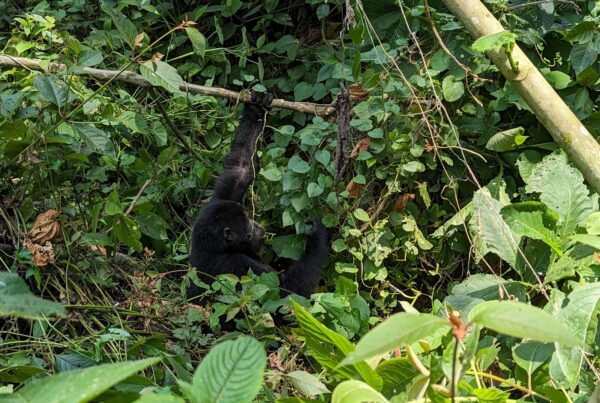
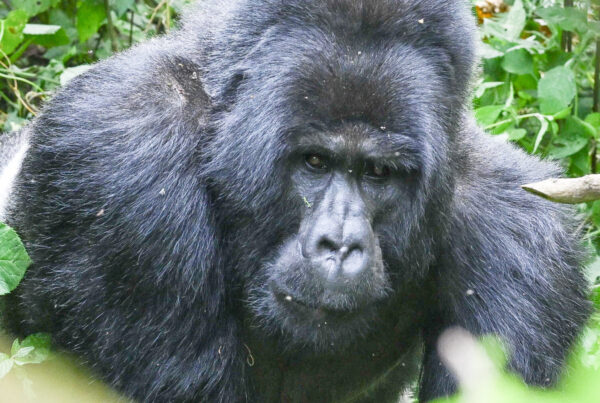
Uganda is home to the mountain gorilla (Gorilla beringei beringei), one of two subspecies of eastern gorilla. They live exclusively in the Virunga volcanic highlands (Uganda/Rwanda/DRC) and Bwindi Impenetrable Forest (Uganda only). Mountain gorillas are the only gorilla subspecies that cannot survive in captivity — every individual you can trek is a wild animal.
The standard gorilla trekking permit gives you exactly 1 hour with the gorilla family. This time begins when you make first contact with the family — the ranger signals the start. The Gorilla Habituation Experience gives 4 hours with a semi-wild family. The walk to find the gorillas can take 30 minutes to 5 hours depending on where the family has moved.
Stay calm, crouch down slowly, avoid direct eye contact, and remain quiet. Do not run — running triggers a chase response. Rangers accompanying your group manage close approaches. Habituated gorillas are accustomed to humans and almost never make contact, but a charging silverback is managed by staying still and following ranger instructions immediately.
A maximum of 8 visitors per habituated gorilla family per day for standard trekking. The Gorilla Habituation Experience has a maximum of 4 visitors per family per day. These limits are set by UWA to minimise stress on the gorilla families and maintain the quality of the experience.
Uganda is home to the mountain gorilla (Gorilla beringei beringei), one of two subspecies of eastern gorilla. They live exclusively in the Virunga volcanic highlands (Uganda/Rwanda/DRC) and Bwindi Impenetrable Forest (Uganda only). Mountain gorillas are the only gorilla subspecies that cannot survive in captivity — every individual you can trek is a wild animal.