Updated
There is a type of travel experience that exists in its fullest form only as itself — that cannot be adequately captured in photographs, that does not translate into social media posts, that resists the compression that digital sharing requires. The gorilla encounter in Uganda’s Bwindi Impenetrable Forest is that type of experience. People have tried to capture it. The photographs are beautiful. They miss the point.
What the photographs cannot capture is the sound. The deep, resonant chest-rumble of the silverback as he settles into a comfortable position nearby — a sound you feel in your sternum before you hear it properly. The crack of undergrowth as the family moves. The particular quality of silence in a closed-canopy tropical forest when nothing is moving. These sounds are the texture of the experience, and they live only in the memory of the people who were there.
What Photography Does to Experience
Research in experiential psychology has found something counterintuitive about photographing experiences: in certain contexts, the act of taking photographs reduces the quality of the memory formed. When the camera mediates the experience — when you are looking through a viewfinder rather than with your eyes, when you are thinking about composition rather than being present in the moment — the experience itself is partially displaced by the process of documenting it.
The gorilla encounter is one of the experiences where this tension is most acutely felt. The photographs are genuinely beautiful — mountain gorillas in tropical forest light are extraordinary photographic subjects. But the hour you spend photographing them is an hour you spend partly outside the experience, managing equipment and thinking about images rather than being fully present with the animals. The photographs will be good. The memory will be good. The question is whether the hour could have been even better if the camera had spent more of it in the bag.
Most gorilla trekking veterans recommend a middle path: take photographs when the opportunity is genuinely photographic, and put the camera down the rest of the time. The images you get from ten minutes of focused photography are often better than those from sixty minutes of continuous shooting. And the experience of being fully present for fifty minutes — looking with your eyes, hearing with your ears, feeling the forest air and the proximity of the gorillas — produces a memory that is richer and more durable than any photograph.
Why Real Beats Filtered
The Instagram filter exists to make images more vivid than reality — to enhance saturation, contrast, and warmth beyond what the camera captured and beyond what the eye saw. The gorilla encounter in Bwindi does not benefit from enhancement. The reality is already more vivid than any filter can make it.
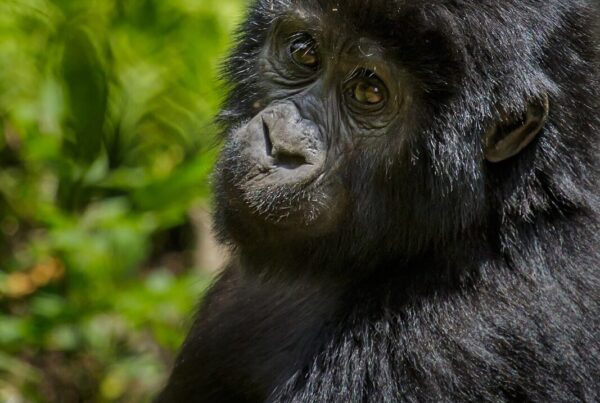
The green of Bwindi’s canopy in morning light — a specific, rich, slightly blue-tinged green that exists in intact tropical forest and nowhere else — is not enhanced by a filter. The texture of a gorilla’s face at three metres — the combination of the specific dark skin, the brown eyes, the structure of the brow ridge — requires no Vsco preset. The gorillas are, in the unfiltered, unedited, real-time reality of the encounter, already extraordinary. The filter is not available for what you see, hear, and feel in person. This is an argument for going in person.
The Memory That Filters Cannot Touch
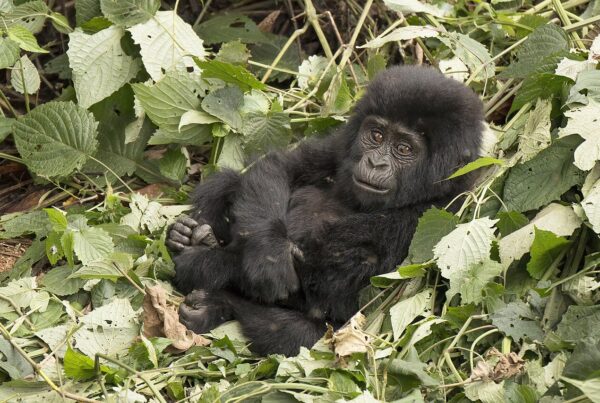
The specific memory that gorilla trekking veterans report — the one that remains sharp and specific for years and decades — is not the memory of any photograph they took. It is the memory of a specific moment: the juvenile that wandered close, the silverback’s gaze, the mother with her infant. These moments are not the moments when the camera was out. They are the moments when people were fully present, not behind glass or a screen, but in the experience itself.
The holiday that cannot be filtered is not a holiday that cannot be photographed. It is a holiday that exceeds what photography can contain. Uganda, Bwindi, the gorillas — these exist most fully as experience, not as image. The $800 permit in 2027 buys access to the real thing, which no filter can improve and no screen can replicate. Contact us to plan your trip. Leave room in the hour for the camera to stay in the bag.
The observation that gorilla trekking resists Instagram representation is partly a function of the encounter’s temporal dimension — the hour spent with the family is not a single photographic moment but a sequence of observations that accumulate into an experience whose total effect is more than the sum of its individual frames, and the single best image from the encounter cannot represent this accumulative quality.