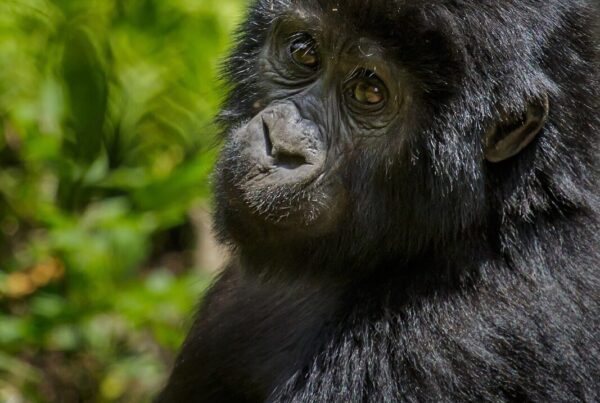
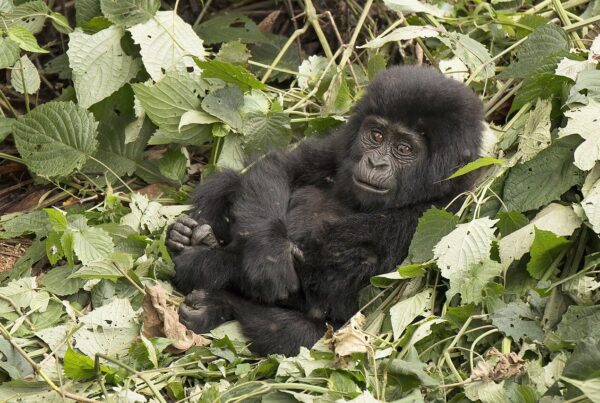
The gorilla baby made our entire group fall silent, and we had been a talkative group. For ninety minutes on the walk in, we had chatted about where we were from, compared notes on other wildlife experiences, and asked our guide enough questions to constitute a small oral exam in mountain gorilla ecology. Then the infant gorilla appeared, and every human in our group stopped making noise simultaneously, without anyone signalling that this was the appropriate response. It just was.
The Group That Morning
Eight of us at the briefing. A young couple from New Zealand on their honeymoon — she had wanted gorillas, he had wanted beach, they had compromised on Uganda. Two retired teachers from Germany who had been to Africa six times and considered themselves experienced. A solo traveller from Japan named Kenji who had booked specifically to photograph gorillas. A mother and her adult son from Canada, doing a bucket list trip they had been planning for three years. And me.
We were assigned to the Habinyanja family, one of the longest-habituated groups in Bwindi with a history going back to the early 1990s. Our guide, a man named Patrick who had been working with this family for eleven years, told us they were settled and would likely be feeding in the valley below the ridge we were climbing toward.
The Walk In
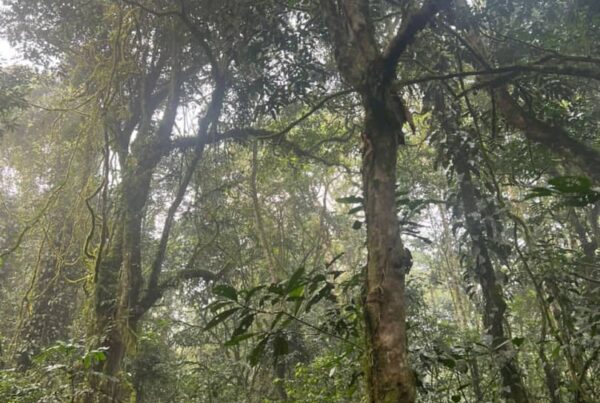
The path through Bwindi changes character several times on the way to a gorilla family. The first section is the most accessible — wide enough, well-maintained, through a zone where the forest has been somewhat managed. Then it narrows, steepens, and becomes the kind of terrain that the word “impenetrable” was presumably coined to describe.
Patrick’s Running Commentary
Patrick talked throughout the walk — not tourist-briefing talk, but genuine information about the forest delivered with the enthusiasm of someone who has not yet become bored with the subject. He named trees. He pointed out tracks. He stopped us to listen to a forest elephant somewhere in the middle distance, too far to see but close enough to hear. By the time we reached the gorillas, we felt like we had been introduced to the forest rather than simply walked through it.
The Valley
The Habinyanja family had settled in a valley below the ridge, in an area of mixed vegetation where bamboo met broadleaf forest. The trackers had been watching them for two hours before we arrived. Patrick paused at the ridge, assessed the family’s position below, and led us down into the valley on a line that would bring us to the edge of the family group without disturbing the silverback.
The First Animals We Saw
Three adult females, sitting in loose proximity, eating. One was examining a section of bark with the focused interest of someone reading very small print. The others were eating leaves. They were perhaps five metres away. All eight of us stopped and looked and said nothing, because what was there to say.
The German teacher to my right — Klaus, who had seen gorillas before, who had been to Tanzania and Botswana and described himself as not easily surprised by wildlife — made a small sound that I can only describe as a sound of involuntary appreciation.
Patrick moved us slightly to the left to improve the sightline, and we followed him without speaking.
The Baby
I saw the infant first because I was looking in the right direction. One of the adult females — the one who had been examining the bark — had moved slightly, and as she moved, the baby became visible. It had been hidden against her chest.
It was approximately four months old, Patrick told us later. Its face had the specific quality of very young gorillas: disproportionately large eyes, a serious expression that does not reflect the seriousness of adult gorillas but rather the seriousness of a creature that has recently arrived and is still working out what kind of place it has arrived in.
The mother settled into a sitting position. The infant shifted, gripped her fur more tightly, and then — slowly, with the deliberation of someone deciding whether to look at something they are not sure about — turned its head and looked at our group.
That was the moment. That look.
Eight humans, who had been talking for ninety minutes, went completely silent. Not because anyone suggested it. Because nothing else was possible.
What the Silence Contained
I have thought about what that silence meant since coming home. Part of it was simple awe — the kind that comes when something is more real than expected. Part of it was the rarity: fewer than 1,100 mountain gorillas exist on Earth, and this was one, and it was very small, and it was looking at us.
The Recognition Moment
Several people in the group described it later as a recognition moment — a moment when the gorillas stopped being “animals” in the abstract and became, unmistakably, relatives. The infant’s look was curious in a way that was familiar. Questioning in a way that was familiar. The grip on its mother’s fur was recognisable to anyone who has held a human infant who does not want to let go.
Kenji’s Camera
Kenji — the Japanese photographer who had come specifically to take gorilla photographs — did not take a single photograph during the five minutes the infant was looking at us. He told me later he had simply forgotten the camera was in his hands. “That look,” he said. “You can’t photograph that look. It’s not a picture. It’s a feeling.”
The Silverback Who Changed the Atmosphere
We had been silently watching the infant for several minutes when the silverback, Rwigema, moved into the clearing. He was the largest gorilla I have ever seen outside of a screen — and screens, as it turns out, do not convey the reality at all.
He walked through the group of feeding females with the ease of someone in a familiar room, settled near the mother and infant, and looked at our group with the expression of an entity that is entirely comfortable with its position in the world. He was perhaps four metres away.
Nobody spoke. Nobody moved. Patrick was at the edge of our group, entirely calm.
Rwigema lost interest in us within thirty seconds and began eating. The infant, perhaps reassured by the silverback’s proximity, turned away from us and began nursing. The silence in our group gradually gave way to the very quiet sound of eight people exhaling.
What Happened in the Rest of the Hour
We stayed with the Habinyanja family for the full sixty minutes. In that time: the newlywed husband (who had wanted a beach holiday) pressed his hands together in front of his face in what I recognised as an involuntary prayer gesture. The Canadian son held his mother’s hand for the entire hour. Klaus — the experienced wildlife man who had seen gorillas before — said afterward: “I forgot everything I thought I knew.”
The Walk Out
The walk back to the trailhead was different from the walk in. We were quieter, but not in the way people are quiet when they have nothing to say — in the way people are quiet when they have too much and need time before language becomes possible.
The German teachers walked together and spoke only in German, low and private. The newlyweds held hands the whole way. Kenji reviewed his photographs — he had taken many on the walk in and during the family encounter, just not during those five minutes with the infant — and shook his head at the screen with an expression I could not interpret but which seemed to involve satisfaction and inadequacy in equal measure.
Why You Should Go
There is a specific experience available in Bwindi Impenetrable National Park that you cannot replicate anywhere else on Earth. Not in a zoo. Not in a documentary. Not in any other wildlife encounter. It is the experience of being genuinely in the presence of mountain gorillas — not looking at them through glass, not watching them on a screen, but standing in their forest while they go about their lives and occasionally, when an infant turns its head and looks directly at you, makes eight strangers go completely silent without being asked.
Contact Uganda Gorilla Trekking to arrange your permit and plan your visit. The Habinyanja family has a baby. Bring your camera, but know that you might forget to use it.