Updated
gorilla trekking Uganda cruise passengers is one of Africa’s most extraordinary wildlife experiences, connecting travellers with mountain gorillas in their natural forest habitat. Cruise itineraries through East Africa typically involve ports along the Indian Ocean coast — Mombasa, Dar es Salaam, Zanzibar, Maputo. If you are aboard a ship that includes any of these stops, you are within reaching distance of one of the world’s most extraordinary wildlife experiences, and with the right planning, gorilla trekking in Uganda can be achieved as a land extension from your cruise without missing your departure.
Gorilla Trekking Uganda for Cruise Passengers
The Geography of It
Uganda is landlocked, but its international airport at Entebbe is served by regular direct flights from Nairobi, Mombasa, Dar es Salaam, and other East African hubs. If your cruise calls at Mombasa, a flight to Entebbe takes approximately one hour. From Dar es Salaam, it is under two hours. Zanzibar connects through Dar es Salaam or Nairobi. Any of these coastal ports puts you on the edge of a short-haul flight network that makes Uganda accessible.
The question is timing. A land extension to Uganda requires a minimum of four nights to do properly: one night in Entebbe or en route, two nights near Bwindi for the trek, and one buffer night before your flight back to rejoin the ship or fly home independently. Five nights is more comfortable and allows you to add an additional activity or avoid being rushed.
Planning Around Your Ship Schedule
The key variable for cruise passengers is the port schedule. If your ship has a two-day call at Mombasa, you do not have enough time for Uganda. But if your itinerary includes a longer stay, or if you are willing to fly home independently rather than returning to the ship, the extension becomes viable.
Many cruise passengers choose to disembark at a port midway through the voyage, complete the Uganda land extension, and then fly to meet the ship at a later port — or fly directly home. Your cruise line’s shore excursion team may not be the right resource for this level of customisation. An independent tour operator specialising in East Africa is better placed to build an itinerary around your specific port dates and departure requirements.
The Permit and What to Expect
Gorilla permits cost $800 USD per person for international visitors in 2027 and are issued by the Uganda Wildlife Authority. Permits must be booked in advance — ideally several months ahead — as availability is limited to eight visitors per gorilla family per day. If you are planning a cruise departure in the second half of 2027, you should be booking your gorilla permit by early 2027 at the latest.
Your tour operator handles the permit booking as part of the package. They will also coordinate transfers between Entebbe and Bwindi, accommodation near the park, and any additional activities before or after the trek.
What the Trek Involves
Gorilla trekking in Bwindi Impenetrable National Park is a physical activity. You walk through dense mountain rainforest on uneven, often steep terrain, following ranger guides who are tracking the gorillas’ overnight position. Trek duration varies from two hours to six or more hours, depending on where the gorillas have moved. The walk is not technically difficult but does require a reasonable level of fitness and mobility.
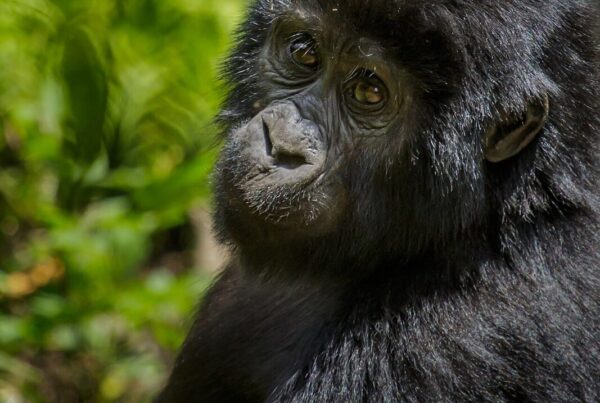
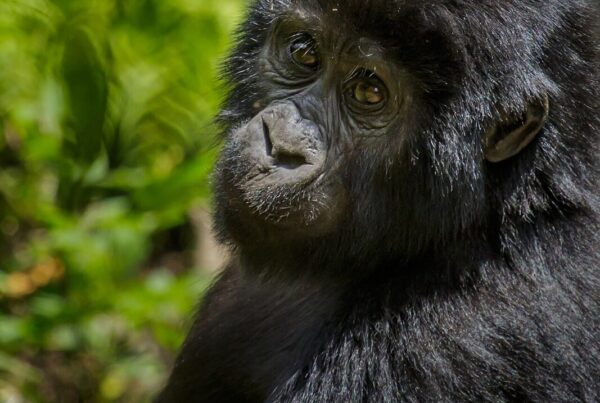
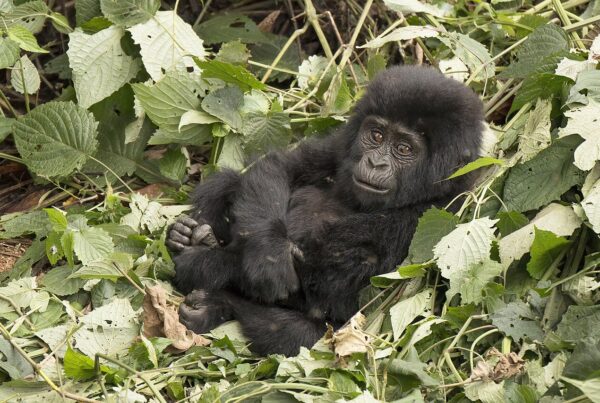
When you reach the gorillas, you spend one hour in their presence. Groups are capped at eight people. The gorillas — which include the dominant silverback, females, juveniles, and infants — have been habituated over years to accept human presence without stress. They do not perform or pose. They feed, play, rest, and move through the forest on their own schedule while you observe from ten metres.
Combining With Other Activities
If your extension runs to five nights, you can add a second activity to the Uganda portion of your trip. Chimpanzee tracking in Kibale National Park is feasible if you are willing to adjust the routing. A game drive in Queen Elizabeth National Park on the way back to Entebbe adds big game, including elephants, buffalo, and the famous tree-climbing lions of the Ishasha sector, without adding many hours to your journey.
Lake Bunyonyi — a serene crater lake near Kabale — is thirty minutes from the Bwindi area and a peaceful overnight stop. Some cruise passengers use it as a wind-down day between the forest intensity and the flight back, which is a genuinely sensible approach.
Coming Back to the Ship a Different Person
The cocktail-hour conversations on deck after a shore excursion typically involve snorkelling, market visits, and beach lunches. The person who rejoins the ship having spent the morning with a family of wild mountain gorillas in the heart of Africa is in a different category. Not in any boastful sense — more in the sense that the scale of what they experienced cannot quite be communicated over a gin and tonic, and they know it.
Gorilla trekking is not a shore excursion. It is an experience that takes several days and requires genuine commitment. But for cruise passengers who are prepared to invest that time on a land extension, Uganda in 2027 offers something the ship’s excursions brochure will never contain: an hour with the rarest great apes on earth, in one of Africa’s most genuinely wild places.