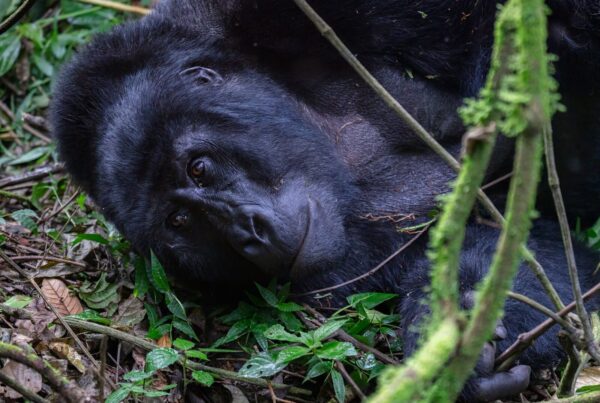
No two wildlife experiences define East Africa more powerfully than gorilla trekking in Uganda’s highland forest and the Great Migration at Kenya’s Masai Mara — and combining them in one trip is more practical than most travelers realize. A 10–12 day itinerary covers both destinations comfortably, with a 1.5-hour flight from Entebbe to Nairobi bridging the rainforest and the open savannah. Start with your gorilla permit, then build the Mara leg around the migration window for maximum impact.
- Uganda leg: 3–4 days in Bwindi (gorilla trek + 1–2 days for activities)
- Kenya leg: 3–4 days Masai Mara (game drives, river crossings Jul–Oct)
- Connection: Entebbe → Nairobi (1.5 hrs by air) + charter to Mara (~45 min)
- Best combined timing: July–September (Uganda dry season + peak Migration)
- Total trip length: 10–14 days recommended
- Indicative cost: $3,500–$8,000+ per person depending on accommodation level
No two wildlife experiences define East Africa more powerfully than gorilla trekking in Uganda’s misty rainforests and the great migration across Kenya’s Masai Mara. Separated by 800 kilometres of diverse landscapes, these two destinations represent the extremes of African wildlife tourism: the intimate, contemplative encounter with endangered mountain gorillas and the vast, thundering spectacle of a million wildebeest crossing crocodile-infested rivers. Combining them in a single trip creates a safari of extraordinary range and depth, a journey that encompasses the full spectrum of what makes East Africa the world’s premier wildlife destination. This guide explains why this combination works so brilliantly, how to plan the logistics, what each destination delivers, and how to time your trip for maximum impact.
Why This Combination Works So Well
The gorilla-Masai Mara pairing satisfies every dimension of wildlife travel. Gorilla trekking offers intimacy and connection on a scale impossible elsewhere in nature. Sitting among a family of mountain gorillas, watching a silverback nurse a minor injury while juveniles play in the canopy above, is an emotional experience that words struggle to capture. The encounter happens at close range, often just seven metres, in the quiet stillness of a misty rainforest where the only sounds are the gorillas’ breathing and the distant calls of forest birds.
The Masai Mara, by contrast, offers scale, drama, and raw natural power. The migration’s river crossings, with thousands of wildebeest plunging into waters patrolled by enormous Nile crocodiles, is one of nature’s most visceral spectacles. The Mara’s golden grasslands stretch to the horizon, dotted with acacia trees and teeming with predators. Lions, cheetahs, leopards, and hyenas patrol this landscape in concentrations that are among the highest on Earth.
Together, these experiences create a safari narrative of remarkable breadth. You will return home with memories of both quiet connection and thunderous action, of individual animals known by name and of mass movements that defy counting. The contrast between the two experiences sharpens your appreciation of both. After the intensity of the gorilla encounter, the open spaces of the Mara feel liberating. After the sensory overload of the migration, the gorilla trek feels meditative. No other two destinations complement each other so perfectly.
The Complete Itinerary
Days 1-2: Arrive in Nairobi, Kenya’s dynamic capital. After clearing immigration and collecting luggage, transfer to the Masai Mara National Reserve. The road transfer takes five to six hours on rough but scenic roads through the Great Rift Valley. Alternatively, take a 45-minute scheduled flight from Wilson Airport to one of the Mara’s airstrips. Upon arrival, check into your lodge and enjoy an afternoon game drive to acclimatise to the landscape and wildlife.
Days 3-5: Full days in the Masai Mara. Experienced guides conduct game drives at dawn and dusk, when predators are most active and light is at its most photogenic. If visiting during migration season, between July and October, your guide will position the vehicle at strategic crossing points along the Mara River. Witnessing thousands of wildebeest and zebra plunge into crocodile-infested waters is a once-in-a-lifetime spectacle that defies description.
Beyond the migration, the Mara offers exceptional predator viewing year-round. The reserve’s lion population is among the most studied in Africa, and individual prides are well-known to guides. Cheetahs hunt on the open plains, leopards lounge in acacia trees, and hyenas patrol in clans that can number fifty or more. Hot air balloon safaris at dawn offer a perspective that ground-based drives cannot match, floating silently over the savannah as the sun rises.
Day 6: Fly from the Mara’s airstrip to Entebbe, Uganda. The flight connects via Nairobi and takes approximately three hours including connections. Alternatively, fly from the Mara to Nairobi and connect to Entebbe on a separate booking. Overnight in Entebbe or Kampala to rest before the next leg of your journey.
Days 7-9: Transfer to Bwindi Impenetrable National Park. The drive from Entebbe takes eight to ten hours through spectacular scenery, or take a one-hour domestic flight to Kihihi or Kisoro airstrip followed by a road transfer. With three days in Bwindi, undertake two gorilla treks with different families, significantly enhancing your experience. Many travellers find the second trek more relaxed and rewarding than the first, as familiarity with the process allows deeper engagement.
Between treks, explore Bwindi’s broader offerings. The park supports over 350 bird species, including 23 Albertine Rift endemics found nowhere else in Uganda. A community visit to the Batwa pygmies provides cultural context and supports local livelihoods. For those with energy remaining, golden monkey trekking in nearby Mgahinga Gorilla National Park offers a different primate encounter in a stunning volcanic setting.
Day 10: Return to Entebbe for your international departure. If time permits, stop at the equator crossing for photographs or visit the Uganda Wildlife Education Centre near Entebbe for a final wildlife fix before your flight.
Timing Your Trip for Maximum Impact
The migration crosses the Mara River between July and October, making this the optimal window for the Kenyan portion of your itinerary. During these months, the Mara hosts approximately 1.5 million wildebeest, 400,000 zebra, and 200,000 gazelles. The sheer density of animals transforms the landscape into a living, moving carpet of wildlife. River crossings, while unpredictable, occur most frequently during this period.
Uganda’s gorilla trekking is excellent year-round, though the dry seasons of June to September and December to February offer the firmest trails and most comfortable conditions. The perfect alignment for this combination is July to September, when migration viewing is at its absolute peak and Bwindi’s conditions are optimal.
If you cannot travel during peak season, consider the shoulder months of June or November. The Mara still offers exceptional predator viewing even without the full migration, and Bwindi’s gorillas are habituated and accessible regardless of season. Lodge prices are lower, and you will share the experience with fewer other visitors.
Costs and Logistics
This is a premium itinerary, and the costs reflect its comprehensiveness. Budget $5,000 to $8,000 per person excluding international flights for a 10-day mid-range combination. Major expenses include:
- Gorilla permits: $800 per trek in Uganda
- Masai Mara park fees: approximately $200 per day for non-residents
- Domestic flights: $300 to $500 between the Mara and Entebbe
- Accommodation: $200 to $500 per night in both destinations
- Vehicle and guide: included in most lodge packages
For luxury travellers, high-end lodges in both destinations charge $800 to $2,000 per night. Budget travellers can reduce costs by using public transport where possible and choosing simpler accommodation, though this itinerary is inherently expensive due to the permit and park fee costs.
Photography Considerations
This combination demands versatile camera equipment. For the Mara, a 100-400mm or 200-600mm telephoto zoom is essential for framing distant predators and migration herds. For gorilla trekking, a fast 24-70mm f/2.8 is the workhorse lens, as the close proximity makes long telephotos unnecessary. Bring a second camera body to avoid changing lenses in dusty or humid conditions.
The Mara’s golden light at dawn and dusk creates exceptional photographic conditions. In Bwindi, the dim forest canopy requires high ISO settings and fast lenses. Pack plenty of memory cards; you will fill them rapidly in both destinations.
Physical Demands
This itinerary is physically varied. The Masai Mara is relatively undemanding; game drives are vehicle-based, though early starts and long hours require stamina. Gorilla trekking, by contrast, is intensely physical. Hiking at altitude through dense forest for up to six hours demands good fitness. Ensure you are in reasonable condition before attempting this combination, and build a rest day between the Mara and Bwindi if possible.
Visa and Border Considerations
Kenya and Uganda are both covered by the East African Tourist Visa, which allows multiple entries to Kenya, Uganda, and Rwanda for 90 days on a single $100 document. This simplifies logistics enormously. Apply online before departure through the immigration portal of the first country you enter, typically Kenya if starting in Nairobi.
Final Thoughts
The gorilla-Masai Mara combination is the definitive East African safari. It pairs the continent’s most intimate wildlife encounter with its most spectacular natural phenomenon. The contrast between the misty stillness of Bwindi’s forest and the golden vastness of the Mara creates a travel experience of extraordinary depth and variety. For many travellers who complete this journey, it becomes the benchmark against which all future safaris are measured, a high-water mark of African wildlife travel that few other itineraries can match.
How do you get from Bwindi to the Masai Mara?
The standard route is a road transfer from Bwindi to Entebbe (4–6 hours depending on which sector you start from), then a scheduled flight from Entebbe to Nairobi (1.5 hours), followed by a charter flight into one of the Masai Mara airstrips (approximately 45 minutes). Allow a full travel day between the two destinations to avoid rushing.
What is the best time to combine gorilla trekking and the Masai Mara?
July to September is the optimal window. Uganda’s dry season makes Bwindi’s forest trails firmer and forest visibility clearer, while the Mara River wildebeest crossings peak in July–September, making it the most dramatic period for Great Migration viewing. This alignment of conditions in both countries is what makes the combination so compelling.
Does the Masai Mara have gorillas?
No. Mountain gorillas exist only in two locations worldwide: Bwindi Impenetrable National Park in Uganda, and the Virunga massif spanning Uganda, Rwanda, and DRC. The Masai Mara is an open savannah ecosystem hosting the Big Five, cheetah, and the Great Migration — a completely different wildlife experience from mountain gorilla trekking in highland rainforest.
Can I do gorilla trekking and Masai Mara in 10 days?
Yes, comfortably. A workable 10-day structure: Day 1 arrive Entebbe, Days 2–4 Bwindi including trek day, Day 5 transfer to Entebbe and fly Nairobi, Days 6–9 Masai Mara (3 full game drive days), Day 10 depart Nairobi. This provides a genuine gorilla experience and three full Mara days without feeling rushed.
Should I visit Uganda or Rwanda for gorillas before the Masai Mara?
Uganda makes more sense logistically and financially. The Uganda gorilla permit costs $800 USD versus Rwanda’s $1,500 USD, and the Entebbe to Nairobi connection is a straightforward 1.5-hour scheduled flight on multiple airlines. Rwanda’s Kigali also connects well to Nairobi, but the higher permit cost makes Uganda the stronger starting point for budget-conscious travelers.
- 3 Days in Queen Elizabeth Uganda Safari: A Hidden Gem Compared to Serengeti & Masai Mara
- What is the East Africa Tourist Visa?
- Is East Africa Safe During the Middle East War?
- Uganda Gorilla Permit Categories: Foreign Resident vs Non-Resident vs East African
- Kenya Tanzania Uganda Safari: The Ultimate East Africa Trip
- Uganda Gorilla Trekking and the Perfect 2-Week East Africa Trip Itinerary
- Getting a Uganda Visa on Arrival vs East Africa Tourist Visa
- Lonely Planet Rated Bwindi the Number One Park in East Africa: The Full Story
- The Experience Gap: Why Uganda Wildlife Is Different From East Africa Standard
- Gorilla Trekking Uganda for East African Residents: The Regional Permit Rate