Updated
gorilla trekking Uganda anxiety awe transformation is one of Africa’s most extraordinary wildlife experiences, connecting travellers with mountain gorillas in their natural forest habitat. My mind is loud. This is the most accurate description I have of my experience of generalised anxiety — not a specific fear, not panic, but a persistent and involuntary noise that runs underneath everything and that I have been managing with varying degrees of success for most of my adult life. Meditation helps. Exercise helps. Medication helps at the level it is designed to help. What none of these things had done was produce genuine quiet — not the managed reduced noise of successful anxiety management, but actual, complete quiet. One hour with a mountain gorilla family in Uganda produced complete quiet. I want to explain precisely how.
From Anxiety to Awe: How One Hour With Gorillas Silenced My Busy Mind
What Anxiety Actually Is in Daily Life
I want to be specific about this because “anxiety” covers too much territory to be useful without specificity. My anxiety is not primarily about identifiable threats. It is primarily an evaluative noise — a constant, low-level assessment of whether things are adequate, whether I am performing adequately, whether the outcomes of current actions will be adequate. It is exhausting in the way that background noise is exhausting: not dramatically, but cumulatively, and in a way that reduces the quality of everything it accompanies.
The standard interventions work by managing this noise: reducing its volume through relaxation, interrupting its patterns through mindfulness, addressing its content through therapy. None of them eliminate it. The best days are days when the noise is present but manageable. What I was looking for was whether genuine quiet was possible, even temporarily, and what conditions might produce it.
Why Gorilla Trekking
My therapist had suggested, not specifically gorilla trekking but generally, that activities requiring complete environmental attention — activities that do not leave cognitive bandwidth for the evaluative noise to occupy — were worth pursuing. She was describing, in clinical language, the experience of flow. Gorilla trekking in Uganda met the description at every level: a physically demanding activity in a completely unfamiliar environment, in the presence of wild animals, with specific rules of conduct and genuine unpredictability, requiring sustained and complete attention for hours. The gorilla permit costs $800 per person. I considered it a legitimate therapeutic expenditure and booked through a licensed Uganda Tourism Board operator.
The Walk
The trek to the gorilla family was three hours. For the first thirty minutes the noise was present — the familiar assessment of whether I was keeping up adequately, whether my boots were adequate, whether my fitness was adequate for the terrain. Then something happened that I can only describe as the noise running out of material. The forest was too demanding and too interesting for the evaluative noise to find purchase. The terrain required physical attention. The sounds required auditory attention. The guide’s quiet observations required cognitive attention. Every channel of my attention was occupied with the present moment, and the evaluative noise, which operates in the spaces between present-moment attention, had nowhere to go.
By the time we found the gorilla family, the noise had been quiet for approximately ninety minutes. This was the longest period of quiet I had experienced in years.
The Hour of Awe
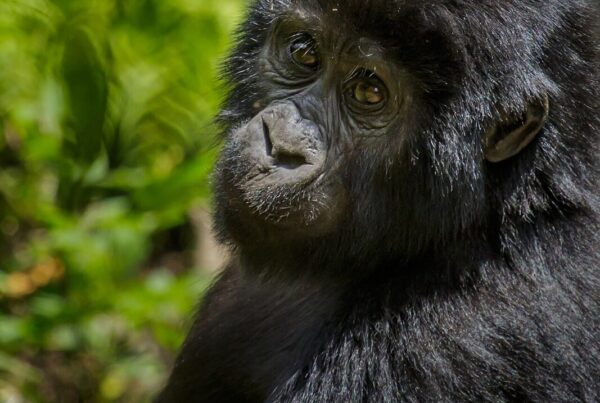
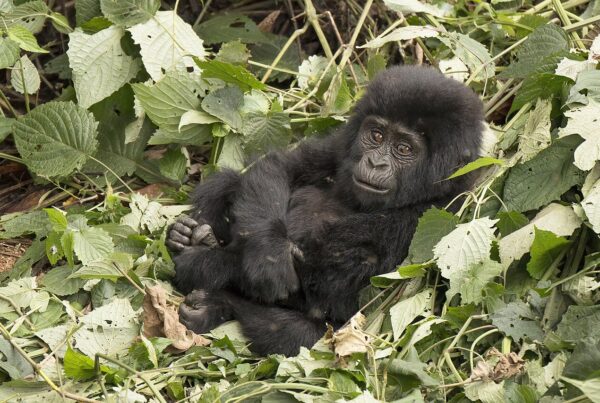
The Katwe group was feeding in a clearing when we arrived — a family of twenty gorillas, visible from our position through the trees. The guide signalled us to crouch and we settled into observation. The silverback was present and visible. The noise in my head was absent. What was present instead was something I am going to call awe because that is the word that fits, even though it is a word I rarely use with confidence.
Awe is the experience of encountering something that exceeds your existing categories for understanding it. The gorilla family exceeded my categories. Not because I had no information about gorillas — I had researched them extensively before the trip. But information is not experience, and the specific physical reality of twenty mountain gorillas in ancient forest, doing exactly what they have been doing for hundreds of thousands of years, available to be witnessed from seven metres, produced something my information had not prepared me for.
The hour passed in complete quiet. Not the managed quiet of successful anxiety management. The genuine quiet of a mind that has found something more interesting to do than evaluate itself. For sixty minutes I was simply present, simply watching, simply in the unrepeatable fact of being in that specific forest at that specific moment with those specific animals.
What Came After
The noise returned on the walk back. I expected this and it was fine. What I had was something more valuable than its permanent absence: the knowledge that the quiet was possible. That it was not an unattainable state but a reachable one, accessible under specific conditions. This is not nothing. For someone who has been managing anxiety for decades, having evidence that genuine quiet exists and that you are capable of experiencing it is a significant finding. It changes the relationship with the noise — not eliminating it, but reducing its authority over the question of what inner life is possible.
I returned to Uganda the following year. I will return again. The permit is $800. For a quiet mind, even temporarily, it is not much to ask.