Updated
Africa is home to four great ape species: the eastern gorilla (which includes mountain gorillas and Grauer’s gorillas), the western gorilla, the chimpanzee and the bonobo. Visitors can see mountain gorillas in Uganda, Rwanda and Congo; Grauer’s gorillas in eastern Congo; western lowland gorillas in the Republic of Congo, Central African Republic and Gabon; chimpanzees in many countries, especially Uganda, Rwanda and Tanzania; and bonobos only in the Democratic Republic of Congo. Uganda is the easiest country for seeing both gorillas and chimpanzees on one trip.
Mountain gorillas
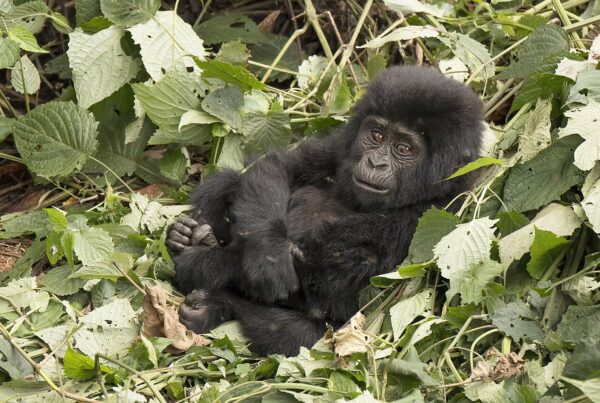
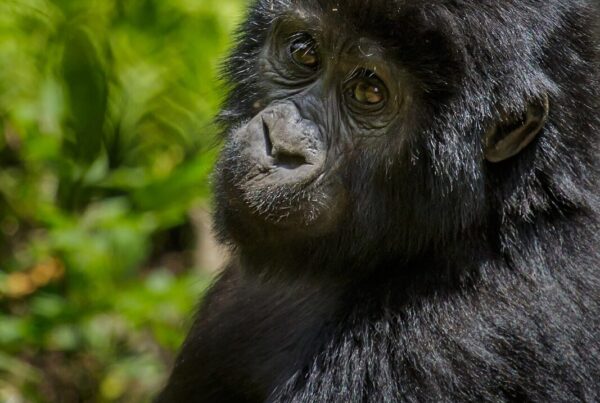
Mountain gorillas live only in the Virunga volcanoes, shared by Uganda, Rwanda and Congo, and in Uganda’s Bwindi Impenetrable National Park, with at least 1,063 counted in the latest censuses. Trekking groups of up to eight spend one hour with a habituated family. Uganda’s permit is US$800, or US$600 in April, May and November; Rwanda’s is US$1,500. Visits in Congo depend on the security situation. See our guide to where mountain gorillas live.
Other gorillas
Grauer’s or eastern lowland gorillas, the largest gorillas, live in eastern Congo; Kahuzi-Biega National Park has habituated families, but conflict often makes visits impossible. Western lowland gorillas, the most numerous kind and the gorillas seen in zoos, can be visited in a few places in Central Africa, such as Odzala-Kokoua in the Republic of Congo and Dzanga-Sangha in the Central African Republic, usually on expensive, remote trips. The Cross River gorilla on the Nigeria–Cameroon border is too rare and shy to visit. See our guide to the eastern lowland gorilla.
Chimpanzees
Chimpanzees live across equatorial Africa. In Uganda, Kibale Forest National Park offers the most reliable chimp tracking, with permits at US$250, rising to US$300 from 1 January 2027; Budongo Forest near Murchison Falls and Kyambura Gorge in Queen Elizabeth are alternatives. Rwanda’s Nyungwe Forest and Tanzania’s Gombe Stream, made famous by Jane Goodall, and Mahale Mountains also offer chimp tracking. See our guide to chimpanzee tracking in Kibale.
Bonobos
Bonobos, the chimpanzee’s closest relative, live only south of the Congo River in the Democratic Republic of Congo. The most accessible place to see them is the Lola ya Bonobo sanctuary near Kinshasa, which cares for orphans; visits to wild bonobos at research and community reserves are possible but remote and complex. Check your government’s travel advice before planning any trip to Congo.
Other primates worth seeing
Uganda is rich in other primates too: Kibale alone has around 13 species, including red colobus and L’Hoest’s monkeys, Mgahinga has golden monkeys, and black-and-white colobus live in many forests. Ethiopia’s gelada monkeys are another unusual primate experience. See our guides to golden monkeys and a 5-day Uganda primate safari.
Frequently asked questions
Four: the eastern gorilla, western gorilla, chimpanzee and bonobo.
Uganda: Bwindi or Mgahinga for gorillas and Kibale for chimpanzees.
Only in the Democratic Republic of Congo, most easily at Lola ya Bonobo near Kinshasa.
Yes, in parks such as Odzala-Kokoua in the Republic of Congo and Dzanga-Sangha in the Central African Republic.