

Where the soul of the forest whispers in the mist
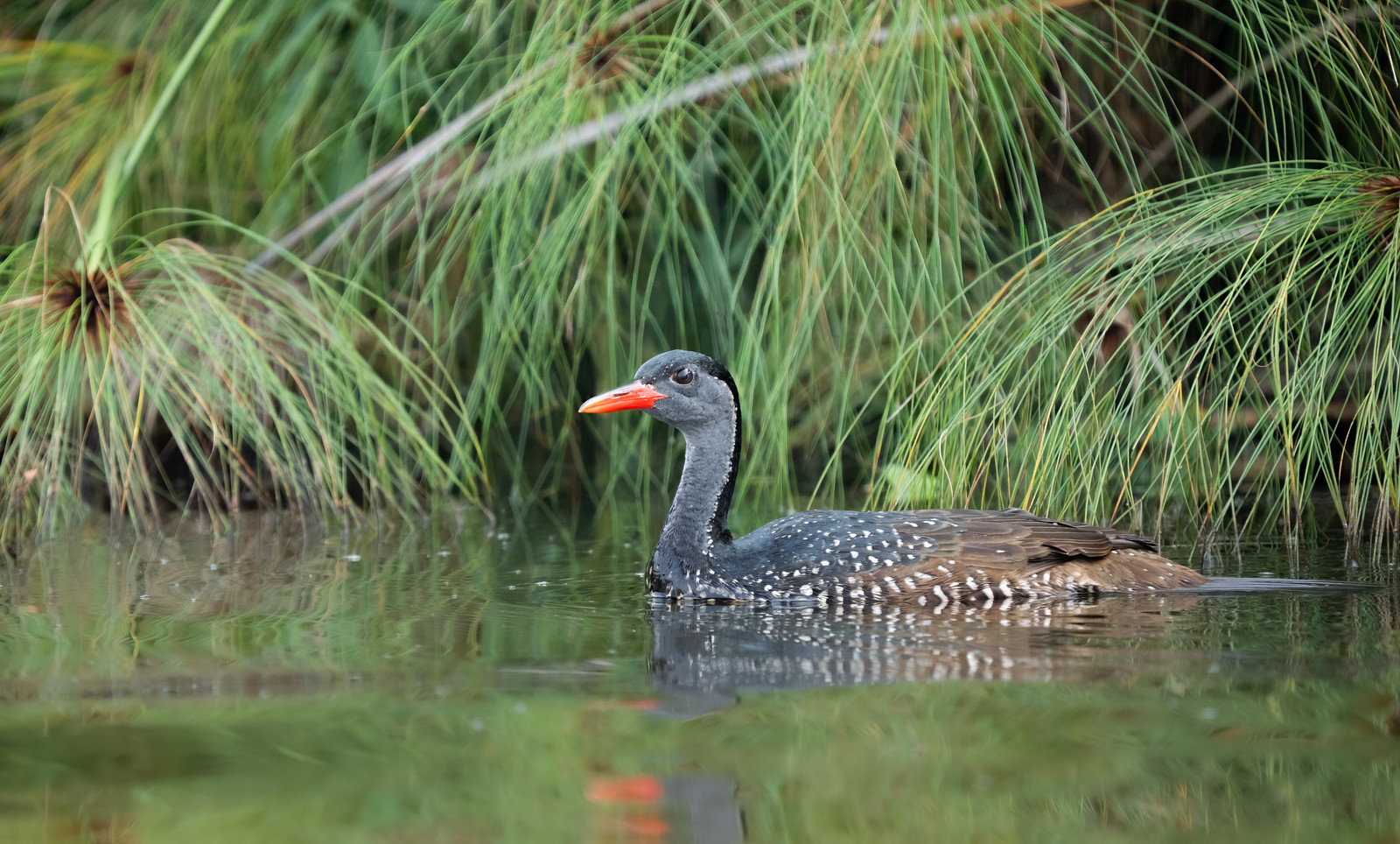
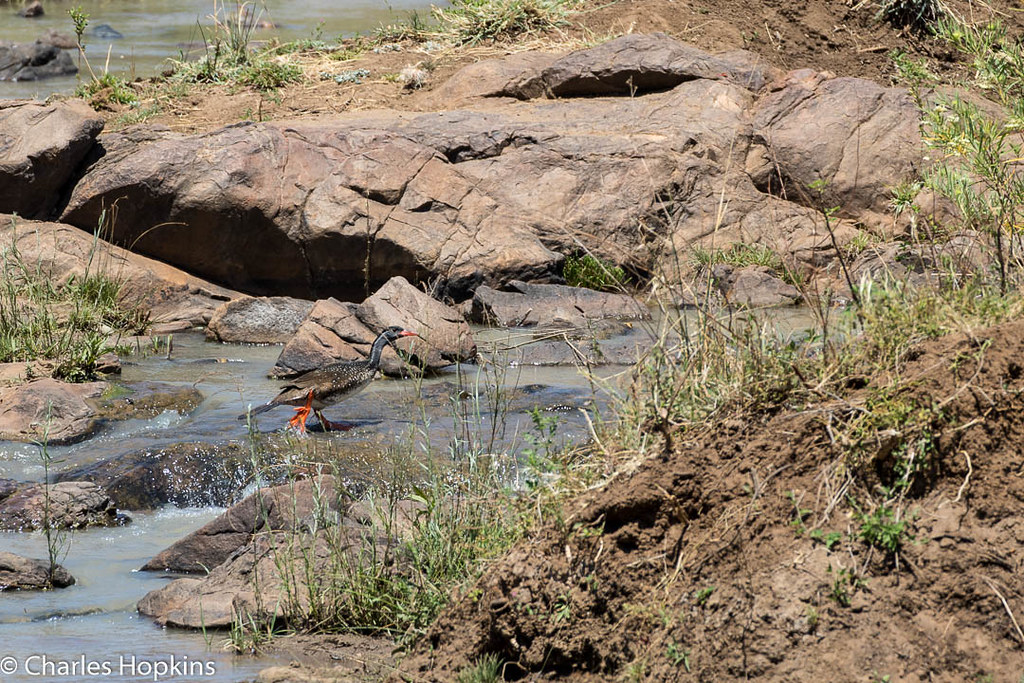
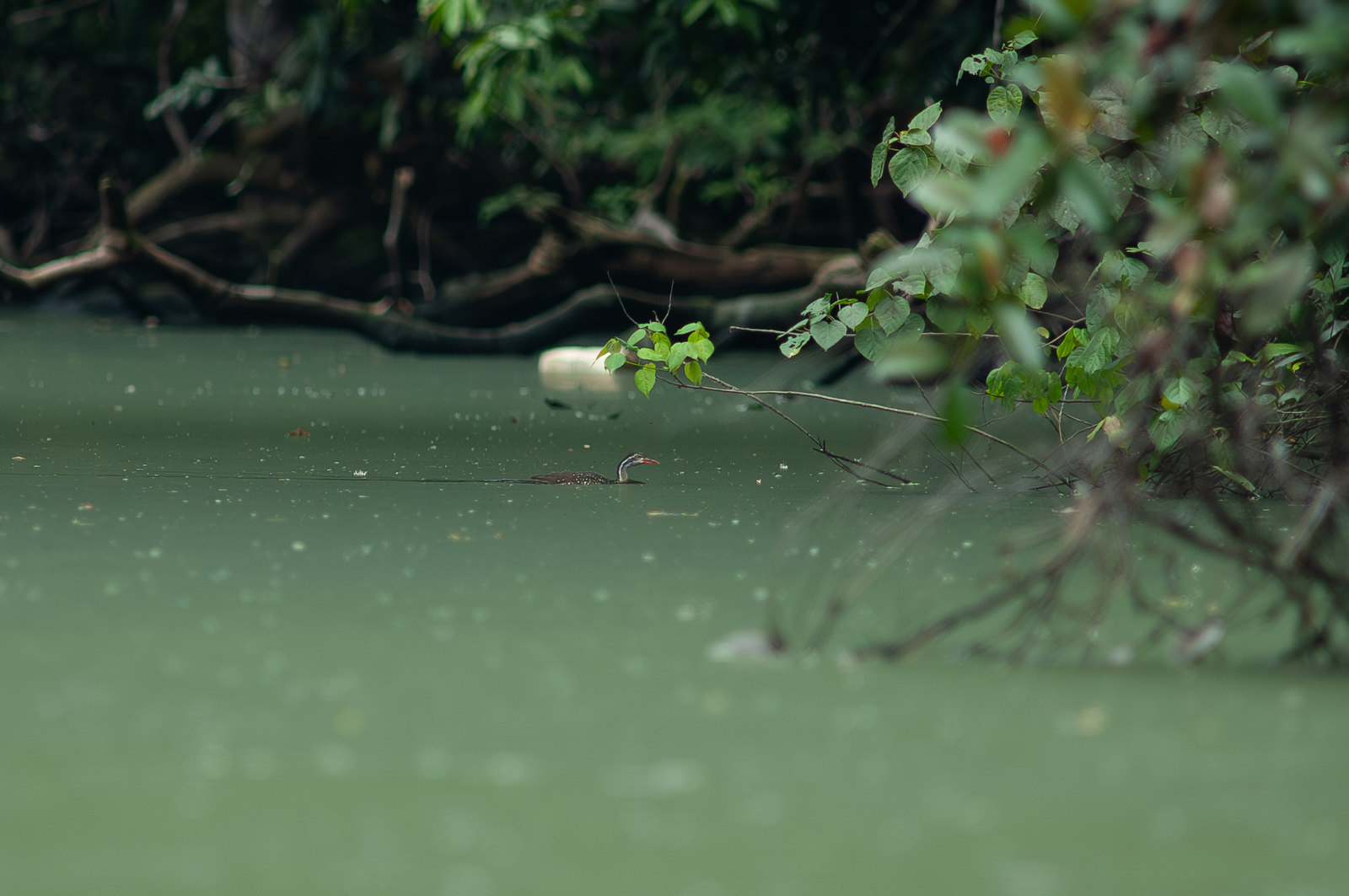
The African finfoot (Podica senegalensis) is one of Africa’s most elusive and secretive freshwater birds, inhabiting slow-moving rivers, forested streams, and densely vegetated wetlands across sub-Saharan Africa. Unlike most waterbirds that are easily visible in open water, the African finfoot prefers shaded riverbanks, overhanging vegetation, and quiet backwaters, making sightings rare and highly prized among birdwatchers.
Although superficially resembling a duck or small cormorant, the African finfoot belongs to a distinct avian lineage, classified within the family Heliornithidae. Its most defining feature is its lobed toes—adaptations that assist in swimming while retaining the ability to perch on branches. This unique combination of aquatic and arboreal traits sets it apart ecologically and behaviorally from other African waterbirds.
So lace up your boots, grab your camera, and prepare to meet the wild — this is where your gorilla trekking dreams and unforgettable safari adventures truly begin.
Truly Iconic Highlights in Uganda

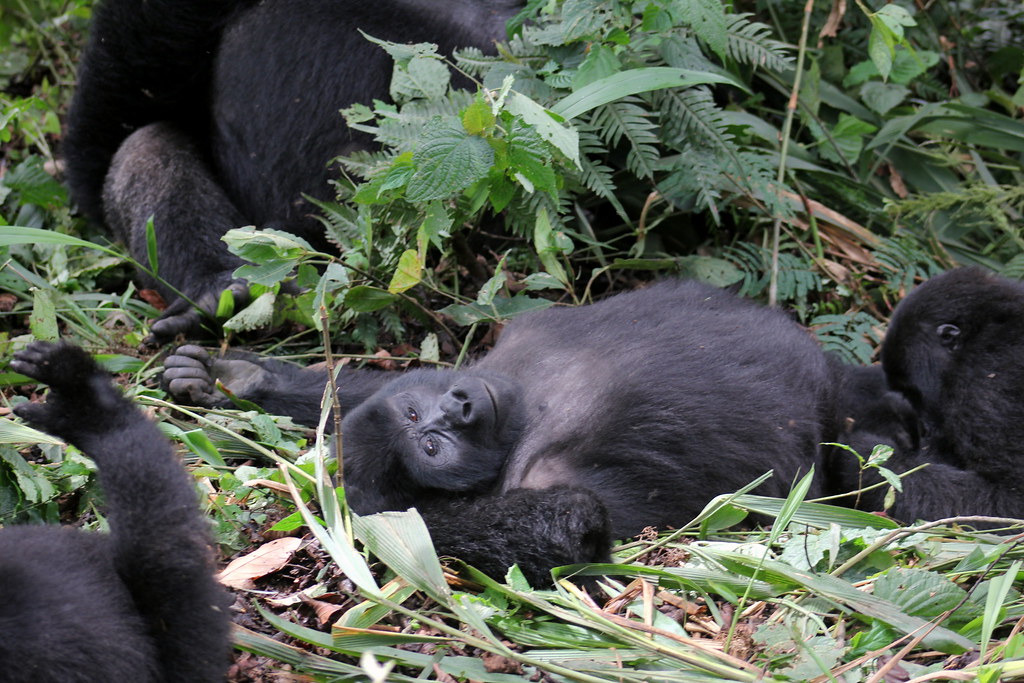
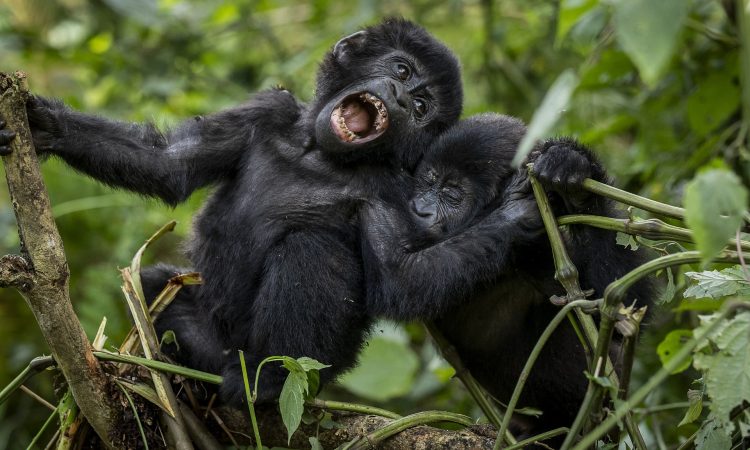
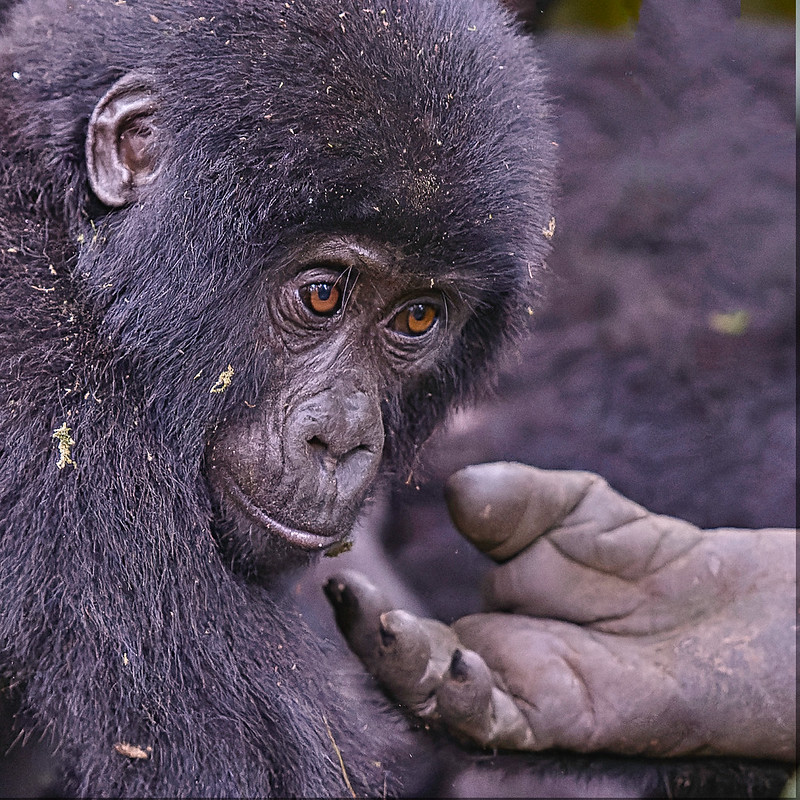
Trek through Bwindi’s mystical rainforest and meet the endangered mountain gorillas in their breathtaking natural home.
Encounter mountain gorillas and golden monkeys on Mgahinga’s misty volcanic trails, where culture and alpine wildlife thrive together.
Unwind after your trek with a peaceful canoe ride across Lake Bunyonyi, Uganda’s most tranquil and scenic highland lake.
Enhance your gorilla trekking safari with an optional chimpanzee encounter in Uganda’s lush forests, adding depth and diversity to your primate adventure
Gorilla Trekking Tours in Uganda – Our Most Popular Itineraries.
Explore our gorilla trekking safaris for every traveler—solo, family, budget, or luxury. All tours include permits, transport, accommodation, meals, and park fees. Whether for a quick trip or a deeper adventure, we’ve got you covered.
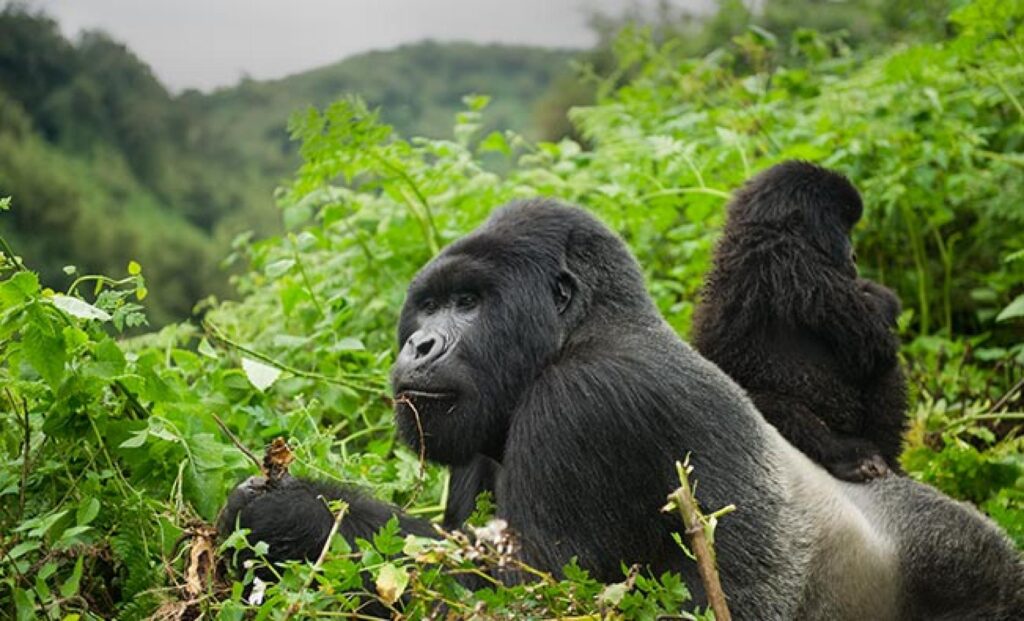
3-Day Bwindi Gorilla Trekking Safari
3-Day Bwindi Gorilla Trekking Safari
4-Day Uganda Gorilla Trekking Safari
4-Day Uganda Gorilla Trekking Safari
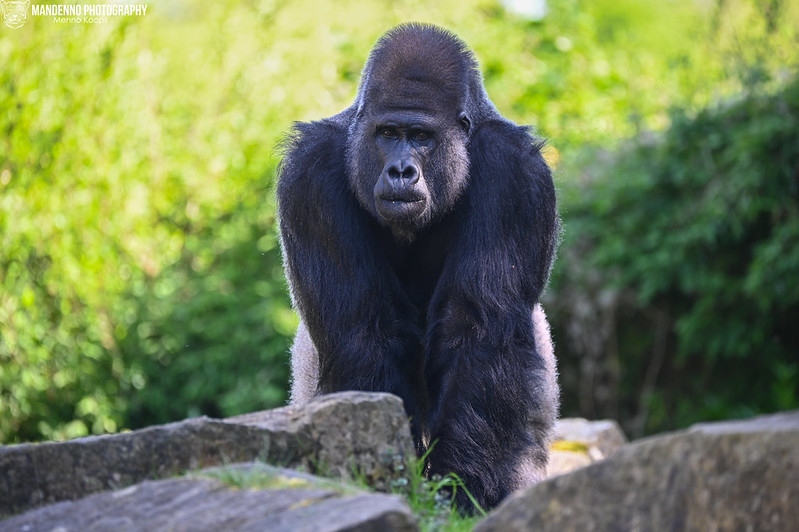
5-Day Gorilla Tracking and Wildlife Safari
5-Day Gorilla Tracking and Wildlife Safari
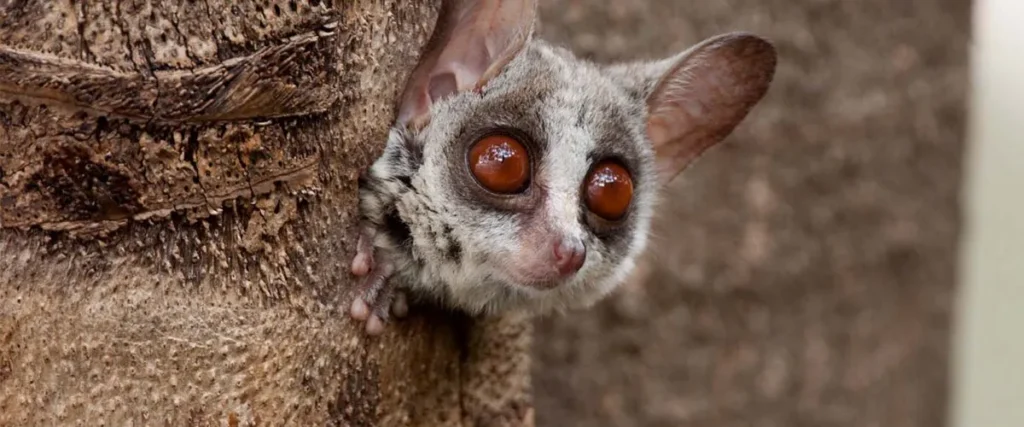
7-Day Uganda Primate Adventure & Wildlife Safari
7-Day Uganda Primate Adventure & Wildlife Safari
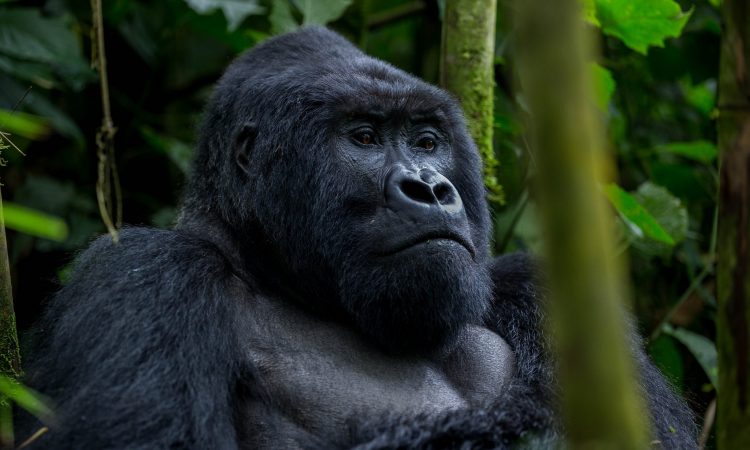
10-Day Gorilla Trekking & Big Five Safari in Uganda
10-Day Gorilla Trekking & Big Five Safari in Uganda
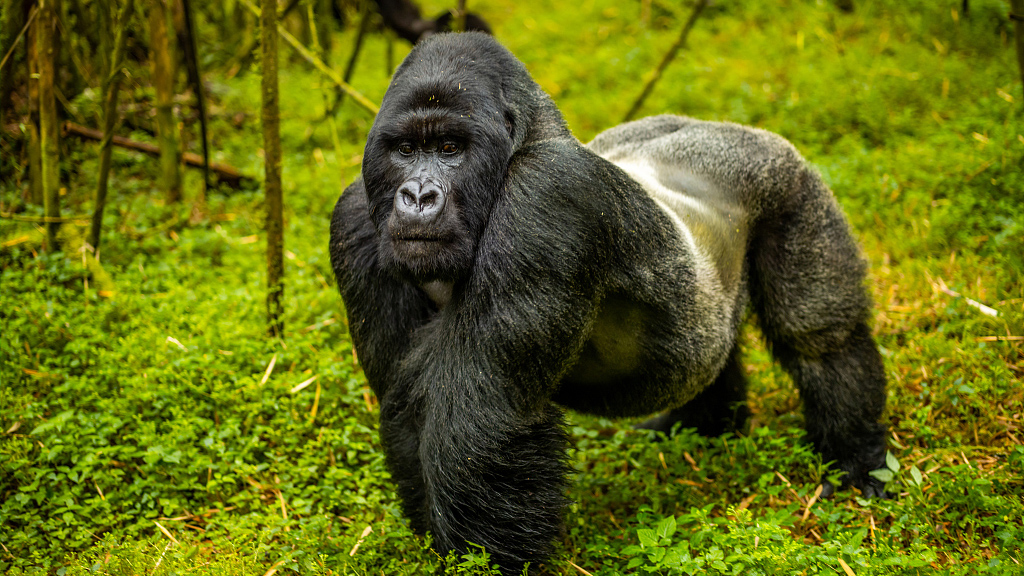
12-Day Uganda Gorilla Trekking, Chimp Tracking & Cultural Safari
12-Day Uganda Gorilla Trekking, Chimp Tracking & Cultural Safari
14-Day Best of Uganda Safari – Gorillas, Wildlife, Cultures
14-Day Best of Uganda Safari – Gorillas, Wildlife, Cultures
A Detailed Study of the African Finfoot
Taxonomy and Evolutionary Classification
The African finfoot is a member of the family Heliornithidae, a small and specialized group of birds known as finfoots or sungrebes. This family includes only a few species globally, distributed across Africa, Asia, and the Americas. The African species, Podica senegalensis, is the sole representative of its genus on the continent.Despite similarities in habitat to grebes or cormorants, finfoots are not closely related to these groups. Their evolutionary history reflects a distinct lineage of freshwater birds adapted to both swimming and perching, highlighting convergent evolution in aquatic bird morphology.
Physical Characteristics and Identification
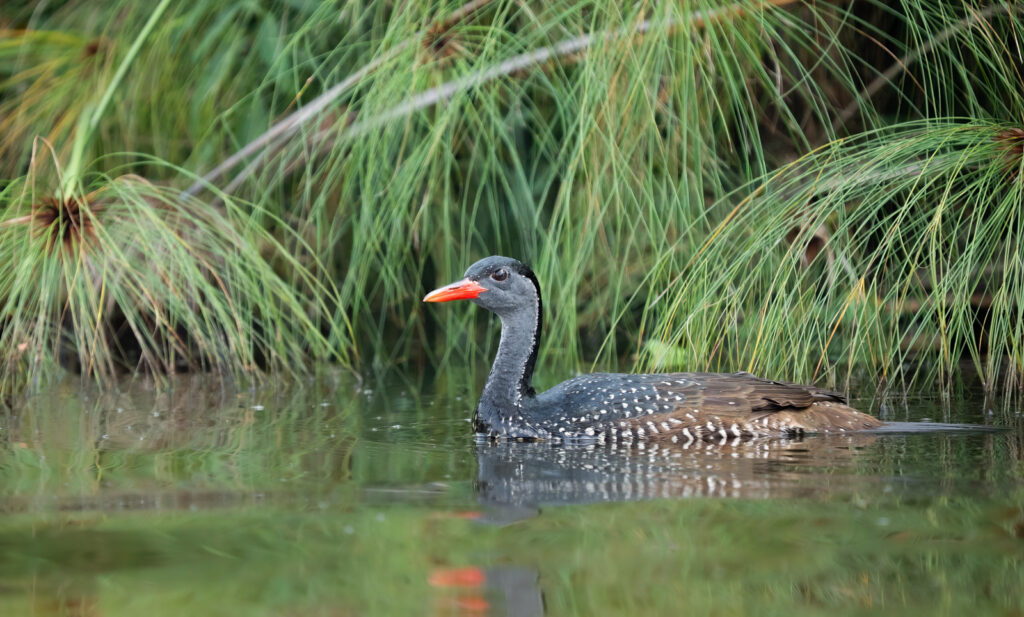
The African finfoot is a medium-sized bird with a slender body, long neck, and striking facial markings. Males and females exhibit sexual dimorphism, particularly in head coloration. Adult males display a bold white stripe extending from the bill above the eye toward the neck, contrasting with darker plumage. Females have more subdued facial markings with warmer brown tones.Its lobed toes are the species’ most remarkable anatomical feature, allowing efficient propulsion through water while maintaining stability on branches. Unlike webbed feet seen in ducks, the lobes expand during swimming strokes and retract when the bird walks or perches.In flight, the finfoot appears relatively short-winged and tends to fly low over water, often retreating quickly into dense vegetation when disturbed.
Habitat and Geographic Distribution
The African finfoot inhabits freshwater environments characterized by slow-flowing water and dense riverside vegetation. Preferred habitats include forested rivers, swampy lagoons, papyrus-lined channels, and sheltered lakeshores. It avoids open water bodies lacking sufficient cover.In East Africa, the species is found in Uganda, Rwanda, Kenya, and Tanzania, particularly in river systems associated with forest reserves and protected wetlands. In Uganda, sightings are occasionally recorded along the Nile, in Mabamba Swamp, and in forest-fringed waterways near national parks such as Queen Elizabeth and Murchison Falls.Because of its secretive behavior, confirmed records may underestimate its true distribution.
Feeding Ecology and Foraging Behavior
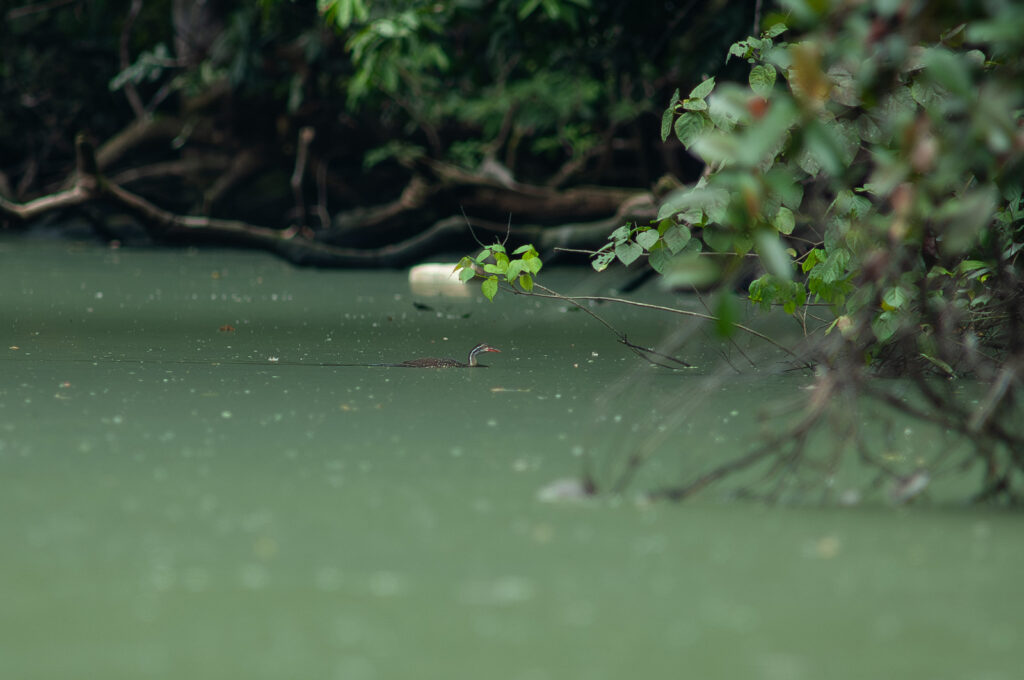
The African finfoot is primarily carnivorous, feeding on small fish, crustaceans, aquatic insects, and mollusks. It hunts quietly along river margins, swimming low in the water with only the head and neck visible.Foraging involves both active swimming and stealth-based ambush techniques, with the bird probing submerged vegetation or diving briefly to capture prey. Its slender bill is well-suited for grasping small aquatic organisms.The species’ preference for shaded and structurally complex waterways supports its feeding strategy, as these environments harbor diverse aquatic invertebrates and juvenile fish populations.
Behavior and Social Structure
African finfoots are predominantly solitary birds, typically encountered alone or in pairs during the breeding season. They maintain discreet territories along riverbanks and are highly sensitive to disturbance.Their behavioral pattern emphasizes concealment and stillness, often freezing in place or slipping silently into vegetation when approached. This cryptic nature makes observation challenging, reinforcing their reputation as one of Africa’s most secretive birds.Unlike many waterbirds that congregate in flocks, finfoots rely on territorial spacing to secure adequate feeding areas.
Reproduction and Nesting Ecology
Breeding typically occurs during rainy seasons when water levels are stable and food availability is high. Nests are constructed in overhanging branches, shrubs, or dense riverside vegetation, usually positioned above water to reduce predation risk.The female lays a small clutch of eggs, and both parents may participate in incubation and chick rearing. Chicks are semi-precocial and capable of swimming shortly after hatching, though they remain under parental supervision.Nest concealment is critical for reproductive success, as riverine habitats host numerous predators including snakes, monitor lizards, and birds of prey.
Vocalization and Communication
The African finfoot is generally quiet, with limited vocal output compared to many waterbirds. Vocalizations are typically soft whistles or contact calls used between mates during breeding.Because of its reclusive nature, auditory detection is uncommon, and sightings are usually visual rather than acoustic.
Ecological Role in Freshwater Systems
As a mid-level aquatic predator, the African finfoot contributes to regulating populations of small fish and invertebrates. Its presence reflects relatively healthy freshwater ecosystems with intact vegetation and stable prey populations.The species also serves as an indicator of riverine habitat quality, as it requires undisturbed banks and clean water for feeding and nesting. Declines in finfoot populations often signal broader environmental degradation.
Conservation Status and Threats
The African finfoot is currently classified as Least Concern globally, though it faces localized pressures in certain regions. Habitat destruction, riverbank clearing, water pollution, and human disturbance pose the primary threats.Wetland conversion for agriculture and fishing activities can significantly impact preferred habitats, particularly in densely populated areas. Because the species is secretive and difficult to monitor, population trends remain imperfectly understood.Conservation of riparian vegetation and freshwater integrity is essential for maintaining viable populations.
African Finfoot in Birding and Ecotourism
Among birdwatchers, the African finfoot is considered a prized and challenging species to observe. Its rarity and elusive behavior make confirmed sightings memorable achievements, especially in regions such as Uganda where bird diversity is exceptionally high.Responsible river-based ecotourism can support habitat conservation, provided disturbance is minimized. Quiet boat excursions along vegetated riverbanks offer the best chance of encountering this species without compromising its habitat.
A Secretive Jewel of Africa’s Rivers
The African finfoot represents one of Africa’s most specialized freshwater birds, blending aquatic adaptations with arboreal capabilities in a unique evolutionary package. Its lobed toes, cryptic behavior, and reliance on shaded waterways distinguish it within the continent’s avifauna.Protecting the African finfoot requires safeguarding freshwater ecosystems and riparian vegetation, ensuring that this elusive species continues to inhabit Africa’s rivers and wetlands. Its presence signals ecological integrity, making it an important indicator of healthy aquatic landscapes.
More Gorilla Trekking Information to Know.
Gorilla trekking goes far beyond just the hike — it’s a deep, emotional journey into the heart of Africa’s last wild rainforests. Knowing the right timing, permits, fitness tips, and park details can turn your experience from good to unforgettable.
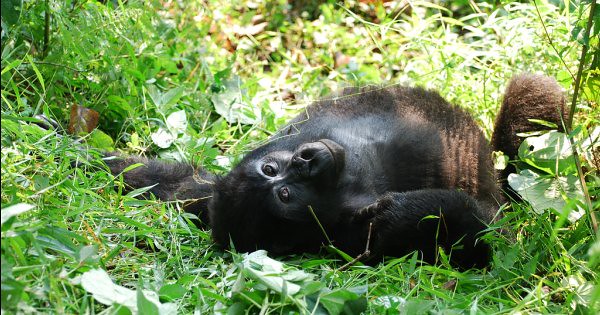
Gorilla Trekking in Bwindi Impenetrable Forest
Gorilla Trekking in Bwindi Impenetrable Forest

Trekking Gorillas in Mgahinga National Park
Trekking Gorillas in Mgahinga National Park
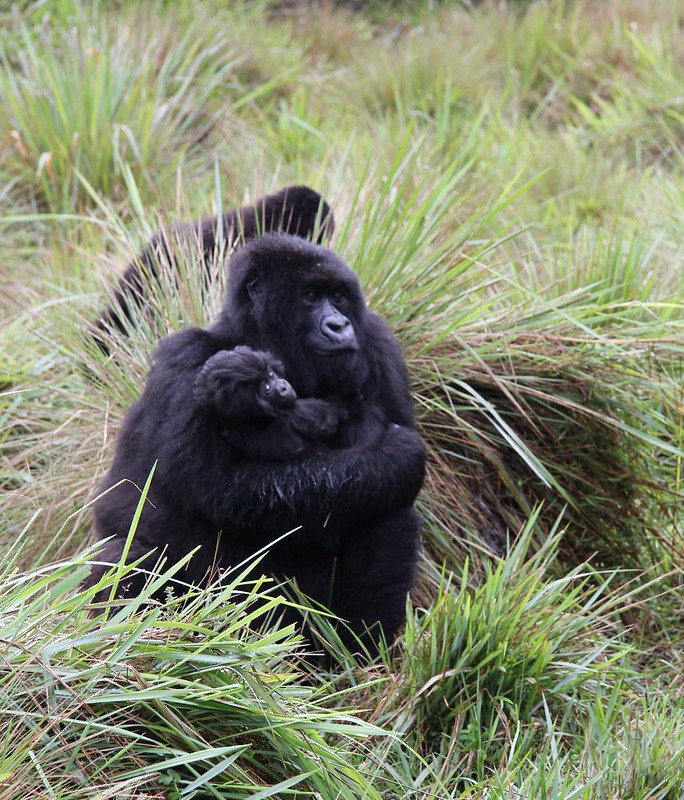
Uganda Gorilla Trekking Permits – Prices, Booking, & Travel Tips
Uganda Gorilla Trekking Permits – Prices, Booking, & Travel Tips

What to Pack for Gorilla Trekking in Uganda – Expert Checklist
What to Pack for Gorilla Trekking in Uganda – Expert Checklist
Best Time to Go Gorilla Trekking in Uganda – Weather & Seasons
Best Time to Go Gorilla Trekking in Uganda – Weather & Seasons
Gorilla Trekking Difficulty in Uganda – Fitness & Trail Guide
Gorilla Trekking Difficulty in Uganda – Fitness & Trail Guide
Gorilla Trekking Rules in Uganda – Safety, Respect & Ethics
Gorilla Trekking Rules in Uganda – Safety, Respect & Ethics
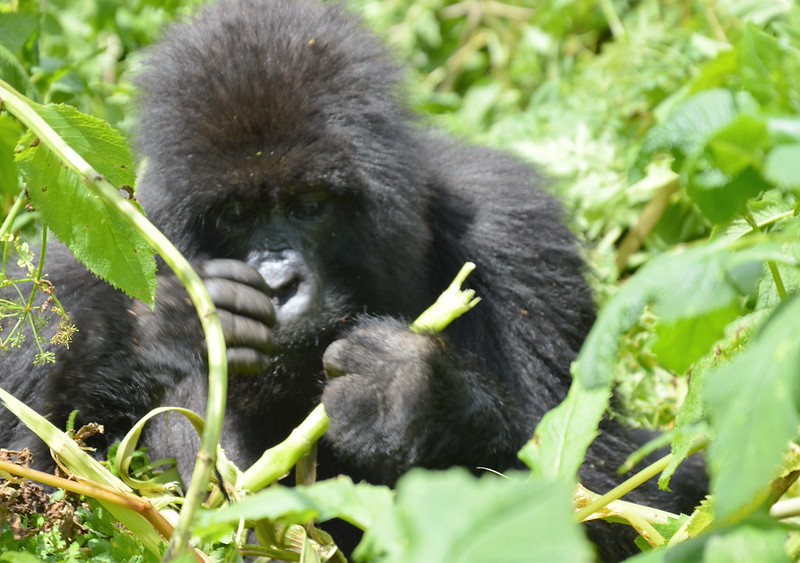
Gorilla Conservation in Uganda – Protecting the Mountain Giants
Gorilla Conservation in Uganda – Protecting the Mountain Giants

Bwindi vs. Mgahinga – Which One to Choose For Gorilla Trekking?
Bwindi vs. Mgahinga – Which One to Choose For Gorilla Trekking?
How to Stay Safe and Healthy While Traveling in Uganda
How to Stay Safe and Healthy While Traveling in Uganda
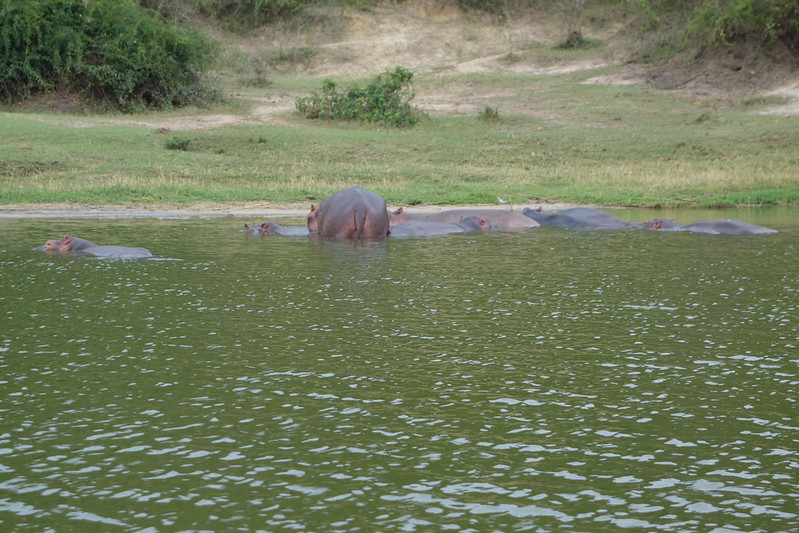
Routes, Tips & Travel Wisdom for Getting to Bwindi or Mgahinga
Routes, Tips & Travel Wisdom for Getting to Bwindi or Mgahinga

Accommodation Options: Lodges & Camps in Bwindi and Mgahinga
Accommodation Options: Lodges & Camps in Bwindi and Mgahinga
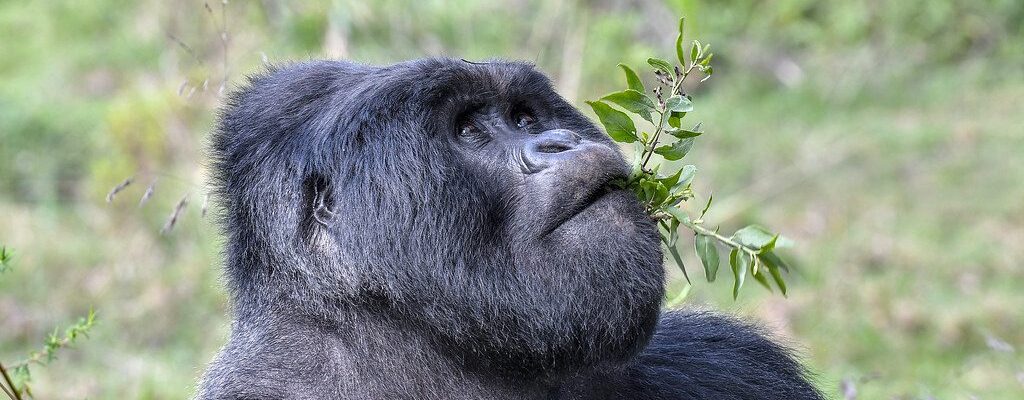
Protecting What You Came to See: Gorilla Conservation & Ethics
Protecting What You Came to See: Gorilla Conservation & Ethics
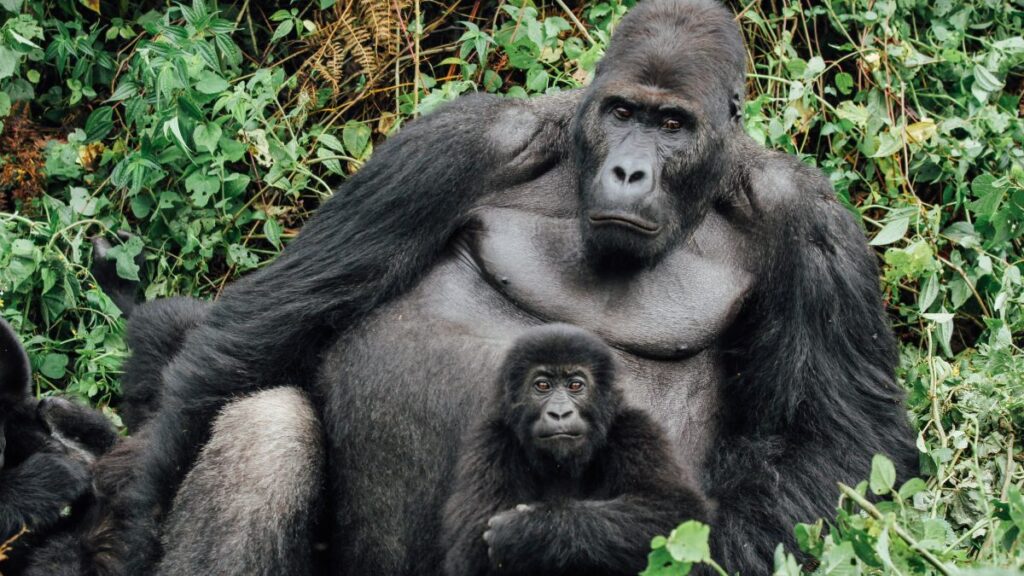
Travel Insurance for Gorilla Treks: Before You Go
Travel Insurance for Gorilla Treks: Before You Go
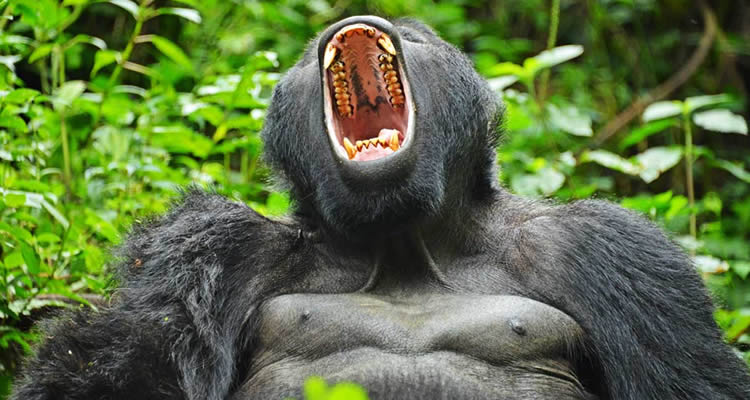
First Time Gorilla Trekking? Here’s Everything I Wish I Knew
First Time Gorilla Trekking? Here’s Everything I Wish I Knew
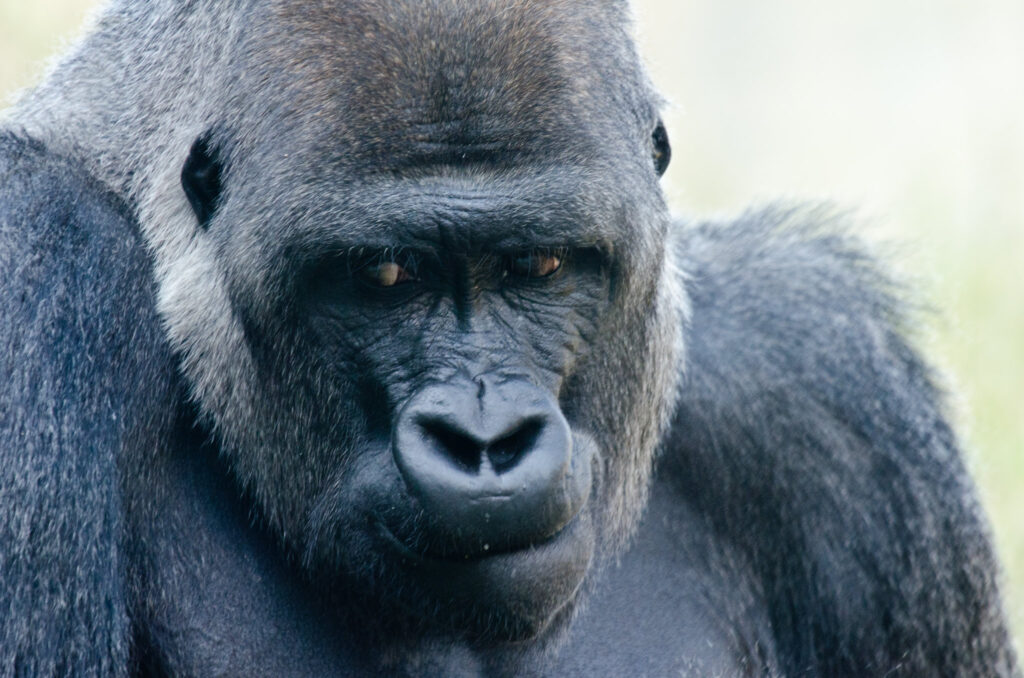
Step by Step: What Happens During a Gorilla Trekking Day
Step by Step: What Happens During a Gorilla Trekking Day
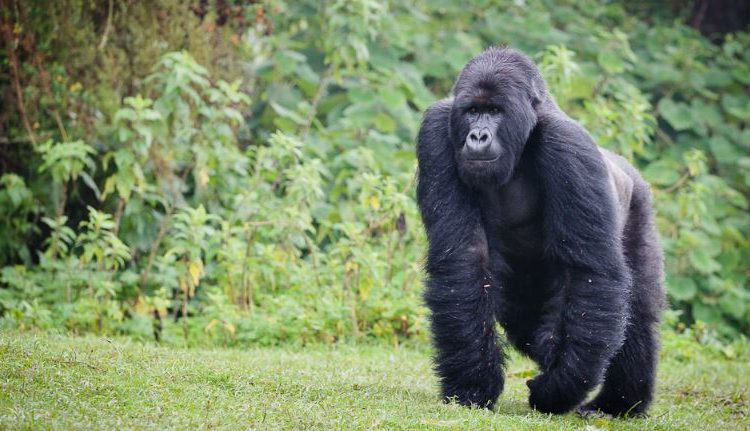
Gorilla Trekking vs. Gorilla Tracking – What’s the Real Difference?
Gorilla Trekking vs. Gorilla Tracking – What’s the Real Difference?
Beyond Gorillas: Other Wildlife You Can See During Your Trek
Beyond Gorillas: Other Wildlife You Can See During Your Trek
In the Realm of Giants – Bwindi & Mgahinga in Frames.
Wander through an elegant gallery capturing Uganda’s most exclusive gorilla sanctuaries, where ancient forests cradle the last mountain gorillas in a world of mist, mystery, and majesty.
Essential Planning Tips for Visiting Uganda’s National Parks.
Get ready for the wild heart of Africa with expert travel tips on when to visit, what to pack, where to go, and how to make the most of your safari across Uganda’s breathtaking national parks.
Why Uganda for Gorilla Trekking?
Uganda is not just a destination — it's the very soul of gorilla trekking. With over half of the world’s remaining mountain gorillas calling its misty forests home, Uganda offers the rarest encounters in their most authentic setting. Here, your journey is not rushed or crowded. Instead, you’re guided by experienced rangers through pristine jungles where gorillas live as they always have — wild, free, and magnificent
From insider travel insights to unforgettable trekking guides, our blog is your trusted path into Uganda’s wild heart — connecting you with mountain gorillas, breathtaking landscapes, and the soul-stirring adventures that make this land unlike any other.