Updated
dry season Bwindi June July August is one of Uganda’s outstanding natural or cultural attractions, drawing visitors in search of wildlife, scenery, and authentic African experiences. June, July, and August are the months that most gorilla trekking guides and safari operators recommend as the optimal time to visit Bwindi. The long dry season provides more predictable weather, firmer trails, better photographic light, and the highest probability of clear morning conditions. Understanding exactly what those months offer—and what they do not—allows you to plan around reality rather than marketing copy.
The dry season at Bwindi: what June, July, and August look like in the forest
What “dry season” means in a rainforest
A common misconception: the dry season in Bwindi does not mean dry. Bwindi Impenetrable Forest is a montane rainforest sitting at the edge of the Congo Basin, one of the wettest regions on Earth. The forest generates its own humidity year-round from transpiration—the process by which trees release water vapour through their leaves. Even during the dry season, the forest interior is persistently humid, the vegetation permanently wet, and morning mist common. What changes in June–August is the character of rainfall: less sustained rain, shorter duration when it does rain, less predictable from day to day. You will almost certainly experience some rain during a dry season trek at Bwindi. Waterproof clothing remains essential regardless of month.
Morning conditions in June, July, and August
The dry season mornings at Bwindi are among the finest weather conditions the park offers. Treks begin at 8 a.m. after the ranger briefing at the park gate, and in June–August this departure typically occurs under clear or partly cloudy skies. The air temperature at trailhead elevation (typically 1,500–1,800 metres) is cool—around 12–16°C—requiring a light fleece or mid-layer over trekking clothes. The visibility within the forest is good; mist may linger in the valley bottoms but does not obstruct the trail. By mid-morning the temperature climbs to 18–22°C—comfortable for hiking. If the gorilla family has moved to a higher elevation, the climb into the colder upper zones of the park can feel dramatically different from the warmer valley trailhead.
Trail conditions during the dry season
The dry season softens Bwindi’s trail challenge noticeably. The steep red laterite slopes that become genuinely treacherous in wet season—slick, polished mud with little grip even in good boots—firm up during the dry months and provide more reliable footing. The understory vegetation, though still dense and impenetrable in its name-sake fashion, is slightly less overgrown than in the wet season peak of April–May, making the trail-cutting effort of the guides less intensive. Stream crossings, which can be difficult during heavy rain, are typically manageable in dry season. The overall result is a trek that is still physically demanding—Bwindi is steep by any standard—but where the terrain’s resistance is somewhat reduced. First-time trekkers with average fitness manage the dry season trek more comfortably than they might in the wet months.
Photographic conditions: golden light and clear views
For photographers, the dry season offers conditions that are harder to achieve in the wet season. Clear mornings mean better directional light in the forest—dappled shafts rather than the flat, diffuse illumination of heavy cloud cover. Afternoon clearings after brief rain provide the golden-hour light that makes forest photography at its most dramatic. The improved visibility on exposed ridges and forest edges allows longer sight lines for photographs that include forest canopy, sky, and landscape context. From elevated positions—lodge verandas, community viewpoints above the canopy—dry season evenings frequently produce spectacular sunset views to the Virunga volcanoes in the south, unobscured by the heavy cloud that often blocks the view in wet season. These conditions do not guarantee good photographs—gorilla photography depends heavily on where the family is positioned and what the vegetation obscures—but they increase the probability of exceptional images.
Gorilla behaviour in the dry season
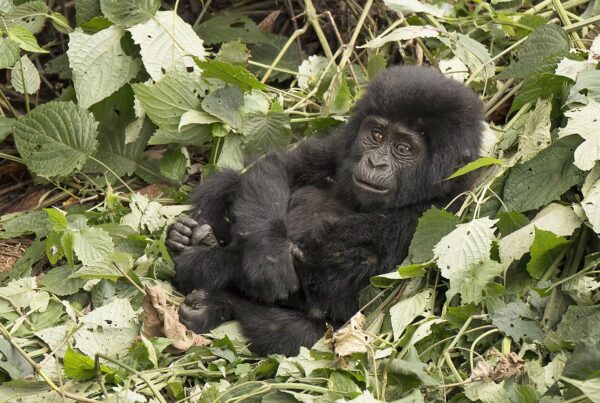
Mountain gorillas in Bwindi adjust their ranging patterns seasonally based on food availability. During the dry season, certain fruit species are in peak season, and gorilla families may move to higher elevations to access fruit resources that are seasonally available in the montane zones. This seasonal movement means that dry season treks can sometimes involve longer approach times to reach a family that has moved higher than usual—but it also means that encountering gorillas feeding on fruit, rather than the more typical leaf-browsing, is more likely in these months. Fruit-feeding gorillas are often more active and visible than leaf-browsing ones, and the presence of preferred food resources can keep a family in a specific area for multiple days, making location prediction more reliable for rangers and trackers.
Temperature and comfort across the day
A typical June–August day at Bwindi in temperature terms: 10–14°C at 6 a.m. wake-up, climbing to 16–20°C by trek departure at 8 a.m., reaching 20–24°C by midday at valley elevations, dropping noticeably to 15–18°C on ridge-top sections, and falling back to 12–16°C by late afternoon. Nights are cold—10–13°C at most lodge elevations—and the temperature inside lodge bandas without heating can be genuinely chilly. Bedding at most lodges is adequate for the temperature but lightweight sleepers may want a sleeping bag liner. The day-night temperature swing of 10–15°C across the dry season requires more versatile layering than many equatorial travellers expect; packing a fleece and a lightweight down layer alongside trekking clothes is sensible regardless of month.
Wildlife beyond gorillas in dry season
The dry season is also productive for Bwindi’s non-gorilla wildlife. The drier conditions concentrate animals around water sources, making sightings of forest buffalo, bushbuck, and red river hog more predictable near streams. Bird activity is high: the dry season coincides with post-breeding dispersal movements that bring species from lower elevations up into the highland forest, and many of Bwindi’s Albertine Rift endemic birds are most vocal and visible in June–August. Butterfly diversity peaks in the dry season when the forest floor is drier and more accessible. Birding walks from the lodges in the early morning of dry season days can produce extraordinary species lists—African green broadbill, Shelley’s crimsonwing, Grauer’s warbler, and the spectacular Rwenzori turaco are all reliably seen in this season by patient observers on the forest trails.
The crowd factor: managing peak season
The dry season’s advantages come with one significant trade-off: crowds. June–August is the busiest period for gorilla trekking in Uganda, coinciding with the Northern Hemisphere school summer holidays. Bwindi permits sell out months in advance for popular dates; lodges operate at high occupancy; the park gate at Buhoma is busy in the early morning with multiple trekking groups assembling simultaneously. None of this diminishes the actual encounter—the strict limit of eight people per gorilla family per day means that your hour with the gorillas is as intimate as in any other season—but the lodge experience and the trailhead atmosphere are more crowded than in shoulder or wet season. Book permits and accommodation six to twelve months in advance for dry season travel, and choose sectors of the park (Rushaga, Nkuringo) that are slightly less visited than the most popular Buhoma northern sector.
- What Bwindi Impenetrable Forest Looks Like From the Air: Drone Footage
- New Eco-Lodge Opens Inside Bwindi Forest in 2026: First Look
- Kampala to Bwindi by Private Car: What the Drive Really Looks Like 2027
- Gorilla trekking in June and July: Uganda’s dry season peak
- Gorilla trekking in July and August: the peak season experience explained
- Bwindi Impenetrable Forest – Gorilla Trekking in Uganda’s UNESCO Jungle
- Chimpanzees Confirmed in Bwindi Forest
- Bwindi Forest: What Happened to the White-Bellied Duiker?
- Bwindi Forest Gorilla Trekking: An Unforgettable Journey
- Uganda Gorilla Trekking Bwindi Impenetrable Forest: The Complete Guide