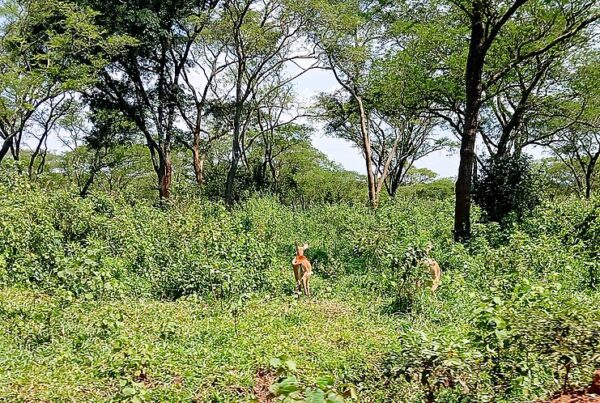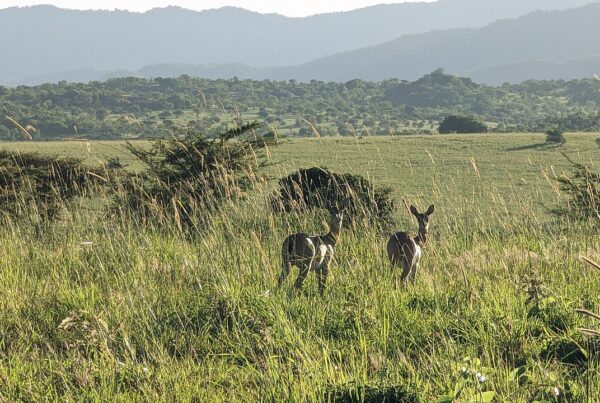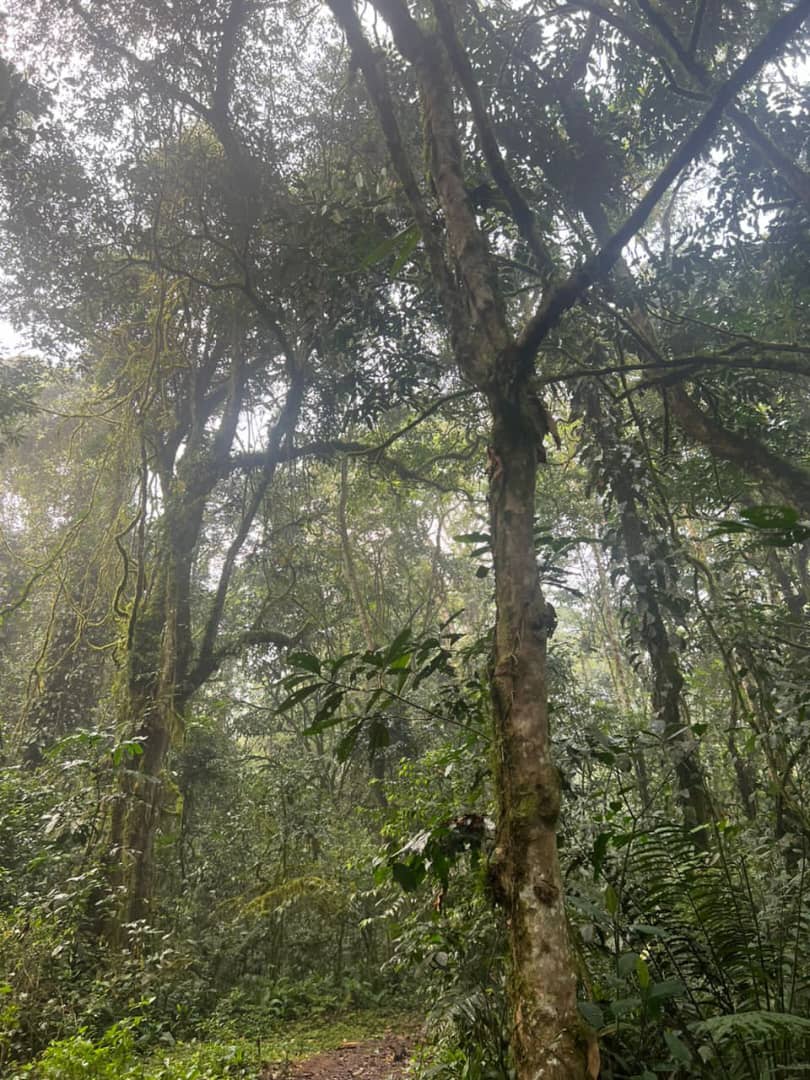
Most visitors to Uganda arrive with one goal: gorilla trekking at Bwindi Impenetrable National Park. And Bwindi absolutely justifies that focus — it is one of the most extraordinary wildlife experiences on earth. But Uganda’s protected area network extends far beyond the famous forest of the southwest, and the country’s other national parks offer a breadth and variety of wildlife experiences that rival any destination in East Africa. Understanding what each park offers and how it fits into an itinerary is the key to unlocking Uganda’s full potential as a safari destination.
Queen Elizabeth National Park
Queen Elizabeth National Park is Uganda’s most visited national park and one of the most biologically diverse protected areas in Africa. Straddling the equator in western Uganda, it encompasses savannah, wetland, forest, and volcanic crater lake habitats that together support an astonishing range of wildlife. The park is named after Queen Elizabeth II, who visited Uganda in 1954, though Ugandans also know it by its older name, Rwenzururu.
The park’s most famous wildlife spectacle is the Kazinga Channel — a natural channel connecting Lakes George and Edward — where boat cruises provide some of the continent’s best hippo and buffalo viewing. The channel banks support the highest concentration of hippos in Africa, with hundreds visible from the water on a typical afternoon cruise. Buffalo in herds of several hundred move along the channel banks in the dry season. Nile crocodiles sun themselves on sandbanks. Elephant, waterbuck, kob, and warthog are all common in the surrounding savannah.
Queen Elizabeth’s unique feature is the Ishasha sector in the south, home to the famous tree-climbing lions. Ishasha’s lions have developed the unusual habit of resting in the branches of large fig trees — a behaviour seen at only a handful of locations in Africa. Ishasha is about two hours from the park’s main tourism area around Mweya, making it an accessible day or overnight extension.
The Kyambura Gorge — sometimes called the “Valley of Apes” — cuts through the eastern edge of Queen Elizabeth and shelters a habituated chimpanzee community. The gorge chimps can be tracked with a permit, providing a smaller-scale primate encounter that complements a Bwindi gorilla trek on a combined itinerary. The gorge itself is visually dramatic: a deep slot canyon of dense riverine forest cutting through the dry savannah, visible from the crater lake rim above.
Kibale National Park
Kibale National Park in western Uganda contains the world’s best chimpanzee trekking. The park protects a large tract of mid-altitude moist forest that supports approximately 1,500 chimpanzees — the highest density of any forest in Uganda — along with twelve other primate species including red colobus, black-and-white colobus, red-tailed monkey, grey-cheeked mangabey, and olive baboon. A single forest walk in Kibale can yield sightings of five or more primate species in addition to chimpanzees.
The standard chimpanzee trekking experience at Kibale is based at Kanyanchu, where habituated chimp communities are tracked each morning and afternoon. Visitors are limited to one hour with the chimps once found, following the same conservation principles as gorilla trekking. The encounter is dramatically different in character from gorilla trekking — chimpanzees are fast, loud, and unpredictable, moving through the canopy at speed and communicating with ear-splitting calls and screams. The energy is electric.
The chimpanzee habituation experience at Kibale is one of Uganda’s most extraordinary offerings. Unlike standard trekking where you join an already-habituated group for one hour, the habituation experience places you with a chimpanzee group that is still in the multi-year process of becoming accustomed to human presence. You spend a full day with the research and habituation team — from the chimps’ nest site in the early morning through their entire day’s range of activity, including feeding, resting, socialising, and nesting again in the evening. This full-day immersion creates an intimacy with individual animals and their social dynamics that no one-hour encounter can match.
Murchison Falls National Park
Murchison Falls National Park is Uganda’s largest protected area, covering over 3,840 square kilometres of savannah, woodland, and riverine forest in the northwest. The park takes its name from the Murchison Falls — a point on the Victoria Nile where the entire flow of the river is compressed through a seven-metre-wide gorge before plunging 43 metres into a churning pool below. It is one of the most powerful waterfalls on earth measured by volume of water per unit width, and it is visually spectacular.
The Nile River through Murchison Falls is the park’s axis. Boat trips from Paraa up to the base of the falls pass through hippo- and crocodile-dense waters with large elephant and buffalo on both banks. Above the falls, the Nile broadens into a slower channel where shoebill storks — one of the world’s most sought-after bird species — are regularly sighted. Murchison is one of the most reliable locations in East Africa for shoebill.
Game drives north of the Nile on the park’s vast open plains offer excellent lion and leopard sightings. Murchison has one of Uganda’s highest lion populations and reasonable leopard density. Rothschild’s giraffe — an endangered subspecies found at only a handful of locations worldwide — was reintroduced to Murchison from Kenya and the population is now breeding and self-sustaining. Seeing Africa’s tallest animal against the backdrop of Murchison’s open plains is a striking contrast to the intimate forest environments of Bwindi and Kibale.
Rwenzori Mountains National Park
Rwenzori Mountains National Park protects the Rwenzori range on Uganda’s western border with the Democratic Republic of Congo — the “Mountains of the Moon” of Ptolemy’s ancient maps. The Rwenzoris are Africa’s third-highest mountain range after Kilimanjaro and Mount Kenya, with Margherita Peak on Mount Stanley reaching 5,109 metres above sea level.
Unlike the volcanic peaks of Kilimanjaro and Kenya, the Rwenzoris are ancient crystalline mountains shaped by tectonic uplift rather than volcanic activity. Their high-altitude ecology is unique — the afro-alpine zone above 4,000 metres supports giant heather, giant groundsel, and giant lobelia plants that grow to tree-like sizes in the equatorial mountain climate. Walking through this zone feels genuinely alien — like traversing a landscape from a science fiction story.
The Rwenzori circuit trek takes seven to nine days for the full mountain experience. Day hikes into the lower forest zones are available for visitors who cannot commit to a multi-day ascent. The park protects extraordinary biodiversity in its forest zones — over 70 mammal species and over 217 bird species — and the lower forest trails offer excellent birding and botanical interest without the technical challenge of the upper mountain.
Mgahinga Gorilla National Park
Mgahinga Gorilla National Park is Uganda’s smallest national park and the country’s second gorilla trekking destination after Bwindi. It protects the Ugandan side of the Virunga volcanoes — a chain of eight extinct and active volcanoes straddling the borders of Uganda, Rwanda, and the DRC. The gorillas of Mgahinga range across international borders and are part of the same population as the gorillas of Rwanda’s Volcanoes National Park.
Mgahinga currently has one habituated gorilla group — the Nyakagezi group — making permit availability more limited than at Bwindi. However, Mgahinga offers a distinct trekking experience: the volcanic forest habitat differs from Bwindi’s ancient impenetrable rainforest, and the backdrop of the Virunga peaks provides dramatic scenery that Bwindi does not offer. Golden monkey trekking — another unique primate experience — is available at Mgahinga for the endemic golden monkey found only in the Virunga volcanic forests.
The Batwa Experience at Mgahinga, described elsewhere in detail, is considered by many visitors to be one of the most culturally significant and emotionally affecting activities available anywhere in Uganda. Combining a gorilla trek with a Batwa Experience creates a day of remarkable richness — both the wildlife encounter and the human cultural encounter are extraordinary in their different ways.
Lake Mburo National Park
Lake Mburo National Park in central-western Uganda is the most accessible major park from Kampala — about three hours’ drive — and the only park in Uganda where you can walk with zebra on open savannah. The park is compact at 370 square kilometres but densely populated with wildlife: zebra, impala, topi, eland, buffalo, and hippo are all common sightings.
Lake Mburo is particularly valued by birders for its acacia woodland and lake edge habitats, which host species difficult to find elsewhere in Uganda. The African finfoot — a secretive water bird — is regularly seen on the lake’s quiet inlets. Papyrus gonolek, shoebill (occasionally), and various kingfisher species reward patient observation along the lakeshore.
The park is popular as a night or two en route between Kampala and the southwestern parks — Bwindi and Mgahinga. Its relatively gentle terrain, flat walking trails, and diverse game make it a relaxing and rewarding stop that adds variety to an itinerary dominated by steep forest trekking. Horse riding through the park is available through the Mihingo Lodge stable, offering a distinctly different perspective on the savannah wildlife.
Kidepo Valley National Park
Kidepo Valley National Park in Uganda’s remote northeast is consistently rated by safari experts as one of Africa’s most spectacular parks — and one of the least visited. Its remoteness, on the border with South Sudan and within a day’s drive of the Ethiopian border, has kept visitor numbers low, preserving a wilderness atmosphere that the more accessible parks cannot replicate.
Kidepo’s landscape is dramatic semi-arid savannah ringed by mountain ranges — the Didinga Hills on the South Sudanese border and the Morungole Massif to the east. The park supports a high lion density and leopard are regularly seen. Cheetah, rare in Uganda elsewhere, are present in Kidepo. Ostrich — absent from other Ugandan parks — stalk the open plains. The Narus Valley concentrates wildlife around its permanent water sources in the dry season in a manner reminiscent of the great East African plains.
The Karamojong people, semi-nomadic pastoralists whose territory surrounds Kidepo, add a cultural dimension to the park visit available nowhere else in Uganda. Cultural visits to Karamojong manyattas — traditional cattle-herding homesteads — can be arranged and provide insight into one of East Africa’s most distinctive pastoral cultures.
Reaching Kidepo requires either a domestic flight to Apoka airstrip or a long drive — eight to ten hours from Kampala on roads of varying quality. The investment in reaching it is exactly what keeps it uncrowded, and for travellers who value genuine wilderness over convenient infrastructure, that investment is entirely worthwhile.
Building a multi-park Uganda itinerary
Uganda’s parks are distributed across the country in ways that make multi-park itineraries logical. A classic western Uganda circuit combines Kibale (chimpanzee trekking), Queen Elizabeth (game drives and Kazinga Channel cruise), and Bwindi (gorilla trekking) in a ten to fourteen day loop from Kampala — all three parks are connected by tarmac and good dirt roads and the driving is manageable with sensible daily distances.
Adding Murchison Falls extends the itinerary northward to the Victoria Nile and the Murchison landscape — a natural complement to the western forest and savannah parks that demonstrates Uganda’s ecological variety. Lake Mburo can serve as a mid-trip break either outbound from Kampala or on the return journey.
Kidepo and the Rwenzoris are best treated as dedicated focus itineraries rather than add-ons to a standard western circuit, given their remoteness and the time required to do them justice. But for return visitors to Uganda or those with three or more weeks available, they represent the country’s most adventurous and least-trodden wildlife experiences — exactly the kind of travel that makes Uganda remarkable not just as a gorilla trekking destination but as one of Africa’s most complete and diverse safari countries.