
Updated
Best places to see hippos in Uganda
Best places to see hippos in Uganda
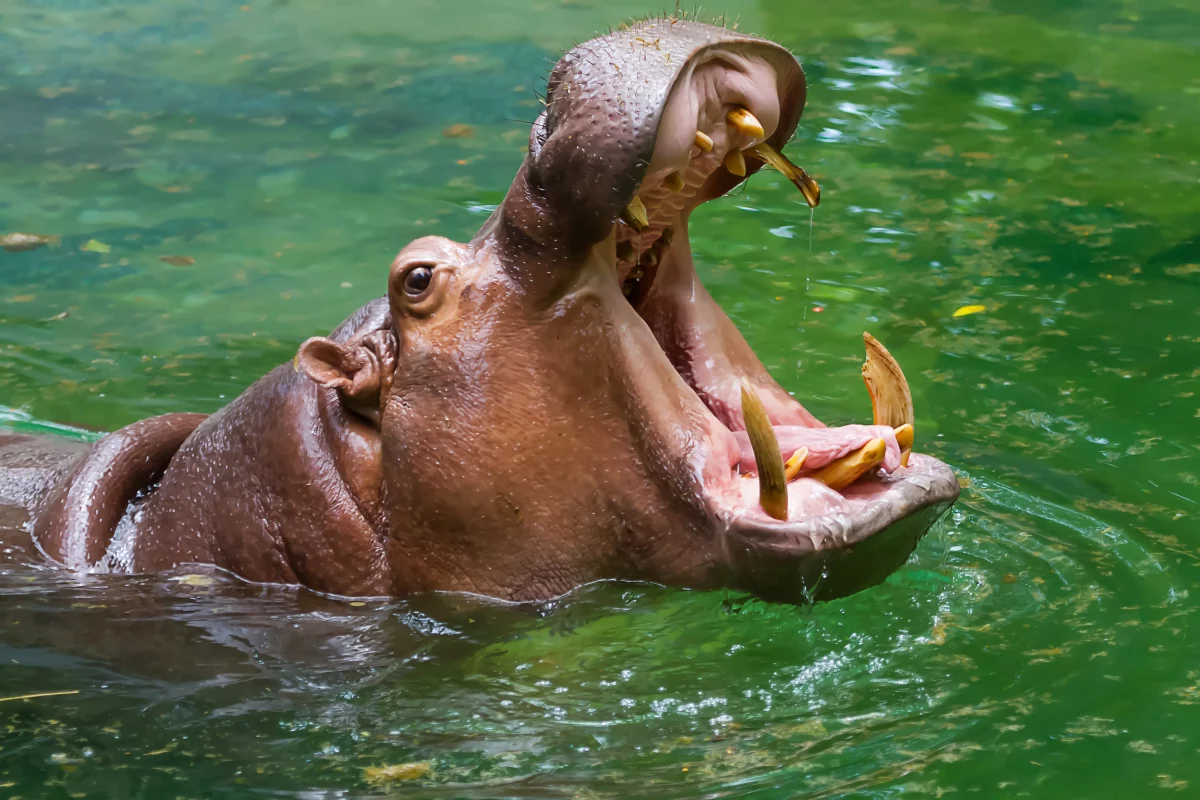
see hippos Uganda national parks best places is one of Uganda’s most impressive wildlife species, encountered in national parks on game drives and guided safari experiences. Uganda has one of the largest hippo populations in East Africa, concentrated in the rivers and lakes of the national parks in the west and northwest. Unlike the East African savannas where hippos are a background presence, Uganda’s protected waterways provide encounters of extraordinary intimacy and scale. These are the best hippo locations in Uganda.
1. Kazinga Channel, Queen Elizabeth NP
The Kazinga Channel between Lakes George and Edward hosts what is regularly cited as the highest density of hippos in Africa — pods of two hundred or more animals are visible from the launch trip boat, often at distances of ten to twenty metres. The two-hour boat cruise is the most accessible and concentrated hippo encounter in Uganda. The afternoon departure (2pm) provides the best light for photography and typically coincides with the hippos’ most active waterside behaviour. No other single activity in Uganda produces as many hippo sightings in as short a time.
2. Victoria Nile, Murchison Falls NP
The Nile below Murchison Falls has a large hippo population distributed through the papyrus edges and open river sections between Paraa and the falls. The launch trip produces multiple hippo pods over its seventeen-kilometre course; some pods contain fifty or more individuals packed into a single sandbank section. The combination of hippos at close range, Nile crocodiles and the dramatic falls backdrop makes this the most visually complete hippo encounter in Uganda.
3. Lake Edward shoreline
The Lake Edward shoreline within Queen Elizabeth NP is accessible on game drives from the Mweya Peninsula area and provides direct lakeside hippo encounters outside the boat context. Large pods rest in the lake shallows within metres of the track; morning game drives produce hippos emerging onto the bank in the early light. The lake also provides fishing village access — hippos interacting with the artisanal fishing operations on the lake’s edge are a component of the social ecology of the area that visitors rarely encounter in a park context.
4. Lake Mburo National Park
Lake Mburo is the most accessible hippo location from Kampala, lying on the main road to Bwindi. The lake’s hippo population is viewable from a shoreline hide or by boat; the evening hippo grazing — when the animals emerge onto the lake’s grassy margins at dusk — is particularly productive. Lake Mburo works as a half-day stop on the Kampala-to-Bwindi drive without requiring an overnight stay.
Hippo behaviour and safety
Hippos are responsible for more human fatalities in Africa than any other large mammal except mosquitoes. The risk arises primarily from encounters on land at night — hippos graze up to 10 kilometres from their daytime water base after dark — and from approaching too closely in boats. The launch trips in Uganda operate at safe distances established through long practice; the boat drivers and guides are experienced in reading hippo behaviour. Walking near the Kazinga Channel or the Nile after dark is not advised, and lodges positioned near the water have specific guidance for guests about nighttime movement.
- Best Places to Travel Solo: Safe, Inspiring & Unforgettable Destinations
- Best Places to Stay in Nkuringo: Lodges, Camps and Guesthouses Ranked
- Best places to see elephants in Uganda
- Best places to see colobus monkeys in Uganda
- Best places to see lions in Uganda
- Best places to see chimpanzees in Uganda
- Best Places to See Shoebill Storks in Uganda
- Best Places to See Buffalo in Uganda on Safari
- Best Time for Gorilla Trekking in Uganda – Monthly Guide to 2025 Seasons
- The Best Time to Climb or Hike Mount Rwenzori
Frequently Asked Questions
Uganda is home to the mountain gorilla (Gorilla beringei beringei), one of two subspecies of eastern gorilla. They live exclusively in the Virunga volcanic highlands (Uganda/Rwanda/DRC) and Bwindi Impenetrable Forest (Uganda only). Mountain gorillas are the only gorilla subspecies that cannot survive in captivity — every individual you can trek is a wild animal.
The standard gorilla trekking permit gives you exactly 1 hour with the gorilla family. This time begins when you make first contact with the family — the ranger signals the start. The Gorilla Habituation Experience gives 4 hours with a semi-wild family. The walk to find the gorillas can take 30 minutes to 5 hours depending on where the family has moved.
Stay calm, crouch down slowly, avoid direct eye contact, and remain quiet. Do not run — running triggers a chase response. Rangers accompanying your group manage close approaches. Habituated gorillas are accustomed to humans and almost never make contact, but a charging silverback is managed by staying still and following ranger instructions immediately.
A maximum of 8 visitors per habituated gorilla family per day for standard trekking. The Gorilla Habituation Experience has a maximum of 4 visitors per family per day. These limits are set by UWA to minimise stress on the gorilla families and maintain the quality of the experience.
Uganda is home to the mountain gorilla (Gorilla beringei beringei), one of two subspecies of eastern gorilla. They live exclusively in the Virunga volcanic highlands (Uganda/Rwanda/DRC) and Bwindi Impenetrable Forest (Uganda only). Mountain gorillas are the only gorilla subspecies that cannot survive in captivity — every individual you can trek is a wild animal.










