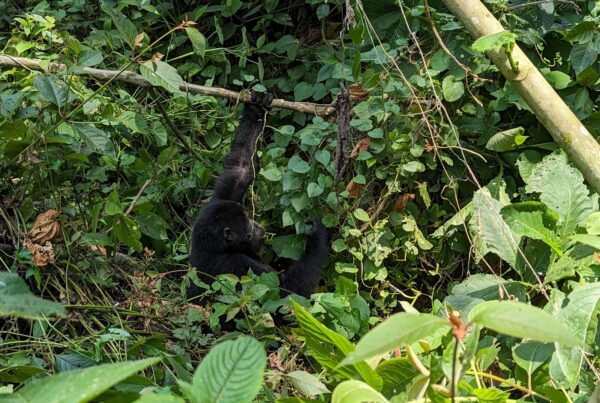
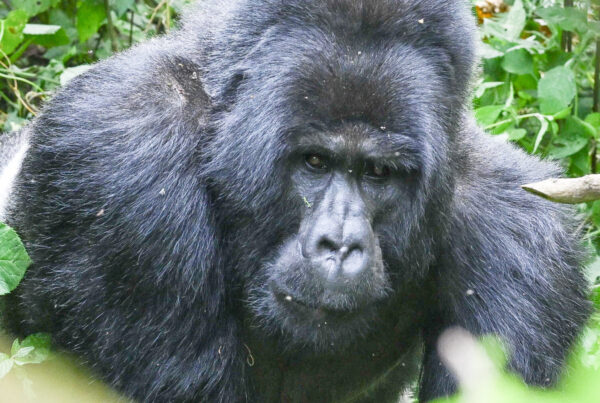
The survival of mountain gorillas depends not only on what happens inside Bwindi Impenetrable National Park and the Virunga Massif but on what happens in the landscape surrounding and connecting these protected areas. Gorillas move between forest fragments, crossing unprotected land when their habitat requires it. Maintaining the ecological connectivity that allows this movement — and ensuring that the buffer zones around core protected areas remain suitable for wildlife — is the work of a network of organisations, including the East African Wildlife Society, that operates in the spaces between the national parks.
What the East African Wildlife Society Does
The East African Wildlife Society (EAWS) is one of the oldest conservation organisations in East Africa, founded in Kenya in 1961 and operating across Uganda, Kenya, Tanzania, and the broader region. Its work spans advocacy, community conservation, anti-poaching support, and habitat connectivity — the last of which is directly relevant to gorilla survival. The Society has been involved in the development of wildlife corridors and buffer zone management across the East African region, working with governments, communities, and international conservation partners.
In Uganda specifically, the Society’s work supports the Uganda Wildlife Authority’s management of the areas surrounding Bwindi and other protected parks. This includes engagement with communities in the buffer zones, support for anti-poaching monitoring, and advocacy for land-use policies that maintain habitat connectivity between protected areas. The Society is not the primary operational force in gorilla conservation — that role belongs to the Uganda Wildlife Authority and the International Gorilla Conservation Programme — but it is part of the broader institutional ecosystem that maintains the conditions for gorilla survival.
Gorilla Corridors: Why They Matter
Mountain gorillas do not respect national park boundaries. Individual gorillas and small groups move between the protected areas that constitute their habitat, crossing agricultural land, community forests, and the buffer zones around national parks. These movements are essential for genetic exchange between gorilla populations — particularly the exchange between the Bwindi-Sarambwe ecosystem and the Virunga Massif. Without genetic connectivity, isolated populations lose diversity, become vulnerable to inbreeding, and are less resilient to disease and environmental change.
The Bwindi-Sarambwe corridor — connecting Bwindi Impenetrable National Park in Uganda with the Sarambwe Nature Reserve in the DRC — is one of the most important wildlife corridors for mountain gorilla conservation. Maintaining this corridor requires coordination between Ugandan and Congolese conservation authorities, management of the communities on both sides of the border, and ongoing monitoring of gorilla movements. Several gorilla families have been documented making regular crossings through this corridor.
The Buffer Zone Challenge
The land immediately surrounding Bwindi is among the most intensively farmed in Uganda. With population densities exceeding 200 people per square kilometre in some areas, and farming extending to the edge of the park boundary, there is little space for wildlife movement outside the formally protected area. The buffer zone — the land between the park boundary and the nearest settlement — has been progressively reduced by agricultural expansion.
Maintaining even a minimal buffer zone around core gorilla habitat requires active management: working with communities to maintain trees and vegetation in the buffer, managing human-gorilla conflict when gorillas enter farmland, and providing economic incentives for landowners to maintain land in a condition that is compatible with wildlife movement rather than converting every available metre to crops. Conservation organisations including EAWS support this work alongside the Uganda Wildlife Authority’s community programmes.
The Revenue Connection
The community support programmes that maintain buffer zone conditions and reduce human-wildlife conflict are partly funded by the community revenue-sharing scheme that allocates a percentage of gorilla permit fees to parish development. The $800 USD permit for international visitors in 2027 generates the revenue that funds ranger salaries, community programmes, and the institutional infrastructure that organisations like EAWS engage with. The connection between visitor permits and wildlife corridor protection is indirect but real — the economic system that gorilla tourism creates funds the conditions that make corridor connectivity sustainable.
What Visitors Can Do
Visitors to Bwindi contribute to gorilla corridor protection primarily through the permit fee and the economic activity their visit generates. Beyond this, some visitors choose to support conservation organisations working in the region through direct contributions or by purchasing products from community enterprises that benefit from conservation employment. The Batwa Trail programme at Bwindi, community craft cooperatives, and guide tip income are all mechanisms by which visitor spending reaches the communities whose land-use decisions affect gorilla corridor integrity. The most effective single action remains the permit — which funds the Uganda Wildlife Authority’s operational capacity across the entire Bwindi landscape, including its work with the communities through which gorilla corridors pass.