Mountain gorilla population 2026 — a conservation milestone explained
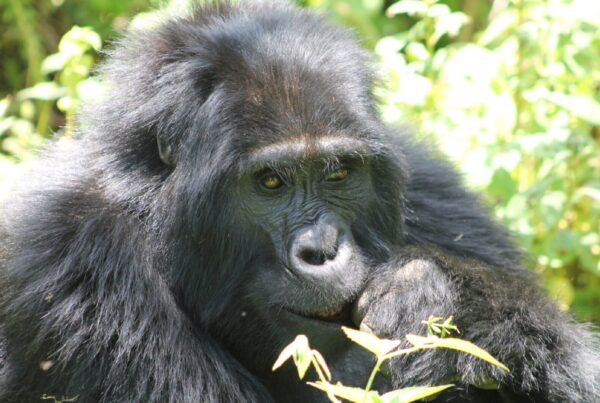
The mountain gorilla population in 2026 has reached a new record high, confirming that the species’ recovery — one of the most remarkable success stories in the history of wildlife conservation — continues to gather momentum. The latest monitoring data from Uganda Wildlife Authority, the Rwanda Development Board, and the Institut Congolais pour la Conservation de la Nature confirms that the combined population of mountain gorillas in Bwindi Impenetrable Forest and the Virunga Massif now exceeds 1,100 individuals — a figure that would have seemed impossibly optimistic to the researchers who, in 1981, counted fewer than 250 individuals remaining in the wild.
How the population is counted
Mountain gorilla population estimates are produced through a combination of methods. Individual gorillas in habituated family groups are known and monitored daily by ranger teams, so the count of habituated individuals is based on direct observation rather than estimation. Non-habituated gorillas — those in family groups that have not undergone the habituation process — are counted through indirect evidence: nest counts, tracks, and the acoustic monitoring of vocalisations. The combination of direct counts and indirect estimation produces a population figure that conservation managers treat as a minimum — the real population is likely somewhat higher because some unhabituated individuals in remote areas of the forest may not be detected during any given census period.
Why the census is difficult
Conducting an accurate census of mountain gorillas in Bwindi Impenetrable Forest is physically demanding work. The forest is dense, the terrain is steep, and the non-habituated gorillas that constitute the uncounted portion of the population actively avoid human presence. Census teams spend weeks in the forest, systematically searching for and recording signs of gorilla activity, building a picture of the population through accumulated data rather than direct observation. The effort required to produce an accurate count is considerable, and the three-country coordination needed to produce a combined census for both the Bwindi and Virunga populations adds logistical complexity.
What drove the population increase
The mountain gorilla population increase to 2026 reflects the cumulative effect of decades of sustained conservation investment. Anti-poaching operations across all three range countries have reduced snare injuries and direct poaching to historically low levels. Veterinary interventions — particularly the active programme of treating injured and sick gorillas maintained by the Mountain Gorilla Veterinary Project — have reduced mortality from treatable conditions. Community development programmes funded in part by gorilla trekking permit revenue have reduced the pressure from agriculture and forest resource extraction on the gorilla habitat. And the political commitment of Uganda, Rwanda, and the DRC to mountain gorilla conservation has been maintained despite the significant challenges that each country faces in managing competing demands on its protected areas.
The role of gorilla trekking in the recovery
The relationship between gorilla trekking tourism and population recovery is direct and well-documented. Trekking permit revenue — $800 per permit in Uganda, $1,500 in Rwanda — funds the Uganda Wildlife Authority budget, which in turn funds ranger salaries, anti-poaching operations, habitat monitoring, veterinary interventions, and community development programmes. The economic incentive created by gorilla tourism has also proven critical in maintaining political support for gorilla conservation at a government level: a species that generates $15 million or more in annual permit revenue is a species that governments have a concrete reason to protect, beyond the moral and environmental arguments that have driven conservation in other contexts.
What the new record means for visitors
For prospective gorilla trekking visitors, the population milestone is good news in several respects. A larger population means a more resilient one — better able to withstand disease outbreaks, habitat pressures, or other disruptions without risk of catastrophic decline. It also means that Uganda Wildlife Authority has been able to habituate additional family groups, increasing the number of permits available and making it somewhat easier to secure a permit for your preferred date and sector. The growth of the population is, in the simplest terms, confirmation that the conservation system underpinning gorilla trekking is working — and that the experience you are booking a permit for is one that will remain available to future generations.
The next conservation milestone
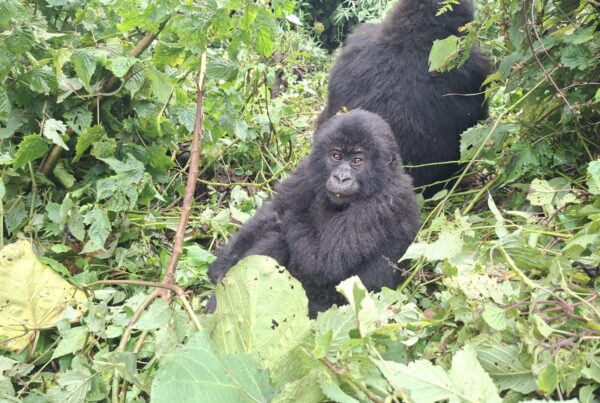
Conservation managers working on mountain gorilla recovery are cautious about declaring victory. The species remains categorised as Endangered on the IUCN Red List, despite the population growth — a reflection of the fact that 1,100 individuals across two isolated populations, in a region with ongoing political instability and significant development pressure, remains a fragile situation. The next milestone that conservation managers are working towards is the establishment of a demographic profile in which the population is growing in both the Bwindi and Virunga populations, with enough juvenile and infant individuals to sustain growth for the next generation. Current data suggests that both populations are on this trajectory, but sustained conservation investment is essential to keep them there.
If the mountain gorilla population milestone has inspired you to visit Bwindi Impenetrable Forest and see the recovery in person, contact our team to arrange your gorilla trekking permit and Uganda safari itinerary. Your permit purchase directly supports the conservation system that has made this milestone possible.
Frequently Asked Questions
The global mountain gorilla population is approximately 1,100 individuals — one of the smallest populations of any great ape. They exist in two separate populations: one in the Virunga Massif spanning Uganda, Rwanda, and DRC; and one in Bwindi Impenetrable Forest (Uganda only). The population has grown from approximately 620 in the 1980s, largely due to tourism-funded conservation.
Uganda Wildlife Authority directs 20% of every gorilla permit fee to communities adjacent to Bwindi and Mgahinga. These funds pay for school construction, healthcare programmes, borehole maintenance, and community microfinance. Permit revenue also funds ranger salaries, anti-poaching patrols, and the research teams that monitor gorilla health daily.
The Batwa (also called Twa) are an indigenous forest people who lived inside Bwindi for thousands of years until it was gazetted as a national park in 1991. Conservation displaced them from their ancestral forest. Gorilla tourism revenue now funds Batwa cultural programmes and livelihoods. The Batwa Cultural Trail at Buhoma sector is run by the Batwa community and is one of the most authentic cultural experiences near Bwindi.
Mountain gorillas are classified as Endangered on the IUCN Red List — one step down from Critically Endangered, which they held until 2018. Their population has grown consistently since the 1980s, making them one of the few great ape populations increasing in number. This recovery is directly attributed to the conservation funding generated by gorilla tourism.
Uganda is home to the mountain gorilla (Gorilla beringei beringei), one of two subspecies of eastern gorilla. They live exclusively in the Virunga volcanic highlands (Uganda/Rwanda/DRC) and Bwindi Impenetrable Forest (Uganda only). Mountain gorillas are the only gorilla subspecies that cannot survive in captivity — every individual you can trek is a wild animal.