How Many Gorillas Are in Uganda? Population Numbers, Conservation Success, and What It Means for Visitors
Uganda is home to approximately half of the world’s remaining mountain gorillas, making it one of the most important countries on Earth for the survival of this critically endangered species. As of the most recent census data from 2018 and updated population estimates for 2026, Uganda’s mountain gorilla population stands at roughly 459 individuals. These extraordinary animals live exclusively in two protected areas in southwestern Uganda: the vast Bwindi Impenetrable National Park and the smaller Mgahinga Gorilla National Park. Understanding these numbers, how they have changed over the decades, what factors have driven population recovery, and what they mean for conservation and tourism provides essential context for anyone planning a gorilla trekking safari in the Pearl of Africa. This comprehensive guide explores every dimension of Uganda’s gorilla population, from scientific counting methods to the economic and ecological significance of these remarkable great apes.
The Global Mountain Gorilla Population in 2026
The total global population of mountain gorillas is estimated at approximately 1,063 individuals as of 2024. This figure represents one of the most remarkable conservation success stories of the past century, a turnaround that few conservationists dared to hope for during the dark days of the 1980s. In the early 1980s, when American primatologist Dian Fossey was working in Rwanda’s Volcanoes National Park, the global mountain gorilla population had dwindled to fewer than 250 individuals. Many experts believed the species was on an irreversible path to extinction. Today, thanks to intensive and sustained conservation efforts spanning more than three decades, the population has more than quadrupled from that critical low point.
Mountain gorillas remain the only great ape species whose population is actively increasing in the wild. While other great apes, including chimpanzees, bonobos, and orangutans, continue to face declining populations due to habitat loss, poaching, and human encroachment, mountain gorillas have bucked the trend. This success is directly attributable to the combination of targeted conservation programmes, habitat protection, anti-poaching enforcement, veterinary care, community engagement, and the regulated tourism industry that funds these essential activities.
Uganda’s Share: Bwindi Impenetrable and Mgahinga
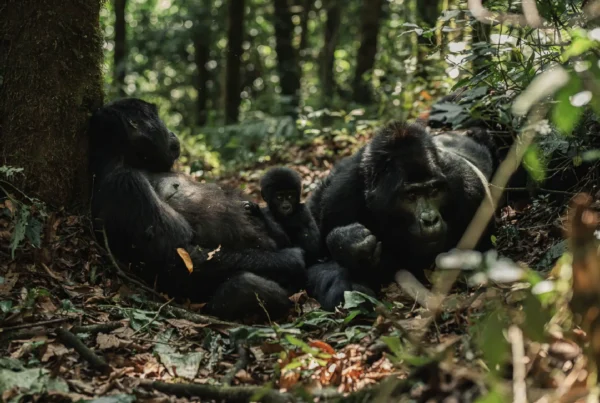
Of the 1,063 mountain gorillas remaining on Earth, Uganda hosts approximately 459 individuals. The vast majority of these, roughly 430, live in Bwindi Impenetrable National Park, a 321-square-kilometre tropical rainforest that is one of the most biodiverse protected areas in Africa. Bwindi’s gorillas are divided among approximately 50 family groups, ranging from small units of five or six individuals to large extended families of 25 or more members.
The remaining Ugandan mountain gorillas live in Mgahinga Gorilla National Park, a smaller protected area of just 34 square kilometres that forms part of the Virunga Massif. Mgahinga is home to the transboundary Nyakagezi gorilla family, which moves between Uganda, Rwanda, and the Democratic Republic of Congo. The gorillas in Bwindi represent a genetically distinct subpopulation from those in the Virunga Massif, making both populations critically important for the species’ long-term genetic diversity and survival.
How Scientists Count Wild Gorillas
Conducting a gorilla census is one of the most demanding field research activities in wildlife science. Teams of experienced trackers, researchers, and veterinarians spend weeks living in the forest, following gorilla trails, recording nest sites, and collecting faecal samples for genetic analysis. Each individual gorilla can be reliably identified by its unique nose print, which differs between individuals in much the same way that human fingerprints differ.
The most recent comprehensive census of Bwindi’s gorilla population was conducted in 2018, and it confirmed a significant increase from the previous census conducted in 2011. The next full census is expected in the near future. In the interim, the Uganda Wildlife Authority maintains continuous monitoring through its network of trackers who follow habituated gorilla families daily and report births, deaths, transfers, and other significant events.
Population Trends Since the 1980s
The trajectory of mountain gorilla numbers since the 1980s tells a powerful story of conservation success against formidable odds. In 1981, the global population was estimated at just 254 individuals. By 1989, it had risen to approximately 320. The 2003 census recorded about 380 individuals, and the 2010 census confirmed 480. The most recent comprehensive count in 2018 found approximately 1,004 individuals across both the Virunga Massif and Bwindi, pushing the species above the symbolic 1,000-individual threshold for the first time in decades.
This steady growth is the direct result of conservation interventions that include rigorous anti-poaching patrols, habitat protection and expansion, veterinary intervention for sick and injured gorillas, community-based conservation programmes, and the development of regulated gorilla trekking tourism. Each of these components plays an essential role, and the removal of any single element would threaten the recovery.
How Tourism Directly Supports Population Growth
Every gorilla permit purchased in Uganda contributes directly to conservation in tangible, measurable ways. The Uganda Wildlife Authority allocates a significant portion of permit revenue to funding anti-poaching patrols, paying ranger salaries, supporting community development projects, and providing veterinary care for the gorillas. In 2023, gorilla trekking tourism generated approximately $20 million in permit revenue alone, with additional millions coming from accommodation, transport, and other services.
The revenue sharing programme ensures that 20 percent of permit fees are returned to communities living around the national parks. These funds support infrastructure projects, schools, health centres, and income-generating activities that reduce the incentive for poaching, illegal logging, and encroachment into gorilla habitat. This economic link between tourism and conservation is the single most important factor in the mountain gorilla’s recovery.
Threats That Could Reverse the Recovery
Despite the encouraging population growth, mountain gorillas remain critically endangered and face ongoing threats. Habitat loss from agricultural expansion and human settlement continues to fragment the forest. Disease transmission from humans poses a constant risk, particularly respiratory infections to which gorillas are highly susceptible. Poaching, while greatly reduced, has not been entirely eliminated. Climate change may alter the montane forest habitat that gorillas depend upon. Political instability in the region could disrupt conservation efforts. The recovery is real and significant, but it is also fragile and reversible without continued commitment and funding.
Final Thoughts
Uganda’s 459 mountain gorillas represent far more than a number. They are a living testament to what dedicated conservation can achieve when science, politics, community engagement, and sustainable tourism align. When you purchase a gorilla permit and trek into the misty forests of Bwindi or Mgahinga, you are not merely observing wildlife; you are actively participating in one of the greatest conservation success stories of our time. The number may seem small, but every individual gorilla matters, and every visitor who respects the forest and follows the rules plays a direct, meaningful role in ensuring that this number continues to grow for generations to come.