Updated
Uganda is co-hosting the 2027 Africa Cup of Nations alongside Kenya and Tanzania. The tournament runs from 19 June to 17 July 2027 and brings tens of thousands of football supporters to East Africa for the first time in AFCON history. If you are already travelling to Uganda for the football, Bwindi Impenetrable Forest is a realistic addition — and the gorilla permits will fill faster than in any previous year.
AFCON 2027 Uganda: How to Combine the Africa Cup of Nations with Gorilla Trekking
AFCON 2027: What Uganda Is Hosting
The 2027 TotalEnergies CAF Africa Cup of Nations — officially titled PAMOJA 2027, with PAMOJA meaning “together” in Swahili — was awarded to the East Africa joint bid on 27 September 2023. It is the first time in AFCON history that three countries share hosting duties. Uganda holds matches in Kampala, which will host group stage fixtures and likely knockout rounds. The Mandela National Stadium (Namboole), located on the outskirts of Kampala, is Uganda’s primary AFCON venue.
For context on scale: AFCON typically draws crowds of 40,000 to 80,000 travelling supporters in addition to host-nation fans. A significant proportion of those supporters come from across Africa and the diaspora — many travelling to East Africa for the first time. The tournament period, June and July, falls in Uganda’s peak gorilla trekking season. Permits are already limited at the best of times. The combination of peak season demand and AFCON tourist traffic makes early booking essential.
Can You Actually Do Both?
Yes, and the logistics work better than most people expect. Kampala to Bwindi Impenetrable Forest takes between 8 and 9 hours by road, or approximately 55 minutes by charter flight from Entebbe International Airport to Kihihi Airstrip. Group stage matches typically take place every two to three days, which means a window of two or three free days — enough to fly in, trek, and fly back to Kampala without missing fixtures.
The practical combination that works best: arrive in Uganda a few days before your first match, fly straight to Bwindi, trek on day one or two, fly back to Kampala for the match. Alternatively, build the gorilla trek into the end of your trip, after Uganda’s AFCON campaign has concluded or after the group stage is complete. Either way, charter flights on the Entebbe–Kihihi route make the timeline manageable — the road option requires an overnight, but it is very doable if budget is the priority.
| Travel Option | Kampala → Bwindi | Cost Estimate |
|---|---|---|
| Charter flight (Entebbe to Kihihi) | ~55 minutes | $250–$350 per person (shared charter) |
| Private road transfer | 8–9 hours | $150–$200 per vehicle |
| Scheduled road (self-drive) | 8–9 hours | Car hire from ~$70/day |
The Gorilla Permit Situation During AFCON 2027
Uganda Wildlife Authority issues a fixed number of gorilla trekking permits per day. Each habituated gorilla family in Bwindi and Mgahinga can receive a maximum of eight visitors per day. With approximately 23 habituated families currently spread across four sectors — Buhoma, Ruhija, Rushaga, and Nkuringo in Bwindi, plus Mgahinga — the daily maximum is around 184 permits across all families. In peak season, most of those permits are taken weeks or months in advance.
June and July are already the busiest months of the year for gorilla trekking. AFCON 2027 will bring an additional wave of visitors who either planned to combine football and safari from the start, or who decided to extend their trip once they arrived. Permit availability during this specific window will be tighter than any previous peak season. Our strong recommendation: if you are attending AFCON matches in Uganda and want to trek, book your gorilla permit before you book your AFCON tickets. The permit is the harder thing to secure.
The standard Uganda gorilla trekking permit costs $800 per person (foreign non-residents). The Gorilla Habituation Experience — four hours with a semi-wild family in Rushaga sector — costs $1,800 per person and is available in groups of maximum four. Both are set by Uganda Wildlife Authority and are the same price regardless of operator.
Suggested AFCON + Gorilla Trekking Itineraries
5 Days: AFCON Match + Quick Gorilla Trek (Fly-In)
- Day 1: Arrive Entebbe, transfer to Kampala — check in, city orientation
- Day 2: Morning charter flight Entebbe → Kihihi (Bwindi). Afternoon at lodge.
- Day 3: Gorilla trekking — Buhoma or Bwindi sector of choice. Celebration evening.
- Day 4: Morning charter Kihihi → Entebbe. Afternoon rest in Kampala or Entebbe.
- Day 5: AFCON match at Mandela National Stadium (Namboole), Kampala.
9 Days: Full AFCON Group Stage + Deep Bwindi
- Days 1–2: Arrive Entebbe. Kampala city, football fan zones, first AFCON match.
- Day 3: Drive or fly south to Bwindi (road is 8–9 hours — overnight stopover in Kabale optional)
- Days 4–5: Gorilla trekking and optional Gorilla Habituation Experience. Bwindi forest walks.
- Day 6: Return to Kampala (charter flight recommended).
- Days 7–8: Second and third AFCON group stage matches. Fan zones, Kampala nightlife.
- Day 9: Depart Entebbe.
12 Days: AFCON + Gorilla + Queen Elizabeth Circuit
- Days 1–3: Kampala — AFCON matches, fan experience, Kampala city highlights
- Days 4–5: Queen Elizabeth National Park — big game game drives, boat safari on Kazinga Channel
- Days 6–8: Bwindi Impenetrable Forest — gorilla trekking, optional second day habituation experience
- Days 9–10: Lake Bunyonyi — decompression, kayaking, community visit
- Days 11–12: Return to Kampala for knockout round fixtures, depart Entebbe
Uganda for the First Time: What Football Visitors Should Know
Uganda is a straightforward country to visit. English is the official language, used in government, education, and commerce. The road network between Kampala and the main safari destinations has improved substantially over the past decade. Most nationalities can obtain a visa on arrival at Entebbe or purchase an East Africa Tourist Visa in advance, which covers Uganda, Kenya, and Tanzania for a single fee — useful if you plan to follow the tournament across all three host countries.
Kampala itself is worth a day or two beyond the matches. The city is hilly, market-driven, and genuinely lively. Owino Market, the Kasubi Royal Tombs (a UNESCO World Heritage Site), the Uganda Museum, and the Buganda Kingdom’s Kabaka’s Palace are all within reach of the city centre. The food scene is stronger than most visitors expect — rolex (egg and vegetable rolled in a chapati, available at every street corner for under a dollar), Ethiopian and Somali restaurants around Old Kampala, and a growing range of mid-market and upmarket restaurants in Kololo and Nakasero. For AFCON visitors looking for fan zones and street atmosphere, Kampala will deliver.
Booking During AFCON Period
Two things have a fixed capacity and will sell out: gorilla permits and accommodation near the gorilla trekking zones. Everything else — charter flights, ground transfers, lodge bookings in Kampala — is more elastic. Our priority advice for AFCON visitors who want to trek:
- Secure your gorilla permit first. We can book it on your behalf as part of a tour or as a standalone permit service. Once it is secured, the rest of your plan can flex around it.
- Book Bwindi lodge accommodation at the same time. The lodges closest to the trekking sectors have between 8 and 20 rooms. They fill for the June–July peak before AFCON was ever in the picture. With AFCON adding demand, expect them to fill earlier than any previous year.
- Build in a buffer day. Gorilla trekking is weather and forest dependent. Trek days rarely fall through entirely, but starting times and sector assignments can shift. A buffer day between your trek and your return flight to Kampala means a missed match is off the table.
- Check the AFCON match schedule once it is confirmed. Group stage schedules are typically released several months before the tournament. Align your gorilla booking to the gap between your confirmed fixtures.
The Gorilla Trekking Itself
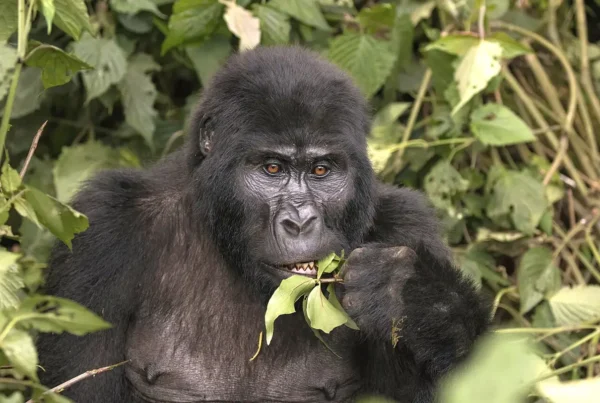
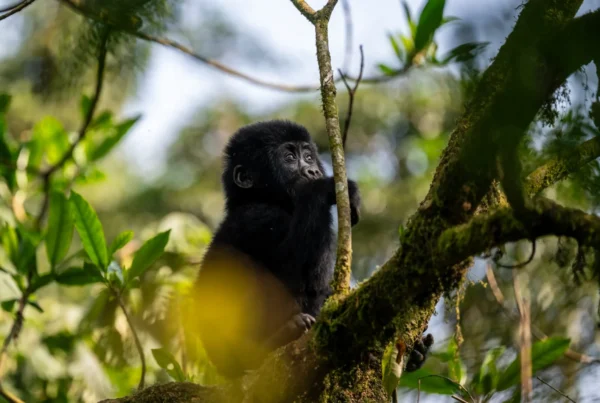
For AFCON visitors who have not considered gorilla trekking before: it is the experience that most people describe as the one that changed them. Bwindi Impenetrable Forest is one of the most biodiverse places on earth — a montane rainforest in the Albertine Rift that has remained intact since the last ice age. The mountain gorillas that live here — a population of just over 1,100 individuals globally — are the product of forty years of habituation work and the active conservation model that gorilla tourism finances.
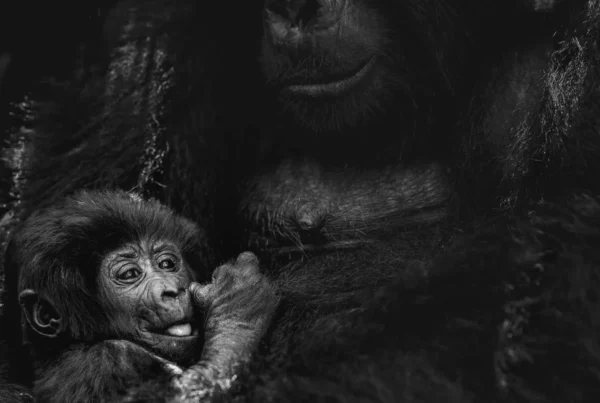
The trek itself takes anywhere from 45 minutes to 5 hours depending on where the gorilla family has moved. Your ranger team tracks them each morning before the group departs, so by the time you enter the forest, the family’s general location is known. When you reach them, you have one hour — sixty minutes at close range with a mountain gorilla family going about its morning. The silverback, the infants, the juveniles chasing each other through the undergrowth, the females nursing. Most people describe it as the most concentrated hour of their lives. It is not something you book as a checkbox. It changes how you think about the rest of the natural world.
The $800 permit is the only way in. There are no alternatives, no budget options, no viewing platforms. The permit is the experience. After an AFCON tournament in the same country, when the football is behind you and the landscape is completely different and the forest is completely silent except for the sounds of movement in the undergrowth — it is a specific kind of contrast that stays with you.
Book Your AFCON + Gorilla Package
We handle the gorilla permit booking, lodge accommodation in Bwindi, charter flights, and ground logistics. You handle your AFCON tickets. We can build the safari component around your confirmed match dates once you have them, or we can help you structure the full trip from arrival in Entebbe to final departure. Message us on WhatsApp at +256 716 068 279 or email info@ugandagorillatrekking.org with your match dates and we will build the itinerary around them.
Permits for the AFCON period will not last. Book early.
Frequently Asked Questions
Yes. Uganda is co-hosting the 2027 TotalEnergies CAF Africa Cup of Nations (PAMOJA 2027) alongside Kenya and Tanzania. The tournament runs from 19 June to 17 July 2027. Uganda’s main venue is Mandela National Stadium (Namboole) in Kampala, which hosts group stage and knockout fixtures. It is the first AFCON co-hosted by three nations.
Yes — and this combination works logistically. Kampala (AFCON matches) to Bwindi by charter flight takes 55 minutes; by road, 8–9 hours. Between match days, a 3-night Bwindi insert is realistic. Gorilla permits during June–July 2027 will sell out earlier than any previous year due to AFCON — book 6+ months ahead.
Uganda Wildlife Authority begins accepting permit bookings 12 months ahead. For AFCON 2027 (June–July), bookings open from mid-2026. Given the exceptional demand expected during the tournament period, secure your gorilla permit as soon as possible — peak season combined with AFCON traffic will make June–July 2027 permits extremely scarce.
Uganda’s Mandela National Stadium (Namboole) will host group stage fixtures and potentially knockout rounds. The full match schedule — including specific groups and dates assigned to each stadium — will be confirmed by CAF ahead of the tournament. Monitor the official CAF website at cafonline.com for schedule updates.
Uganda is home to the mountain gorilla (Gorilla beringei beringei), one of two subspecies of eastern gorilla. They live exclusively in the Virunga volcanic highlands (Uganda/Rwanda/DRC) and Bwindi Impenetrable Forest (Uganda only). Mountain gorillas are the only gorilla subspecies that cannot survive in captivity — every individual you can trek is a wild animal.