

Updated
Hagenia abyssinica is the gnarled, moss-draped tree that defines the high forest of the Virunga volcanoes, the mountain gorilla habitat Dian Fossey made famous and that visitors walk through in Mgahinga and Rwanda’s Volcanoes National Park. It grows mainly between about 2,400 and 3,600 m. With the giant St John’s wort, Hypericum revolutum, it forms an open woodland whose light, lush understorey of herbs and vines is one of the richest feeding grounds mountain gorillas have. This guide explains how to recognise the tree, why its woodland matters to gorillas, and where you can see it on a trip.
Recognising Hagenia
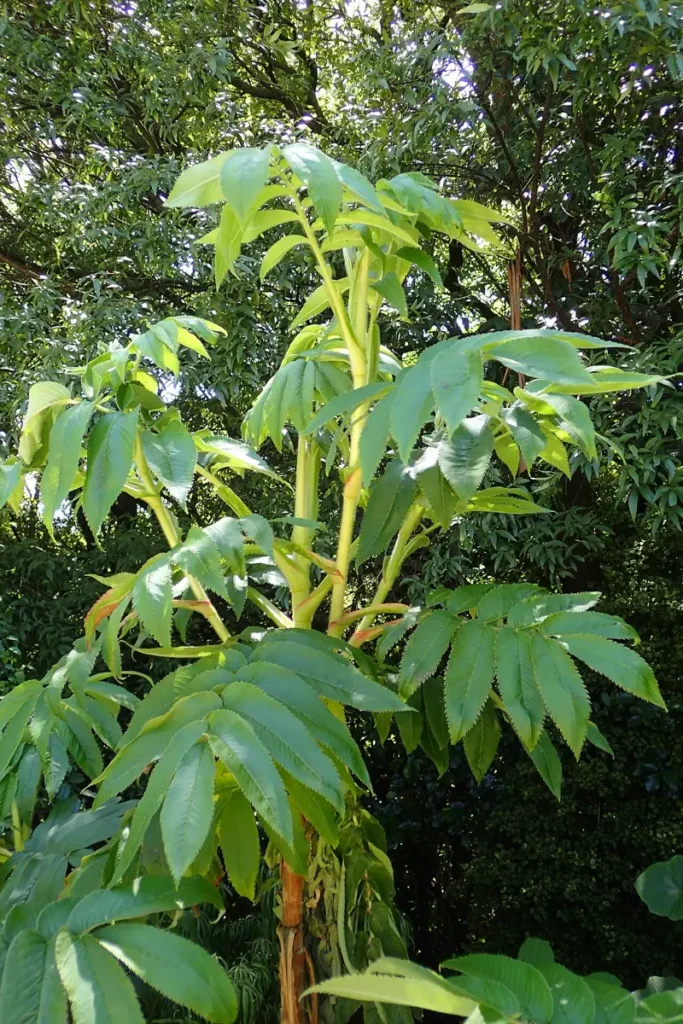
Hagenia is a surprising member of the rose family. It is a broad, spreading tree, usually 10–20 m tall, with a short, often leaning trunk and thick, twisting branches. The bark is reddish-brown and flakes off in papery strips. Its leaves are large and compound, with toothed leaflets that are silky and hairy underneath and that gather in tufts at the ends of the branches. In the Virungas almost every limb is wrapped in moss, ferns and pale grey beard lichen, which gives Hagenia woodland its dreamlike, misty look in photographs.
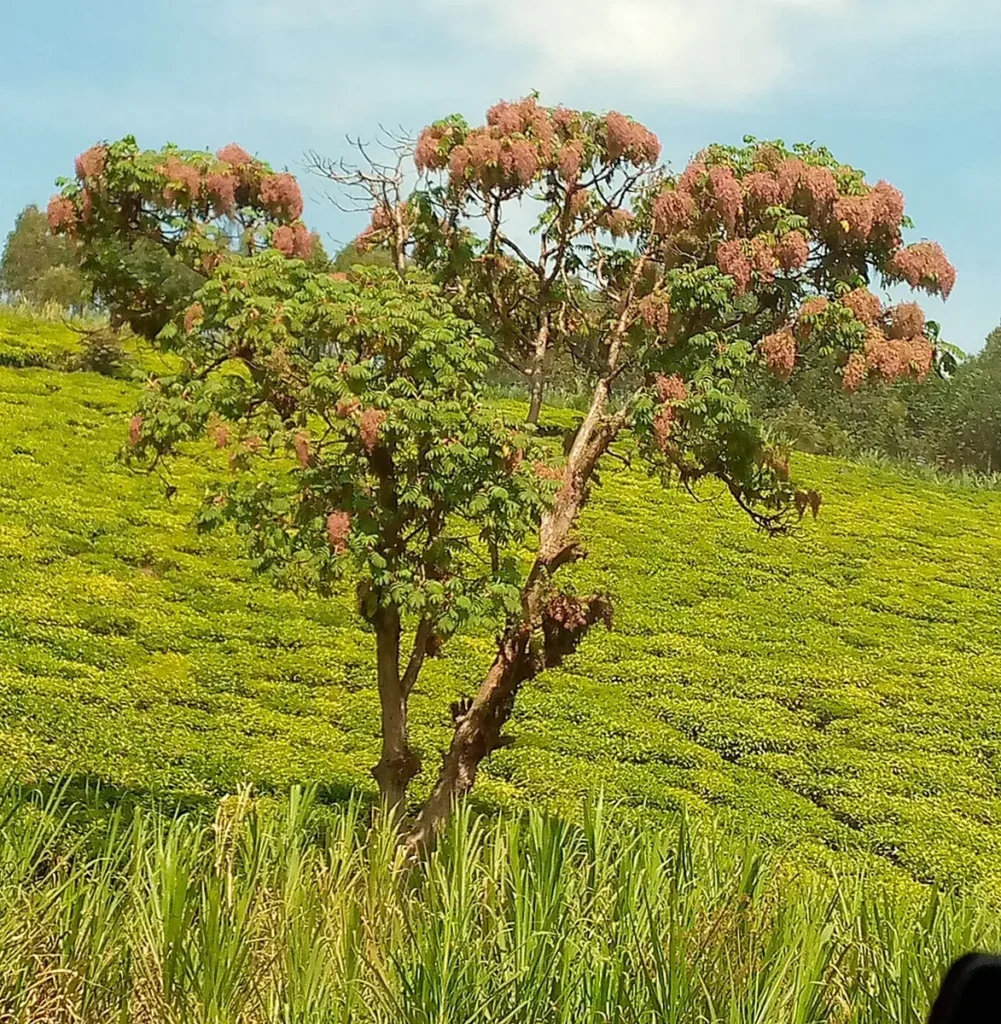
Male and female flowers grow on separate trees, in large hanging clusters up to half a metre long. Female clusters ripen to a rusty red or pinkish colour and are the easiest way to identify the tree from a distance. Male clusters are paler and more yellowish. The tree’s local and trade names include kosso, its Ethiopian name, and African redwood, after the colour of its timber.
The Hagenia–Hypericum woodland
On the Virunga volcanoes, vegetation changes with altitude in clear bands. Farmland stops abruptly at the park boundary, and above it come mixed montane forest and a belt of bamboo, home to golden monkeys. Next is the Hagenia–Hypericum woodland, then giant heather and, near the summits, the afro-alpine zone of giant lobelias and groundsels. The Hypericum here is nothing like a garden herb but a small tree with bright yellow, cup-shaped flowers, and together with Hagenia it forms a loose, open canopy rather than a closed forest.
That openness is what matters to gorillas. Because light reaches the ground, the woodland floor is a tangle of tall herbs, nettles, thistles, wild celery and clinging bedstraw (Galium) vines, all foods that mountain gorillas eat in large quantities.
Long-term research at Karisoke, the station Dian Fossey founded in 1967 in the saddle between Mount Karisimbi and Mount Bisoke, showed that Virunga gorillas spend much of their time feeding in this zone and the herb-rich areas around it. Gorillas also strip and eat the bark of some trees and shrubs. Read more about the bamboo zone just below and its role in the gorillas’ seasonal diet.
Hagenia in Bwindi
Bwindi is a different forest. It lies mostly between 1,160 and 2,607 m, below most of the Hagenia belt, and it is a dense, closed-canopy forest rich in fruit trees rather than open woodland. Hagenia is not one of its characteristic trees. On a Bwindi trek you are far more likely to notice tree ferns, figs and huge mahogany-family trees than the drooping red flower clusters of Hagenia.
That difference in habitat is one reason Bwindi’s gorillas eat much more fruit than their Virunga cousins and often range further each day. Our guide to the fig trees of Bwindi explains the fruit side of that story.
Medicinal use and threats
Hagenia has a long history as a medicine across the highlands of East Africa and Ethiopia. Dried female flowers, known as kosso, were used to expel tapeworms and were exported to Europe as a remedy in the nineteenth century. The treatment is toxic in high doses and has been replaced by modern drugs. The tree’s dense, attractive wood has been prized for furniture and construction, and outside protected areas Hagenia has been heavily logged in many places. It regenerates poorly in dense shade, so it relies on open, undisturbed areas to replace old trees.
Inside the Virunga parks, the biggest threat for decades was clearance for farming, which removed a large part of the Rwandan side of the park between the 1950s and the 1970s. Today the woodland is fully protected, but it is under pressure from bark-stripping and browsing by elephants and buffalo and from occasional wood cutting near the boundary. Each trek permit helps pay for the rangers who patrol it.
Where to see Hagenia woodland
In Uganda, the place to see Hagenia is Mgahinga Gorilla National Park, Uganda’s corner of the Virungas. Gorilla treks and the volcano hikes up Muhabura, Gahinga and Sabyinyo all climb through the vegetation zones, and the golden monkey trek takes you into the bamboo just below the Hagenia belt. Across the border in Rwanda, many gorilla treks in Volcanoes National Park end in Hagenia–Hypericum woodland, and the hike to Dian Fossey’s grave at Karisoke passes through classic stands of moss-covered Hagenia.
The best light for photographing the woodland is soft and overcast, which the Virungas supply in abundance. Look for the rusty flower clusters, the peeling red bark under the moss, and the bright yellow Hypericum flowers.
Frequently asked questions
A large, spreading tree of the rose family that grows in the highlands of East Africa and Ethiopia, mostly between 2,400 and 3,600 m. It dominates the high woodland of the Virunga volcanoes.
Not much. Hagenia matters to gorillas because its open woodland lets light reach the ground, producing the herbs, nettles, thistles, wild celery and Galium vines they eat in large quantities.
In Mgahinga Gorilla National Park, on gorilla treks and volcano hikes. Bwindi lies mostly below the Hagenia belt, so the tree is not typical there.
The Ethiopian name for Hagenia and its dried female flowers, which were traditionally used to treat tapeworm.










