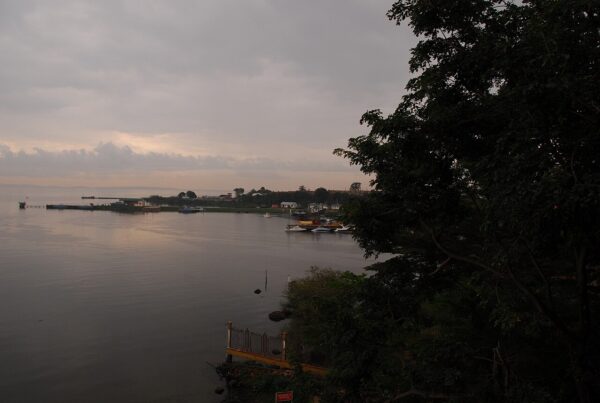
The road from Kampala to Bwindi is not merely a means of getting somewhere—it is itself a journey through the layered story of Uganda. You leave the capital’s traffic-clogged streets, climb through the rolling hills of Ankole cattle country, pass tea estates and roadside markets, ascend into the cloud-wrapped highlands of Kigezi, and arrive, eight to ten hours later, at the edge of one of Africa’s oldest forests. For travellers willing to give it time, the overland route is one of the most rewarding parts of the entire trip.
The route overview
The main road from Kampala to Bwindi runs approximately 500 kilometres and takes eight to ten hours depending on road conditions, the number of stops, and whether you travel via Mbarara or through the southwestern corridor via Masaka and Kabale. The most common route goes via the Kampala–Masaka highway, then south through Mbarara to Kabale, and finally on to either the Buhoma sector (northern access, via Ruhija) or the Rushaga/Nkuringo sectors (southern access). A second, slightly longer but very scenic route passes through Ishaka and approaches from the west. Your safari operator will advise which route based on your specific sector booking and road conditions at the time of travel.
How long does it take?
Expect eight to ten hours of driving on a good day, including meal and comfort stops. The road between Kampala and Mbarara (about 270 kilometres) is the country’s best—a dual carriageway for much of its length, smooth and fast. Beyond Mbarara the road quality becomes more variable. The final stretch from Kabale to Bwindi is the most demanding—winding mountain roads with steep drops, narrow sections, and occasional road works. During the rainy season (March–May and October–November) this final section can be slow due to erosion and mudslides. A good safari driver will factor all of this into the schedule and will not rush the mountain section.
Private transfer vs shared shuttle
Most gorilla trekking packages include a private vehicle and driver—a 4WD Land Cruiser or similar—for the entire journey. This is the standard and strongly recommended option. It gives you flexibility on stops, comfort for the long drive, and security for your luggage. The driver doubles as a guide, often pointing out wildlife, explaining what you see in towns, and handling the logistics of fuel, tolls, and any unexpected road situations. Shared shuttles are available for budget travellers but are less comfortable and follow fixed schedules with limited stops. For the Bwindi journey specifically—long, mountain-heavy, and logistically involved—private transfer is worth every dollar of the price difference.
What to expect: the equator crossing
About 75 kilometres south of Kampala, at a place called Kayabwe on the Kampala–Masaka road, the highway crosses the equator. There is a small monument—two large rings painted in local colours—and a cluster of stalls selling crafts, cold drinks, and the obligatory equator certificate. Nearly every vehicle heading south stops here. It is genuinely worth five or ten minutes: a photograph astride the zero-latitude line, a cold water purchase, and perhaps a demonstration of the Coriolis effect performed by a vendor pouring water into a funnel on each side of the line (theatrically convincing if not entirely scientific). The equator crossing is one of the great small rituals of East African overland travel.
The Ankole heartland
South of the equator the landscape opens into the rolling grasslands of Ankole—cattle country. The signature sight is the Ankole longhorn, a breed found nowhere else in the world, with horns so wide and heavy that the animals carry their heads with a dignified, unhurried tilt. They graze in small herds across the hills, tended by herdsmen in rubber boots and bright gomesi cloth. The towns along this stretch—Lyantonde, Mbarara—are busy regional centres with roadside restaurants serving plates of matoke and groundnut stew, cold Nile beer, and fresh passion fruit juice. Stopping for lunch in Mbarara breaks the journey perfectly and gives you a genuine town-level experience of Ugandan life rather than the filtered version at a lodge.
Lake Mburo: a detour worth considering
If your itinerary allows an extra day, a one-night stop at Lake Mburo National Park—located just 30 kilometres east of the Mbarara junction—breaks the drive beautifully. Lake Mburo is the smallest of Uganda’s savannah parks but one of the most accessible from Kampala, and it offers something Bwindi cannot: zebra, impala, topi, eland, and hippo in open grassland. An evening game drive at Lake Mburo followed by a morning boat trip on the lake sets the tone for a wildlife-focused trip before you enter the forest world of Bwindi. The 90-minute detour back to the main Kabale road is trivial compared to the experience gained.
Kabale and the gateway to the highlands
Kabale is the last significant town before Bwindi—a bustling highland market town at 1,850 metres above sea level, surrounded by terraced hills so steep they look almost impossible to farm. The agriculture here is intensive: beans, sorghum, sweet potatoes, and Irish potatoes cover every horizontal surface from valley floor to ridge top. Kabale is a good place for a fuel stop, a bank visit, or a late lunch if the schedule allows. The town is also the jumping-off point for Lake Bunyonyi—one of Uganda’s most beautiful lakes—which makes for an excellent one or two night pre- or post-trek extension. From Kabale it is another 45 minutes to two hours to reach your specific sector of Bwindi, depending on road conditions.
The mountain road to Bwindi
The final section of the journey—from Kabale into the forest—is the most dramatic. The road climbs sharply from Kabale, winding through terraced farmland before entering patches of montane forest. Views across the Kigezi highlands open and close as the road turns. Clouds roll in from the Congo, and the temperature drops noticeably. On clear days you can see the Virunga volcanoes rising to the south—Muhavura, Mgahinga, and beyond the border into Rwanda and DRC. At a certain point the cultivation thins and the forest takes over: the road tunnels through overhanging trees, the light turns green and fragmented, and you feel the transition from the human world into something older and wilder. Arriving at Bwindi in late afternoon light, with mist in the valleys, is an arrival worth every hour of the drive.
Tips for the overland journey
Start early—leaving Kampala by 7 a.m. means arriving at Bwindi in daylight with time to settle in. Carry snacks and water for the vehicle; roadside food is plentiful but timing stops can be tricky on a schedule. Motion-sickness tablets are useful for the mountain section if you are prone. Bring a light layer or fleece for the highlands—Bwindi’s elevation means temperatures drop fast after sunset. A good audiobook or podcast for the flat Ankole section saves energy you will want for the mountains. And tell your driver to stop whenever something interesting appears: the drive is half the adventure.
- Road transfer from Kampala to Bwindi: what to expect on the drive west
- The Road to Bwindi: What You See on the 8-Hour Drive From Kampala
- The Kampala to Bwindi Road: Exactly What You Drive Through 2027
- The road from Kabale to Bwindi: what to expect on Uganda’s most scenic drive
- Distance from Kampala to Bwindi: Drive Times and All Routes
- Uganda Road Conditions: What to Expect on Safari Drives
- Best Stopovers on the Drive from Kampala to Bwindi: Where to Stop and What to See
- Entebbe to Bwindi by Road: The Scenic 8-Hour Drive Guide 2027
- Kampala to Bwindi by Private Car: What the Drive Really Looks Like 2027
- Mbarara Stopover: The Best Town to Break the Kampala to Bwindi Drive 2027