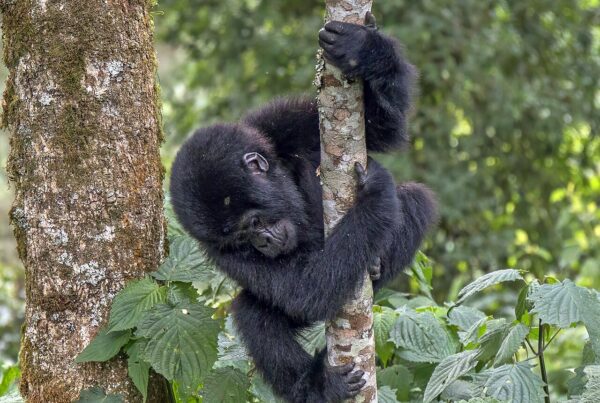
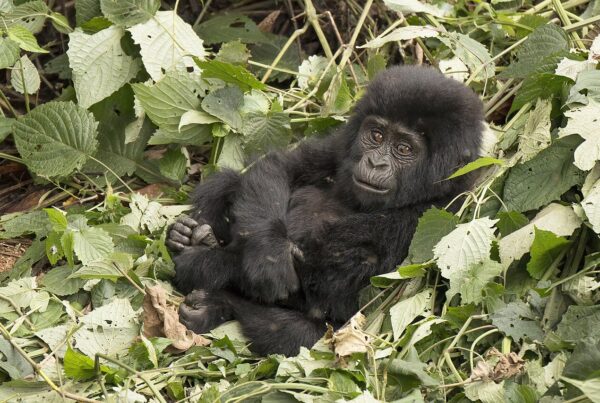
Dian Fossey established what she called the Digit Fund in 1978, shortly after the killing of the young silverback whose name it bore. The fund was a direct response — urgent, personal, grief-driven — to the poaching that had taken the animal she had known since his infancy. She could not, at that moment, have imagined that this small memorial campaign would grow into one of the world’s most respected and scientifically sophisticated wildlife conservation organisations, still operating nearly five decades later from bases in Rwanda, the DRC, Uganda, and the United States, and still bearing her name in the form she could not have claimed for herself while alive.
From Digit Fund to Dian Fossey Gorilla Fund International
The Digit Fund operated primarily as an anti-poaching fundraising vehicle during the final years of Fossey’s life, providing resources for the patrols and snare removal operations that she organised from Karisoke. After her murder in December 1985, the Fund was renamed the Dian Fossey Gorilla Fund International in her memory and reorganised under a professional board of directors based in Atlanta, Georgia — a transition from personal campaign to institutional organisation that fundamentally changed its character and capacity.
The Rwandan genocide of 1994 tested the organisation at an existential level. With Karisoke evacuated and the Virunga Mountains inaccessible during the height of the killing and displacement crisis, the Fund’s ability to operate in the field was suspended. The post-genocide reorganisation of Rwandan society, the eventual stabilisation of the country under Paul Kagame’s RPF government, and the extraordinary recovery of Rwanda as a functioning state created the conditions in which the Fund was able to return to the field and eventually to rebuild Karisoke and establish the Ellen DeGeneres Campus — a purpose-built conservation and research facility opened in 2022 — in Rwanda’s Musanze district.
The scientific programme
The Fossey Fund’s research programme is the longest continuously running field study of wild gorillas in the world. The database accumulated at Karisoke since 1967 — daily observation records for multiple habituated families across more than fifty years — is a scientific resource of extraordinary value that no other study of any primate population can match for depth and continuity. It contains complete birth and death records, kinship data, behavioural observations, and health assessments for hundreds of individual gorillas across multiple generations.
Current research focuses on gorilla social dynamics, disease ecology, the effects of habituation on gorilla behaviour and physiology, and the monitoring of population trends in both the Virunga and Grauer’s gorilla populations. The Fund employs Rwandan and Congolese scientists in senior research roles — a deliberate policy of scientific capacity building that reflects a commitment to the long-term sustainability of research that depends on local expertise and institutional knowledge.
The veterinary programme, which monitors the health of habituated gorilla families and provides emergency intervention when disease or injury requires it, is a direct operational legacy of the health monitoring work that Fossey initiated at Karisoke. The Fund’s veterinary team has responded to respiratory disease outbreaks, mange infestations, snare injuries, and other health emergencies across multiple decades of work, and has developed protocols for gorilla health intervention that are now used by conservation organisations across the species’ range.
The community programme: Fossey’s blind spot and its remedy
One of the most significant institutional evolutions in the Fund’s history has been its development of community engagement as a core programme component — an approach that directly reverses the adversarial relationship with local communities that characterised Fossey’s personal methodology. Fossey’s hostility to community interests and her sometimes violent treatment of local people created lasting damage to the relationship between the park institution and adjacent communities that subsequent operators spent decades repairing.
The Fund’s community programme now includes agricultural support, women’s empowerment initiatives, school programmes, and the direct engagement of community members as conservation partners rather than suspected adversaries. This approach reflects a sophisticated understanding that sustainable gorilla conservation requires communities adjacent to gorilla habitat to have tangible reasons to value and protect that habitat — reasons that go beyond the abstract conservation arguments that Fossey made and that were insufficient to prevent the poaching she spent her life fighting.
What the Fund means for Bwindi visitors
The Dian Fossey Gorilla Fund’s primary operational focus has historically been the Virunga population rather than Bwindi, which is geographically distinct and is managed primarily through the Uganda Wildlife Authority’s systems. But the Fund’s scientific and methodological contributions — the habituation protocols, the health monitoring frameworks, the community engagement models — have influenced gorilla conservation practice in Bwindi as well as in the Virungas, as knowledge transfers between organisations working in the same species’ conservation community.
The Fund is a direct channel for visitor donations. For gorilla trekkers who want to extend their financial contribution beyond the permit fee, a donation to the Fossey Fund — designated for the specific programmes that resonate with their experience, whether research, community development, or veterinary care — adds a direct conservation contribution to the enormous value already represented by the permit purchase itself. The Fund is a registered charity in multiple countries and issues tax-acknowledged donation receipts appropriate for the donor’s jurisdiction.
- Dian Fossey and Mountain Gorillas: Her Legacy in Conservation
- How Community-Based Conservation in Uganda Became a Global Model
- Dian Fossey and the mountain gorillas: legacy, controversy, and Karisoke
- Dian Fossey’s legacy: how one researcher changed everything for mountain gorillas
- Ian Redmond: the primatologist who dedicated his life to Dian Fossey’s gorillas
- The history of gorilla research at Karisoke: from Dian Fossey to the present day
- Uganda Gorilla Trekking Cancellation and Refund Policy
- Gorilla Trekking Refund Policy: What You Should Know Before You Book
- Uganda Just Became the World’s Top Wildlife Destination: Here Is Why
- What If the Gorillas Are Not Found on My Trek? Refund or Retry Explained