Jane Goodall arrived at Gombe Stream in Tanzania in 1960 with no formal scientific degree, a notebook, and the permission of a sceptical scientific establishment who expected her to fail. What she produced over the following decades—fifty years of continuous field research, the discovery that chimpanzees make and use tools, a reframing of the boundary between human and non-human intelligence—transformed not just primatology but the entire field of conservation biology. Her influence extends far beyond chimpanzees and far beyond Gombe. It reaches directly into the forests of Uganda, including Bwindi, through the movements and methods and moral frameworks she helped establish.
The Gombe breakthrough
When Goodall observed David Greybeard—a chimpanzee she had individually named and followed for months—using a grass stem to extract termites from a mound in October 1960, she did something that required courage: she sent a telegram to her mentor Louis Leakey reporting the observation. Leakey’s famous response was: “Now we must redefine tool, redefine man, or accept chimpanzees as humans.” Tool use had been considered uniquely human. Goodall’s observation shattered that assumption, and with it the comfortable distinction that had allowed humans to treat non-human animals as categorically different from themselves—and therefore expendable. The implications for conservation were immediate and far-reaching: if chimpanzees make tools, they are not merely animals. They are beings. And beings have claims on our moral attention that animals do not.
Individual naming and long-term study
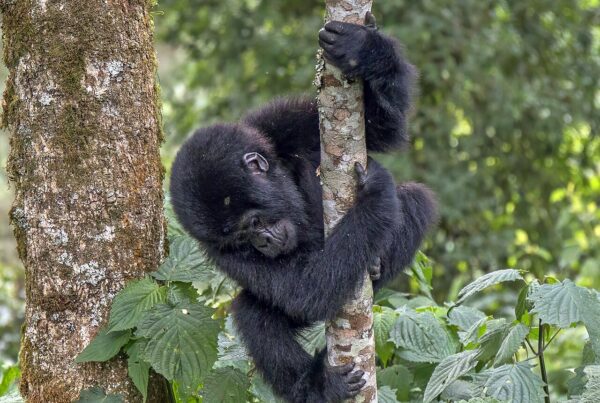
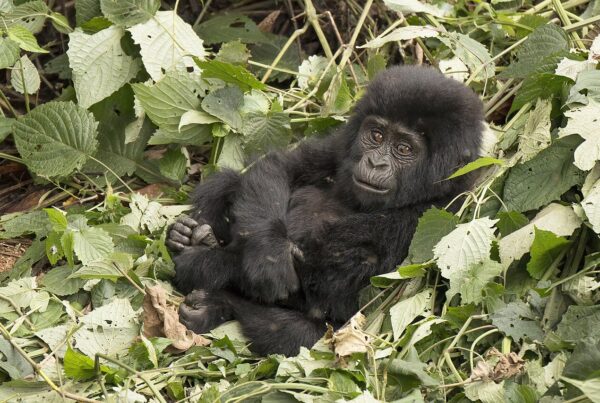
Goodall was criticised by the scientific establishment of the 1960s for naming her study subjects rather than numbering them—a practice considered sentimental and unscientific. She ignored the criticism. Naming David Greybeard, Flo, Fifi, and the other Gombe chimpanzees had practical as well as philosophical consequences. It enabled the kind of long-term individual life history tracking—birth, development, social relationships, illness, death—that produced the most significant findings of the Gombe research. Individual naming and long-term habituation are now standard practice across primate research and wildlife conservation, including the mountain gorilla research at Bwindi that directly informs trekking operations. Every gorilla family in Bwindi has individual names for its members; every silverback, every female, every juvenile is known as an individual. This individual recognition is Goodall’s methodological legacy as much as Fossey’s.
The Jane Goodall Institute and its Uganda work
In 1977 Goodall founded the Jane Goodall Institute (JGI), an international conservation and research organisation. In subsequent decades the JGI expanded its work beyond Tanzania into multiple African countries, including Uganda. JGI Uganda has worked in the Albertine Rift region—the same mountain chain that contains Bwindi—on community-based conservation programmes, environmental education, and chimpanzee habitat protection in forests outside the formal national park network. The TACARE programme (Take Care), developed initially by JGI in Tanzania and subsequently adopted across East Africa, works with communities adjacent to chimp habitats to develop sustainable livelihoods that reduce pressure on forest resources. The model—conservation through community benefit rather than exclusion—is the same model that underlies gorilla tourism at Bwindi.
Roots and Shoots: the global youth movement
Among Goodall’s most enduring legacies is Roots and Shoots—a global environmental and humanitarian education programme she founded in 1991 in Tanzania with a group of twelve high school students. Roots and Shoots now operates in over 60 countries with thousands of youth groups implementing local conservation and community service projects. In Uganda, Roots and Shoots groups operate in schools near national parks, working on tree planting, wildlife education, and community clean-up programmes. The programme is explicitly built on Goodall’s conviction that young people are the primary agents of conservation change—that the natural world will be saved not by governments or international organisations alone but by young people who grow up understanding that their choices matter. Several lodges near Bwindi have connections to local Roots and Shoots groups and can arrange visits or encounters for interested travellers.
The connection to mountain gorilla conservation
Goodall’s methodological framework—habituation, individual identification, long-term study, community engagement—was adopted and adapted by Dian Fossey in her mountain gorilla work, which Goodall’s mentor Louis Leakey also initiated. The three great primatologists Leakey sent into the field—Goodall (chimpanzees, Tanzania), Fossey (mountain gorillas, Rwanda/DRC), and Biruté Galdikas (orangutans, Borneo)—became known as “Leakey’s Angels” and collectively established the template for long-term field primatology that still governs research at Bwindi. The gorilla habituation process that makes tourism possible at Bwindi—years of patient, non-threatening contact until gorillas accept human presence—is a direct descendant of Goodall’s Gombe methodology. When you sit with a gorilla family that has come to accept humans without fear, you are in some sense the beneficiary of the scientific approach Jane Goodall demonstrated was possible in 1960.
Goodall’s later advocacy and the moral argument for conservation
In the decades after stepping back from active field research, Goodall has been increasingly focused on advocacy—lectures, writing, media, and personal diplomacy in service of environmental and animal welfare causes. Her central argument has shifted from the scientific (here is what chimpanzees do that we did not know) to the moral (here is why what we do to chimpanzees and their forests matters). She has been outspoken on habitat destruction, the bushmeat trade, the use of chimpanzees in medical research, and climate change. Some conservationists find her approach too emotionally framed; Goodall’s response is that rationality alone has not saved enough forests and that moral engagement—the feeling that these animals matter—is a necessary complement to scientific argument. She is not wrong.
What Goodall means for visitors to Uganda
Visitors to Uganda who trek chimpanzees at Kibale or gorillas at Bwindi are participating in something Jane Goodall spent her life making possible—not directly, but structurally. The habituation methodology. The individual naming that makes each animal a known being rather than an anonymous member of a group. The scientific foundation that justified conservation investment at a national and international level. The moral framework that made wildlife tourism a form of conservation rather than mere recreation. When you sit quietly in the presence of a mountain gorilla family and feel the weight of the encounter—the sense that you are being assessed by an intelligence that is not human but is not entirely unlike human—you are experiencing the truth that Jane Goodall demonstrated at Gombe in 1960 and has spent the rest of her life communicating to the world.
- Jane Goodall’s influence on gorilla research and African primate conservation
- Jane Goodall and Africa’s great apes: how her chimpanzee work influenced gorilla conservation
- Jane Goodall and mountain gorillas: her influence on Bwindi’s conservation story
- Dian Fossey and Mountain Gorillas: Her Legacy in Conservation
- African Elephant Uganda: Family Structure, Migration and Conservation
- The photography of Frans Lanting and his influence on gorilla conservation imagery
- Meet the conservationist protecting mountain gorillas in the heart of the impenetrable forest.
- What a 3-Day Uganda Wildlife and Cycling Safari Did to My Family Was Beyond Anything We Expected
- The Unmatched Strength of a Silverback Gorilla: Power Beyond Muscle
- Safaris That Offer Unique Wildlife Experiences in Uganda: Beyond the Ordinary