Gorilla Sex | How Do Gorillas Have Sex? | Reproduction & Breastfeeding in the Wild
Behind the Forest Curtain: The Truth About Gorilla Intimacy and Family Life
In the heart of Africa’s mist-draped mountains and lush, green rainforests, gorillas live in tight-knit family groups where their lives unfold with both silent grace and untold complexity. While tourists often catch a glimpse of them munching leaves or playfully tumbling through bamboo thickets, few ever witness the deeply intimate parts of gorilla life—specifically their sexual behavior, reproductive cycles, and maternal care.
For conservationists, researchers, and passionate nature travelers alike, understanding these private dynamics opens a new doorway into the emotional depth and survival instincts that shape gorilla families. So let us lift the veil and explore—honestly and respectfully—the natural facts about how gorillas have sex, how they reproduce, and the powerful bond forged through breastfeeding and nurturing their young.
All information here is critically sourced from the latest field research in 2025, ensuring accuracy and scientific relevance, particularly concerning mountain gorillas in Uganda’s Bwindi Impenetrable National Park and Mgahinga, as well as populations in Rwanda and the DRC.

How Do Gorillas Have Sex? The Quiet Act of Courtship in the Wild
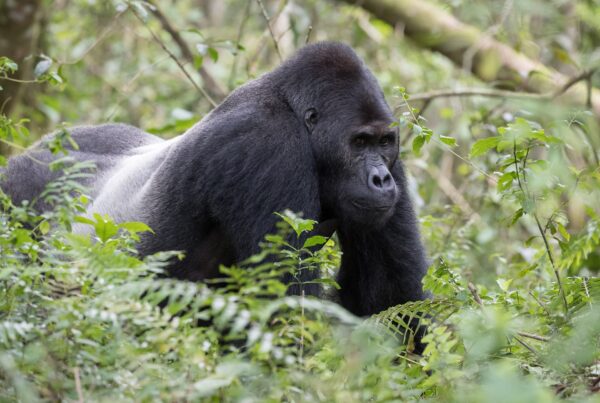
Gorilla Sex — Gorillas are among the most emotionally complex and socially sensitive primates on Earth, but when it comes to sex, they remain surprisingly discreet. Unlike the often-exaggerated portrayals in media, gorilla mating is usually brief, infrequent, and subdued. Most sexual activity occurs between the dominant male—usually the silverback—and the mature females of the group.
The silverback does not always initiate. In fact, female gorillas are often the ones who signal their interest in mating. They approach the male with a slow gait, maintain eye contact, and occasionally touch or gesture subtly with rhythmic body movements. This courtship can go unnoticed to the untrained eye, but it is filled with layers of intention and biological timing.
When the silverback accepts her invitation, mating typically takes place in a rear-entry (ventro-dorsal) position. However, fascinatingly, face-to-face copulation has also been observed—particularly among mountain gorillas—suggesting a degree of physical intimacy and emotional depth once thought to be exclusive to humans and bonobos.
Sex is not just for reproduction. While gorillas don’t have sex as frequently or socially as bonobos, studies have documented occasional same-sex behavior, playful touching, and even sexual behavior outside of the fertile period—indicating that physical closeness may also serve emotional or social bonding functions, especially in highly cohesive families.
Gorilla Mating Rights: Silverbacks, Rivalry, and Female Choice
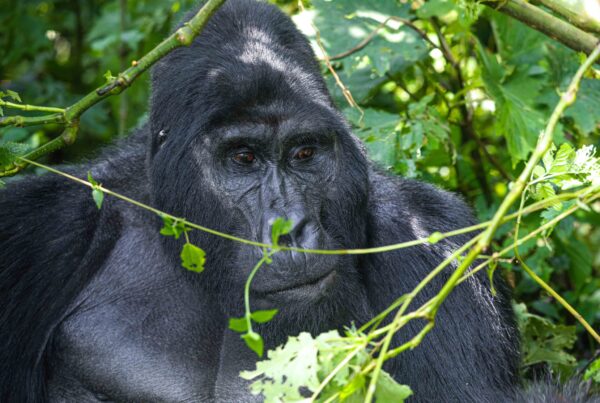
In most gorilla groups, one silverback male dominates and monopolizes mating with the group’s females. His strength and maturity give him the social authority to protect, lead, and breed. However, females are not without agency. While a silverback may appear to have total control, field researchers have observed females sneak off to mate with subordinate blackbacks or even outside males during periods of estrus.
This behavior may serve as an evolutionary strategy to confuse paternity. By mating with more than one male, a female increases the chances that each male believes he might be the father—reducing the risk of future infanticide if dominance shifts occur. In rare cases when a new silverback takes over a family, he may kill unweaned infants sired by the previous leader to bring the mother back into estrus. While this behavior is brutal, it’s also part of the deep-rooted survival strategies found in many species, including lions and other primates.
But even in such high-stakes sexual dynamics, a silverback does more than just reproduce. He guards the females, nurtures their trust, and intervenes in disputes or dangers. Sexual relationships in gorillas are not just about genetics—they’re about stability, protection, and lifelong social balance.
Pregnancy and Reproduction: How Baby Gorillas Are Born
When a female successfully conceives, the pregnancy lasts about 8.5 months—very close to a human’s, yet evolutionarily tailored to a life in the forest. There are no rituals of preparation for the birth, no midwives, no help. A female simply stops, isolates herself slightly from the group, and delivers the baby on her own—usually without making a sound.
She immediately cleans the baby, and within minutes, the newborn instinctively crawls to her chest. Gorilla infants weigh about 4–5 pounds at birth and are entirely dependent on their mothers for warmth, milk, and safety. Unlike other mammals, gorillas have only one baby at a time—twins are extremely rare and often don’t both survive due to the physical burden on the mother.
After birth, the mother remains close to the group but minimizes movement. She carries the baby on her chest for the first few months, then gradually transitions the infant to her back. For the next several years, she becomes the child’s world—feeding, grooming, disciplining, and teaching the baby everything from foraging to the politics of the group.
The silverback may not hold the baby or feed it, but he plays a crucial role in protecting both mother and infant. His mere presence discourages predators and keeps young, aggressive males in check.

Gorilla Breastfeeding: More Than Just Nutrition
Breastfeeding among gorillas is one of the most emotionally rich aspects of their family life. It’s not just nourishment—it’s a moment of bonding that ensures emotional security and physical closeness. The mother holds the infant close to her chest and feeds it several times a day. Gorilla milk is rich in fat, enabling steady growth and development in an environment where mobility is key to survival.
Breastfeeding continues for around 3 to 4 years, much longer than in many other primate species. Even after the baby starts eating leaves, shoots, and fruit around six months, it will return frequently to nurse—especially during times of stress or after playful exertion. The mother never refuses unless she is ill or pregnant again. That emotional nourishment ensures the infant grows into a confident juvenile capable of independent foraging and social integration.
As the baby matures, breastfeeding tapers off naturally. There’s no forced weaning, only a gentle transition where the child gradually learns to rely more on solid food and play interactions within the group.

Beyond Biology: Emotion, Protection, and Gorilla Parenting
The intimate aspects of gorilla life—sex, reproduction, breastfeeding—are not just evolutionary mechanics. They are rituals deeply embedded in social structure and emotional intelligence. Females form close bonds with their infants, protect them fiercely, and sometimes even grieve lost offspring in visibly emotional ways. Likewise, silverbacks do not simply “dominate” their families—they lead, watch, and care. If a baby cries, he’ll often investigate or physically intervene if another juvenile is too rough.
These dynamics reflect a social complexity that continues to challenge and humble researchers. They prove that gorillas—while physically powerful—are tender-hearted and highly sensitive creatures. To witness a mother calmly nursing her baby while the silverback sits watchfully nearby is to glimpse a moment of pure, primal serenity—one that reminds us how closely related we really are.
What Gorilla Trekking Visitors May Actually Witness
While gorilla mating is typically private and brief, it is not impossible for trekkers to observe reproductive or maternal behavior in the wild. Rangers strictly control viewing distance and ensure respectful observation at all times. Visitors may occasionally witness:
• Courtship gestures between a female and a silverback
• A mother nursing her infant
• Juveniles climbing over nursing mothers
• Protective positioning by a silverback
Sexual activity, when it occurs, is usually brief and understated. Guides may calmly explain the behavior without sensationalism, emphasizing its role in reproduction and social structure.
Reproductive Cycles and Birth Spacing
Female mountain gorillas typically give birth once every four to six years. This slow reproductive rate is one of the reasons the species remains vulnerable. Because each mother invests years into raising a single infant, population recovery depends heavily on survival rates and habitat stability.
A female does not ovulate again while breastfeeding, which naturally spaces births. This biological pacing protects the infant but also slows overall population growth — making conservation efforts critical.
Female Fertility and Estrus
Unlike some primates, female gorillas do not display dramatic physical swelling during estrus. Fertility signals are subtle and behavioral rather than visual. This reduces overt competition but increases reliance on social cues within the group.
Ovulation typically occurs every 28–32 days when not pregnant or nursing. However, because of extended breastfeeding, most adult females are not cycling frequently.
Respecting Gorilla Intimacy in the Wild
Understanding gorilla reproduction is not about voyeurism. It is about appreciating the biological and emotional mechanisms that sustain one of the world’s rarest primate species.
Professional trekking guidelines prohibit intrusive photography, flash usage, or attempts to approach mating or nursing individuals. Ethical tourism ensures that these private moments remain undisturbed.
Learning about gorilla intimacy should deepen respect — not curiosity driven by spectacle.
Why Reproductive Success Matters for Conservation
Mountain gorillas number just over one thousand individuals globally. Uganda protects nearly half of that population. Because females reproduce slowly and infants remain dependent for several years, each successful birth plays a vital role in species survival.
Tourism revenue directly supports monitoring programs that track births, infant survival rates, and maternal health. Without structured funding, population growth would stall.
The Forest Is Not a Spectacle — It Is a Living Society
Gorilla sex, reproduction, and breastfeeding are not sensational topics. They are the foundation of survival for a species once on the brink of extinction. Behind every infant clinging to its mother’s chest lies years of evolutionary precision and fragile ecological balance.
When visitors trek through Uganda’s rainforests, they are not simply observing animals. They are stepping quietly into a functioning family system built on protection, hierarchy, tenderness, and instinct.
To understand gorilla intimacy is to understand how deeply structured and emotionally layered their society truly is. And to protect that society is the responsibility of every traveler who enters their forest.