Gorilla Trekking in Uganda from Austria – Your Complete Guide to Meeting the Silverback
From the Alps to the African Jungles – An Austrian’s Journey to Gorilla Trekking
Gorilla Trekking in Uganda from Austria is not simply a long-haul holiday. It is a dramatic transition — from the structured landscapes of the Austrian Alps to the raw, humid, and biodiverse rainforests of East Africa. Austria offers alpine precision, clean mountain air, and centuries of cultural refinement. Uganda offers something entirely different: ancient forest ecosystems, volcanic ranges, and one of the most powerful wildlife encounters on Earth — standing face to face with a wild Silverback gorilla.
For Austrian travelers seeking something beyond Europe’s familiar beauty, this journey represents contrast, depth, and purpose. This guide walks you through every stage of planning your gorilla trekking safari from Austria — including departure airports, flight routes, visa procedures, health and insurance expectations, currency comparisons, payment systems, seasonal timing aligned with Austrian holidays, sample itineraries based on Austrian leave patterns, and safety considerations framed specifically for Western travelers.
Departure Airports in Austria – Where the Journey Begins
Most Austrian travelers depart from Vienna International Airport (VIE), the country’s primary intercontinental hub. Vienna offers the widest range of long-haul connections to East Africa and typically provides the most competitive fares.
Additional departure points include:
- Salzburg Airport (SZG)
- Innsbruck Airport (INN)
- Graz Airport (GRZ)
- Linz Airport (LNZ)
However, departures from Salzburg, Innsbruck, Graz, or Linz usually require an additional European connection before reaching a long-haul gateway such as Frankfurt, Munich, or Istanbul. For efficiency, schedule flexibility, and fewer transfer risks, Vienna remains the most practical choice.
Austrian outbound travel peaks in July, August, Christmas, and Easter. Booking flights at least three to five months in advance during these periods is strongly advised.
Typical Routes to Entebbe & Flight Duration
There are no direct flights from Austria to Uganda. The most reliable routes include:
- Vienna → Istanbul → Entebbe (Turkish Airlines)
- Vienna → Doha → Entebbe (Qatar Airways)
- Vienna → Addis Ababa → Entebbe (Ethiopian Airlines)
- Vienna → Frankfurt → Entebbe (Lufthansa and partners)
Total travel time typically ranges between 12 and 18 hours, depending on connection times.
The time difference between Austria and Uganda is generally one to two hours, meaning jet lag impact is minimal compared to intercontinental travel to the Americas or Asia. Many Austrian travelers schedule an overnight in Entebbe before continuing inland to Bwindi to allow recovery from long-haul travel.
Entry Requirements – Visa Process for Austrian Citizens
Austrian passport holders require a tourist visa to enter Uganda.
The process is straightforward:
- Apply online via Uganda’s official e-visa system
- Upload passport bio-data page
- Pay the USD 50 visa fee
- Receive approval electronically
- Passport validity must extend at least six months beyond your intended stay.
Processing usually takes three to five working days, though applying three to four weeks before departure is recommended.
Travelers combining Uganda with Rwanda or Kenya may apply for the East Africa Tourist Visa, which covers multiple countries under one permit.
Health Preparation & Travel Insurance Expectations
A valid Yellow Fever vaccination certificate is mandatory for entry into Uganda. Malaria prophylaxis is strongly recommended. Austrian travelers typically consult tropical medicine clinics or their Hausarzt prior to departure.
Comprehensive travel insurance is essential for Gorilla Trekking in Uganda from Austria. Insurance policies should include:
- Emergency medical evacuation
- Adventure activity coverage
- Trip interruption
- Repatriation
Austrian providers such as UNIQA, Allianz Travel, and Europäische Reiseversicherung offer suitable coverage for safari travel.
Uganda’s gorilla trekking regions are remote forest environments. Proper insurance provides security and peace of mind.
Choosing Your Gorilla Trekking Destination in Uganda
Uganda offers two national parks for mountain gorilla encounters.
Bwindi Impenetrable National Park
Bwindi is the primary destination and home to the majority of Uganda’s habituated gorilla families. It is divided into four trekking sectors:
- Buhoma
- Ruhija
- Rushaga
- Nkuringo
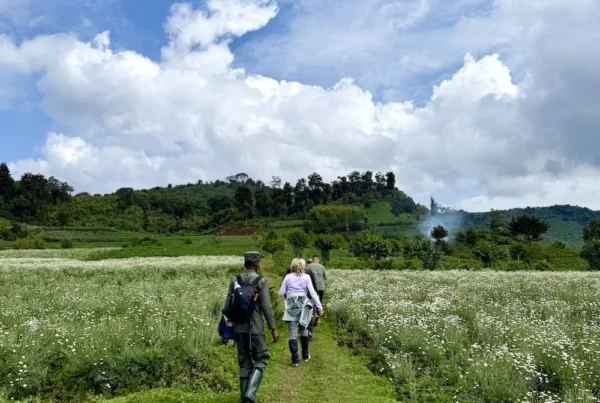
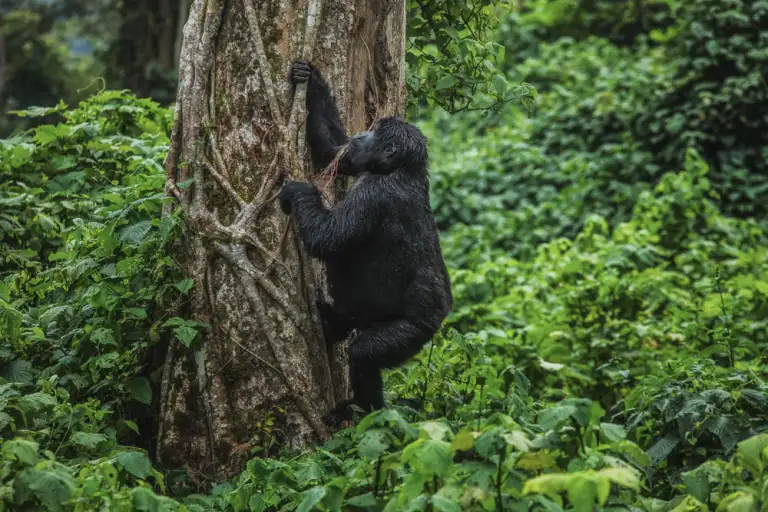
Each sector offers different terrain characteristics and lodge options. For Austrian hikers accustomed to alpine trails, rainforest trekking differs significantly. The terrain is humid, vegetation is dense, and trails are often muddy rather than rocky.
Mgahinga Gorilla National Park
Smaller and quieter, Mgahinga lies along the Virunga volcano range. It offers a more exclusive experience and the possibility of combining gorilla trekking with golden monkey tracking.
Most Austrian travelers select Bwindi due to permit availability and broader accommodation choices.
Gorilla Permit Cost & Conservation Impact
The gorilla trekking permit costs USD 800 per person for international visitors, including Austrian citizens.
This fee includes:
- Park entry
- Professional ranger guidance
- One hour with a habituated gorilla family
- Direct conservation contribution
A significant portion of permit revenue funds anti-poaching patrols, ranger salaries, veterinary programs, and community revenue-sharing initiatives. Uganda is home to roughly half of the world’s remaining mountain gorillas. Conservation success in the region has been directly supported by tourism revenue.
Permits are limited and sell out quickly during Austrian peak holiday periods, particularly July–August and December–January. Booking four to six months in advance is strongly recommended.
Currency Comparison & Financial Planning
Austria uses the Euro (EUR), while Uganda’s tourism industry operates primarily in United States Dollars (USD).
Estimated total trip costs:
Flights: EUR 600 – 1,200
Gorilla Permit: USD 800 (~EUR 740 depending on exchange rate)
Visa: USD 50 (~EUR 45)
Mid-range 4-day trek package: USD 1,200 – 2,000
10-day safari extension: USD 3,000 – 5,000
Estimated full trip total:
EUR 3,000 – 5,500
GBP £2,600 – £4,800
USD $3,200 – $6,000
Exchange rate fluctuations between EUR and USD can influence overall cost. Monitoring exchange trends and confirming conversion fees with Austrian banks is advisable.
Most safari operators accept:
- International bank transfers (SEPA compatible)
- Visa & Mastercard
- Secure online payment links
Carrying newer USD notes (post-2013 series) is recommended for on-ground payments.
Best Travel Months – Aligning with Austrian Holiday Patterns
Uganda’s dry seasons occur:
- June to September
- December to February
These align well with Austrian holiday structures.
July and August coincide with Austria’s summer school holidays and offer ideal trekking conditions. Christmas and New Year travel is also excellent. Easter can be suitable, though occasional rainfall is possible.
Austria’s five-week annual leave structure allows flexibility for extended safari travel. Shoulder months such as June or September offer excellent balance between favorable weather and moderate demand.
Physical Preparation – Alpine Fitness vs Rainforest Reality
Austrians familiar with alpine hiking often assume gorilla trekking is similar in physical demand. While elevation levels are comparable, rainforest conditions differ significantly.
Bwindi ranges between approximately 1,200 and 2,600 meters above sea level. However, humidity is much higher than in alpine regions. Trails are muddy, vegetation dense, and footing less predictable.
Recommended preparation includes:
- Moderate cardiovascular fitness
- Waterproof hiking boots
- Lightweight breathable clothing
- Trekking poles
- Hiring a porter for assistance
Porters not only reduce physical strain but also support local communities economically.
Sample 9–10 Day Leave-Friendly Itinerary from Austria
- Day 1 – Depart Vienna
- Day 2 – Arrive Entebbe
- Day 3 – Transfer to Bwindi
- Day 4 – Gorilla Trekking Experience
- Day 5 – Community visit or forest walk
- Day 6 – Transfer to Queen Elizabeth National Park
- Day 7 – Safari game drive & Kazinga Channel boat cruise
- Day 8 – Transfer to Lake Bunyonyi
- Day 9 – Relaxation & return to Entebbe
- Day 10 – Departure
- Day 11 – Arrival in Austria
This structure balances adventure, wildlife diversity, and recovery time before returning to work.
Safety Reassurance for Austrian & Western Travelers
Uganda’s gorilla trekking program operates under strict conservation and security frameworks.
Key safety measures include:
- Ranger escorts on all treks
- Maximum group size of eight visitors per gorilla family
- Controlled trekking routes
- Active monitoring in border regions
Bwindi and Mgahinga are geographically distant from Uganda’s political centers and are among the most protected conservation zones in the country. European embassies maintain presence in Kampala, and thousands of Western travelers visit annually without incident.
Gorilla trekking remains one of Uganda’s most stable and professionally managed tourism activities.
Cultural Considerations & Travel Psychology
English is widely spoken in Uganda’s tourism sector, ensuring easy communication for Austrian travelers. Hospitality culture is warm and community-focused.
Modest dress, respectful greetings, and patience are appreciated. Tipping guides and porters is customary and directly supports local livelihoods.
Safari schedules operate efficiently but allow flexibility based on wildlife movement. Austrian travelers accustomed to punctual systems should embrace minor adjustments as part of the wilderness experience.
Why Gorilla Trekking Resonates with Austrian Travelers
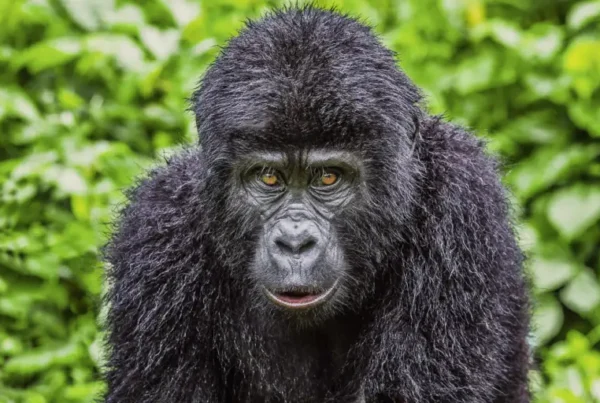
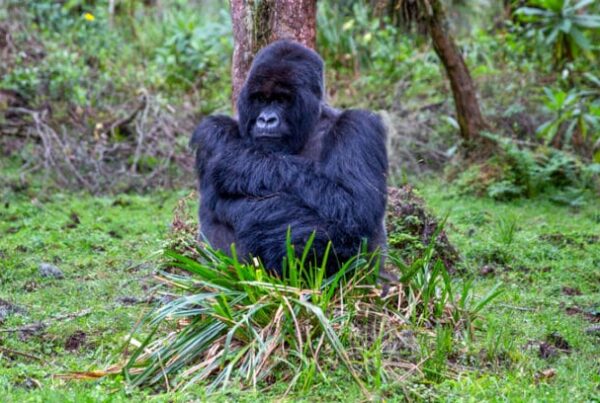
Gorilla Trekking in Uganda from Austria – For Austrians raised among structured landscapes and alpine discipline, Uganda’s rainforest offers contrast and perspective. The dense canopy, rising mist, and silent presence of a Silverback create a moment that transcends ordinary travel.
Gorilla trekking is not simply tourism. It is participation in conservation. Each permit directly contributes to protecting one of the world’s most endangered primates and supporting surrounding communities.
From the Alps to Africa’s jungles, the journey reshapes perception. It is a return home not only with photographs, but with a deeper understanding of wilderness and responsibility.