20 Fun Facts About Mountains (So Fascinating)
Mountains are among the most powerful and influential features on Earth. They shape continents, control weather systems, store freshwater, and influence how life evolves. From towering peaks that pierce the sky to ancient ranges worn down over hundreds of millions of years, mountains tell the story of the planet’s restless interior and long climatic history. They act as natural barriers, sacred spaces, biodiversity refuges, and climate regulators all at once. Human civilizations have feared them, worshipped them, crossed them, and depended on them for survival. Whether visible above the clouds or hidden beneath the oceans, mountains are dynamic systems rather than static landforms. Understanding mountains is ultimately about understanding Earth itself.
1. Mountains are still growing
Mountains may look ancient and unchanging, but many of them are still growing today. Tectonic plates beneath the Earth’s surface continue to collide, pushing land upward by millimeters each year. This slow movement is invisible to the human eye but measurable with modern instruments. Some mountain ranges rise while others erode at the same time, creating a balance between uplift and wear. Earthquakes often accompany this growth, releasing pressure built up underground. Over millions of years, these tiny changes create dramatic landscapes. Mountains are therefore not static monuments, but living features of the planet.
2. Mount Everest is not the tallest mountain from base to peak
Mount Everest is the highest mountain above sea level, but it is not the tallest when measured from base to summit. That title belongs to Mauna Kea in Hawaii, whose base lies deep beneath the Pacific Ocean. When measured from the ocean floor to its peak, Mauna Kea is taller than Everest by more than a kilometer. Everest’s fame comes from sea-level measurement, which is a human-made reference point. Nature itself does not recognize sea level as a boundary. This distinction shows how perspective changes facts. Mountains can be measured in more than one meaningful way.
3. Mountains influence global weather patterns
Mountains play a critical role in shaping weather across entire continents. When moist air is forced upward over a mountain range, it cools and releases precipitation. This creates wet regions on one side of a range and dry rain-shadow deserts on the other. The Himalayas, for example, help direct the Asian monsoon system. Without mountains, rainfall patterns would be dramatically different worldwide. Many fertile regions owe their existence to mountain-driven weather systems. In this way, mountains quietly control where forests, farms, and deserts form.
4. Mountains create their own ecosystems
As elevation increases, temperature drops and oxygen levels decrease. This creates distinct ecological zones stacked vertically along a mountain’s slope. At the base, you may find tropical forests, while higher elevations host alpine meadows or bare rock. Each zone supports unique plant and animal species adapted to its conditions. Some species live only within narrow altitude ranges and nowhere else on Earth. This makes mountains biodiversity hotspots. They act like natural laboratories of evolution.
5. Mountains hold most of the world’s freshwater
Although they cover a small portion of Earth’s surface, mountains store a vast amount of freshwater. Glaciers, snowfields, and ice caps act as natural reservoirs. During warmer months, melting snow feeds rivers that supply billions of people. Many of the world’s major rivers originate in mountainous regions. Without mountains, water availability in lowlands would be far less reliable. This makes mountain conservation directly tied to human survival. Cities far away depend on water that begins as mountain snow.
6. High mountains can affect human physiology
Living or traveling at high altitude places stress on the human body. Lower oxygen levels force the body to produce more red blood cells. Some populations, such as those in the Andes or Himalayas, have developed genetic adaptations over thousands of years. These adaptations improve oxygen use and reduce altitude sickness. Visitors often experience headaches, nausea, or fatigue as their bodies adjust. This physiological challenge shapes settlement patterns in mountain regions. Mountains influence not just geography, but biology.
7. Mountains can form in multiple ways
Not all mountains are created by tectonic collisions. Some form through volcanic activity, where lava piles up over time. Others emerge when erosion removes surrounding land, leaving resistant rock standing tall. Fault-block mountains arise when large sections of Earth’s crust shift vertically. Each formation process leaves distinct shapes and rock structures. This diversity explains why mountain ranges look so different from one another. Mountains are records of Earth’s geological history.
8. Mountains can disappear entirely
Mountains are constantly being worn down by wind, water, and ice. Over millions of years, erosion can reduce towering peaks to rolling hills or flat plains. Ancient mountain ranges once rivaled today’s tallest peaks but are now barely recognizable. The Appalachian Mountains, for example, were once as high as the Himalayas. Erosion is relentless and unstoppable. This reminds us that even the grandest landscapes are temporary. Mountains have life cycles just like living organisms.
9. Mountains act as natural barriers
Throughout history, mountains have shaped human movement and political boundaries. They slow migration, limit trade routes, and isolate communities. Many languages and cultures developed uniquely because mountains separated populations. Military campaigns have often been decided by control of mountain passes. Even today, borders frequently follow mountain ridgelines. These natural walls influence geopolitics and identity. Mountains shape human history as much as rivers and seas.
10. Some mountains glow at sunrise and sunset
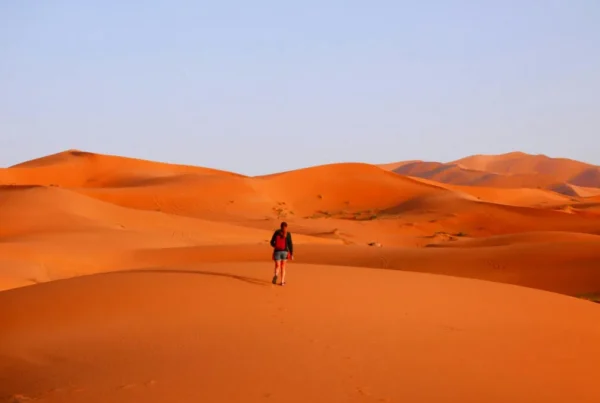
At certain times of day, mountains can appear to glow with vivid colors. This phenomenon occurs because low-angle sunlight scatters differently through the atmosphere. Minerals in the rock reflect light in reds, pinks, and golds. Snow-covered peaks amplify this effect dramatically. Artists and photographers have been inspired by this glow for centuries. Cultures often associate glowing mountains with spiritual meaning. Nature turns geology into art twice every day.
11. Mountains can generate earthquakes
Many mountain ranges form at tectonic plate boundaries where stress builds underground. When that stress is released, earthquakes occur. These quakes reshape mountains by triggering landslides and altering slopes. Earthquakes can also expose new rock layers, revealing Earth’s interior history. Some of the most seismically active regions are mountainous. This constant movement reminds us that mountains are unstable structures. They exist because the Earth beneath them is restless.
12. Sound travels differently in mountains
Mountain terrain changes how sound behaves. Valleys can amplify noises, while ridges block them entirely. Echoes can bounce between cliffs, creating haunting acoustic effects. Wind direction and temperature inversions further alter sound travel. This phenomenon has influenced communication methods used by mountain communities. Horns, yodeling, and calls evolved partly because of these acoustic properties. Mountains shape not only landscapes but soundscapes.
13. Mountains are sacred in many cultures
Across the world, mountains hold deep spiritual significance. Many religions consider them dwelling places of gods or ancestors. Pilgrimages often involve climbing sacred peaks as acts of devotion. Isolation, height, and dramatic scenery contribute to this reverence. Mountains symbolize endurance, transcendence, and closeness to the heavens. Even today, spiritual practices continue in mountain settings. These beliefs show how geography influences human meaning.
14. Mountains can create extreme winds
Air moving over steep terrain accelerates, producing powerful winds. These winds can sculpt rock, uproot trees, and create unique cloud formations. Some mountain passes are infamous for sudden, violent gusts. Pilots and climbers must carefully account for these conditions. Wind chill at high elevations can make temperatures feel far colder than they are. Mountains intensify weather in ways that can be dangerous. They demand respect from anyone who enters them.
15. Mountains host rare and ancient species
Some mountain species are living fossils that have survived for millions of years. Isolation protects them from competition and environmental change. Certain plants grow nowhere else because they evolved in specific mountain niches. Animals adapted to thin air and cold temperatures often cannot survive at lower elevations. This makes mountains refuges for biodiversity. Losing mountain habitats would mean losing irreplaceable life forms. Mountains are guardians of evolutionary history.
16. Mountains influence time perception and psychology
High-altitude environments often create a sense of altered time and awareness. Reduced oxygen and sensory isolation can heighten perception. Many people report feeling calmer or more introspective in mountains. Others experience anxiety due to exposure and scale. These psychological effects have inspired philosophy, literature, and art. Mountains challenge both the body and the mind. They change how humans experience themselves.
17. Mountains can create natural dams
Landslides and glacial movement can block rivers in mountainous regions. This creates natural dams and lakes upstream. While beautiful, these dams can be unstable and dangerous. Sudden collapse can cause catastrophic flooding downstream. Such events have shaped valleys and settlements throughout history. Mountains constantly reshape water flow. They can create both life and destruction.
18. Mountains store climate history in their ice
Glaciers act as frozen archives of Earth’s climate. Layers of ice trap air bubbles from ancient atmospheres. Scientists drill ice cores to study past temperatures and greenhouse gas levels. These records span hundreds of thousands of years. Mountains therefore preserve memories of Earth’s climate. As glaciers melt, this information is lost forever. Protecting mountain ice means protecting planetary history.
19. Mountains can exist underwater
Not all mountains rise above sea level. Underwater mountain ranges, called seamounts, cover vast areas of the ocean floor. Some are taller than land-based mountains but hidden beneath water. These underwater mountains influence ocean currents and marine life. Many become hotspots for biodiversity. When they rise above sea level, they can form islands. Mountains shape the planet even when unseen.
20. Mountains remind humans of scale and humility
Standing before a mountain often evokes awe. Their size dwarfs human structures and lifespans. Mountains remind us how small we are in Earth’s timeline. They have witnessed ice ages, mass extinctions, and the rise of civilizations. Human history is brief compared to mountain time. This perspective fosters humility and respect for nature. Mountains are Earth’s silent storytellers.