Is East Africa Safe During the Middle East War? The Complete 2026 Guide for Uganda Gorilla Trekkers
You saw the headlines. You have a gorilla trek booked — or you were about to book one. And now you’re wondering: should I cancel? is East Africa safe 2026
The short answer is no. Uganda is not in the Middle East. Bwindi Impenetrable Forest is not affected by the conflict between the USA, Iran, and Israel. Your mountain gorilla trek is safe to plan, safe to book, and — if you already have a permit — safe to go.
But you deserve more than a short answer. This guide explains exactly why East Africa is geographically, politically, and logistically separate from the Middle East conflict, what the current travel advisories actually say, how flights are affected (or not), and why 2026 might actually be one of the best years to go.
Let’s clear the fog. — is East Africa safe 2026.
1. Where Is Uganda? (And Why It Has Nothing to Do With the Middle East)
This sounds like a simple geography question. But it’s the most important one to answer — because most travel anxiety right now stems from a blurred mental map.
Uganda is located in East-Central Africa, just north of the equator. It shares borders with Kenya to the east, Tanzania to the south, Rwanda to the southwest, the Democratic Republic of Congo to the west, and South Sudan to the north.
The nearest point of the Middle East conflict — Israel and Iran — is roughly 5,000 kilometres away from Kampala. That’s further than London is from New York.
The countries involved in the current conflict — Israel, Iran, and the USA’s regional military presence — have no territorial, political, or military footprint in East Africa. Uganda is not a party to this conflict. It has no involvement, no proxy stakes, and no geographic proximity to the theatre of war.
Think of it this way: if there were a conflict in Norway, you wouldn’t cancel a trip to Morocco. The same logic applies here.
2. What the Official Travel Advisories Actually Say About Uganda in 2026
When people feel uncertain about travel safety, the most credible sources are government travel advisories. Here’s what the key ones say about Uganda right now.
UK Foreign, Commonwealth & Development Office (FCDO)
The FCDO does not advise against travel to Uganda for gorilla trekking. It recommends standard precautions in urban areas and notes that the national parks, including Bwindi and Mgahinga, are considered safe for tourism. There is no warning connected to the Middle East conflict in relation to Uganda.
US State Department
Uganda sits at Level 2 (Exercise Increased Caution) on the US State Department travel advisory scale — the same rating as France, Germany, and dozens of other popular tourist destinations. This rating relates to general crime precautions, not war, not regional conflict, and not any connection to the Middle East.
What the Advisories Don’t Say
None of these advisories warn against visiting Uganda’s national parks. None mention any spillover from the Middle East conflict into East Africa. None advise cancelling booked safaris or gorilla treks.
The headlines are about a conflict thousands of miles away. The advisories tell a completely different story about Uganda.
3. Are Flights to Uganda Affected?
This is the practical concern most travellers have after reading about regional conflict: will my flight still run?
The short answer is yes — flights to Uganda are operating normally.
Entebbe International Airport
Entebbe International Airport continues to operate all scheduled international routes. Major carriers including Kenya Airways, Ethiopian Airlines, Qatar Airways, KLM, and British Airways all maintain regular services to Entebbe. None have suspended, diverted, or cancelled Uganda routes in response to the Middle East situation.
The Kigali Route
Many gorilla trekkers fly into Kigali International Airport in Rwanda and drive to southern Uganda — a popular option that reduces overland travel time to Bwindi. Kigali routes remain fully operational and are unaffected by the conflict.
Overflight Concerns
Some travellers worry about flight paths passing near conflict zones. Airlines routinely adjust routes to avoid restricted airspace. For flights from Europe or the USA to East Africa, standard routing passes well clear of the Middle East conflict zone. Your airline’s operations team monitors this in real time — it’s their most fundamental safety responsibility.
If you want certainty, check your specific airline’s current routing before you travel. But based on all current information, there is no meaningful flight disruption risk for Uganda-bound travellers.
4. Is Bwindi Itself Safe? What’s Happening on the Ground
Bwindi Impenetrable National Park sits in the remote southwest corner of Uganda, near the borders of Rwanda and the Democratic Republic of Congo. It is one of the most carefully monitored ecosystems in Africa.
The Uganda Wildlife Authority (UWA) manages daily operations with trained rangers, anti-poaching patrols, and consistent security protocols. International tourism organisations and conservation bodies maintain active relationships with Bwindi — and none have issued any safety alerts for the region in 2026.
What Bwindi Is Like Right Now
- Gorilla families are habituated and being tracked daily
- All four trekking sectors — Buhoma, Ruhija, Rushaga, and Nkuringo — are operating normally
- Lodges from budget to ultra-luxury are open and receiving guests
- Permit availability for 2026 remains — but peak months are filling
- Rangers are professional, well-equipped, and accustomed to international visitors
There is no curfew, no security restriction, and no advisory warning for Bwindi or Mgahinga Gorilla National Park. The forest is open, the gorillas are there, and the experience is exactly what it has always been.
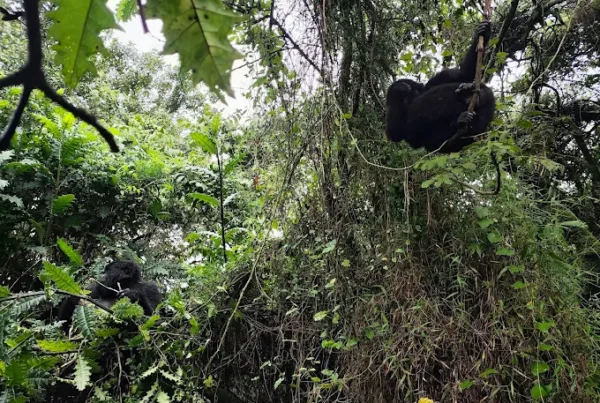
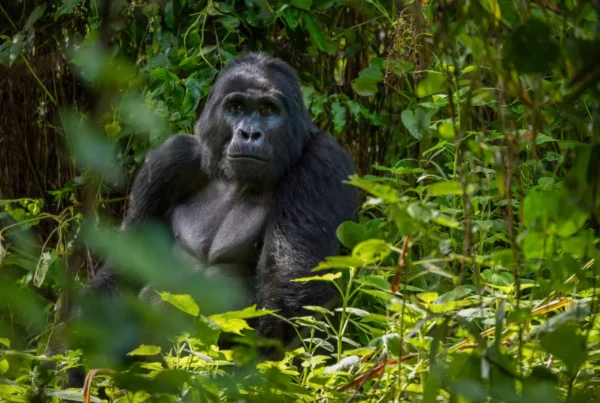
While the world watches the news, the mist still clings to Bwindi’s ridges every morning. The silverbacks don’t read the headlines.
5. Why 2026 Could Actually Be the Best Year to Go
Here’s the counterintuitive truth about travel anxiety and world events: when nervous travellers cancel, the brave ones benefit. — is East Africa safe 2026.
Fewer Crowds, Same Experience
Gorilla trekking is limited to eight visitors per gorilla family per day. If general travel anxiety keeps some tourists home, permit availability improves — and the experience becomes even more intimate. You’re not sharing a viewpoint with thirty tourists. You never were. But right now, the competition for those eight spots is slightly less fierce.
Price Stability
Uganda has not raised gorilla permit prices in response to the conflict. The standard international permit remains USD 800. Lodge pricing is stable. The economic conditions for a well-planned 2026 trip are favourable.
Conservation Impact
Every permit purchased directly supports mountain gorilla conservation. The revenue funds anti-poaching rangers, veterinary teams, and community development programmes around the parks. When nervous travellers cancel, this funding decreases — and the gorillas pay the price. By going, you are not just enjoying a safari. You are actively participating in one of the world’s most successful wildlife conservation stories.
You Waited Long Enough
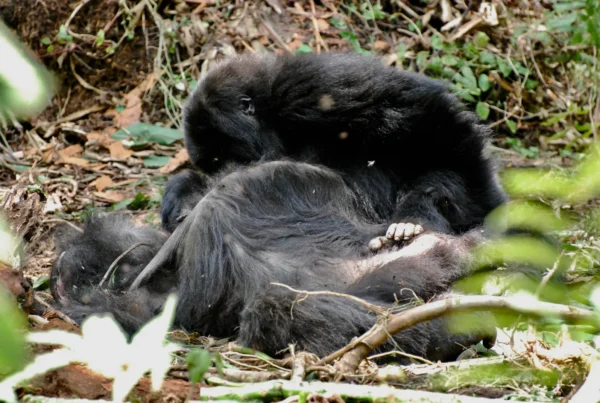
Mountain gorillas are one of the rarest large mammals on Earth. There are just over 1,000 left. The opportunity to stand quietly in Bwindi’s mist and watch a silverback rest while his family plays around him — that experience is genuinely rare. The Middle East conflict is not a reason to delay something this meaningful.
6. Travel Insurance and the War Clause — What You Need to Know
One practical area where the conflict does matter is travel insurance. This is worth understanding clearly before you book.
What a War Clause Covers
Most standard travel insurance policies contain a war exclusion clause. This means that if you are in a country that becomes a war zone, claims may be affected. However, this clause applies to the country you are visiting — Uganda — not to conflicts in other regions.
Uganda is not a war zone. Uganda is not a conflict zone. The Middle East war exclusion in your insurance policy does not apply to your Uganda gorilla trek.
What to Do
- Read your specific policy wording around war exclusions
- Confirm that ‘war’ exclusions relate to the country of travel, not global events
- Consider a specialist travel insurance policy that covers gorilla trekking specifically
- Look for policies that include trip cancellation cover for unforeseen events
- Ask your insurer directly if you are uncertain — get the answer in writing
For most standard international travel insurance policies, your Uganda gorilla trek is fully covered as normal. The war clause does not apply here.
7. A Message to the Nervous Traveller
If you’re reading this because you’re genuinely worried — this section is for you.
It is completely understandable to feel nervous when the world feels unstable. The news cycle is relentless, the headlines are alarming, and the instinct to stay home and wait for things to settle is a very human response.
But here’s what we know about waiting: the world rarely settles completely. There is almost always something happening somewhere. Travellers who wait for perfect conditions often wait too long.
Uganda has been welcoming international visitors to trek mountain gorillas for decades. Through political changes, through regional tensions, through global events — Bwindi has remained open, the gorillas have remained there, and the people of Uganda have continued to provide one of the warmest, most professionally managed safari experiences in Africa.
The gorillas don’t care about the war. And the war has absolutely nothing to do with Uganda.
The most common thing trekkers say after visiting Bwindi is: ‘I wish I’d done this sooner.’ Nobody has ever said: ‘I wish I’d waited another year.’
8. Quick Facts: East Africa vs. Middle East
For those who want the key facts at a glance:
- Distance from Uganda to the Middle East conflict zone: approximately 5,000 km
- Uganda’s current US State Department advisory level: Level 2 (same as France, Germany)
- FCDO advice for Bwindi gorilla trekking: no advisory against travel
- Flights to Entebbe: operating normally on all major carriers
- Bwindi trekking sectors operational: all four (Buhoma, Ruhija, Rushaga, Nkuringo)
- Mountain gorillas currently in Bwindi: over 400 individuals
- Uganda gorilla permit price 2026: USD 800 per person
- Minimum age for trekking: 15 years
- Maximum visitors per gorilla family per day: 8
- Uganda’s political relationship to the Middle East conflict: none
Ready to Book? Here’s Your Next Step
If this guide has answered your questions and you’re ready to move forward, here’s what to do:
- Check permit availability: Permits for peak months (July–September) fill quickly. The sooner you check, the more options you have.
- Choose your trekking sector: Bwindi’s four sectors each offer a slightly different experience. We can help you choose based on fitness level and accommodation preference.
- Talk to our team: We’re based in Uganda. We have people on the ground at Bwindi right now. We can give you a real, unfiltered assessment of conditions — not just what you read in the news.
Have questions? Talk to our Uganda Gorilla Trekking experts