Uganda Gorilla Tracking – The Definitive 2026 Guide Book
Introduction: Why Uganda Gorilla Tracking Leads Africa in 2026
Uganda gorilla tracking represents the most structured and conservation-centered mountain gorilla experience in Africa. The country holds more than half of the global mountain gorilla population, which makes Uganda the strongest and most reliable destination for consistent sightings. Tracking takes place inside Bwindi Impenetrable National Park and Mgahinga Gorilla National Park, two protected ecosystems operating under strict ecological management.
The experience is not staged wildlife viewing. It is a guided forest expedition where trained trackers locate a gorilla family based on fresh nesting sites and feeding trails. Visitors hike through steep rainforest terrain and spend exactly one regulated hour observing natural behavior.
In 2026, Uganda remains dominant due to its balanced permit cost, high family concentration, safari extension opportunities, and stable conservation framework.
Access Strategy: Entebbe vs Kigali Route
Most international travelers arrive through Entebbe International Airport. The road journey to Bwindi takes approximately eight to ten hours depending on sector. The drive crosses rolling hills, equatorial farmland, and southwestern highlands. Many travelers break the journey with an overnight stop near Lake Mburo.
An alternative access route is flying into Kigali, Rwanda, then crossing by road into southern Bwindi or Mgahinga. The Kigali-to-Bwindi transfer can take four to five hours depending on border efficiency. This route reduces drive time significantly but requires visa coordination.
Domestic flights from Entebbe to Kihihi or Kisoro airstrips reduce travel time to roughly one hour in the air followed by a short lodge transfer.
Sector Selection: How to Choose Correctly
Choosing the correct sector affects terrain difficulty, lodge style, transfer distance, and permit flexibility.
Buhoma suits travelers combining gorillas with Queen Elizabeth National Park. Terrain here tends to be moderately demanding rather than extremely steep.
Rushaga offers the widest permit availability and the only Gorilla Habituation Experience option. It works well during peak season when other sectors sell out.
Nkuringo involves steeper hiking routes but rewards visitors with panoramic volcanic scenery and quieter lodge positioning.
Ruhija offers cooler high-altitude climate and often appeals to birding enthusiasts due to forest species diversity.
Mgahinga offers bamboo forest visibility and fewer daily groups, providing a quieter trekking atmosphere.
Gorilla Habituation vs Standard Tracking
Standard Uganda gorilla tracking allows one hour with a fully habituated gorilla family. This is sufficient for observation, photography, and behavioral immersion.
The Gorilla Habituation Experience allows up to four hours with a semi-habituated group. The extended time offers deeper scientific exposure and greater photography flexibility. However, habituation groups may move more unpredictably and require longer tracking effort.
Travelers prioritizing photography depth or conservation immersion often prefer habituation. Travelers prioritizing moderate physical demand often prefer standard tracking.
Physical Demands and Terrain Realities
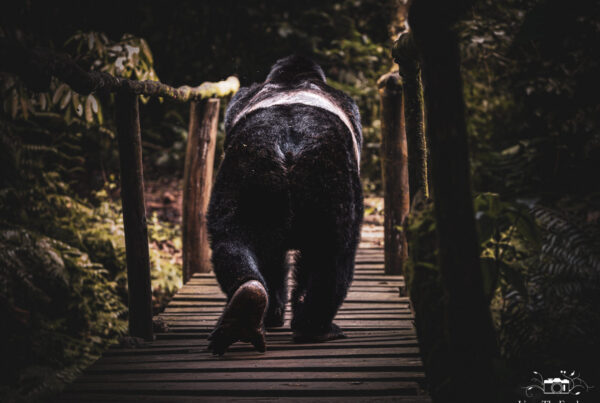
Uganda gorilla tracking requires realistic physical preparation. Elevation ranges between 1,200 and 2,600 meters. Trails include mud, exposed roots, steep inclines, and dense vegetation.
During rainy months, downhill slopes become slippery and require careful footing. Rangers adjust pace to group ability. Porters provide physical assistance during climbs and descents.
Sedan chair support exists for travelers with mobility limitations, carried by trained teams along forest routes.
Fitness does not require athletic performance, but endurance and balance significantly improve comfort.
Gorilla Behavior: What You Actually Observe
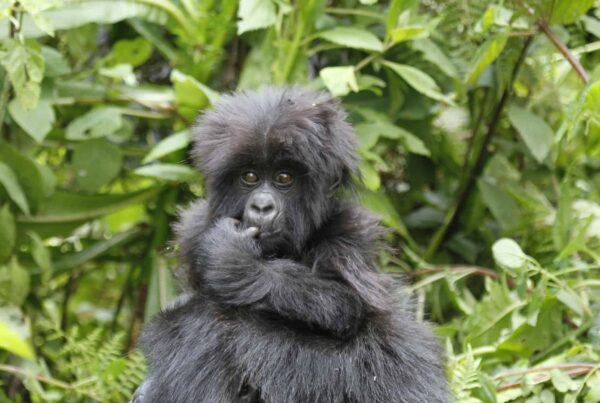
Mountain gorillas spend most of their day feeding. You will likely observe leaf consumption, stem stripping, and relaxed resting positions.
Infants cling to mothers and practice climbing skills. Juveniles engage in play-fighting and curiosity-driven exploration.
The silverback monitors group position constantly. Occasional chest beating or vocal rumbling may occur as communication signals.
Direct eye contact should be minimized to avoid perceived dominance challenges. Rangers guide visitor positioning carefully.
Full Cost Structure Explained Clearly
The permit costs USD 800 per person. This covers ranger guidance and one-hour viewing.
Accommodation varies widely. Budget forest lodges may cost approximately USD 100 per night. Mid-range lodges range between USD 200 and 400. Luxury mountain lodges exceed USD 800 per night.
Private 4×4 vehicle hire for three days typically ranges between USD 900 and 1,200 depending on fuel and distance.
Domestic flights cost between USD 250 and 350 one way.
Porters charge approximately USD 20. Driver and guide gratuities depend on service level.
A realistic three-day mid-range Uganda gorilla tracking safari typically ranges between USD 2,500 and 3,200 per person including transport and accommodation.
Permit Availability and Cancellation Reality
Permits are issued for specific dates and sectors. Changes are limited and subject to availability. Cancellation refunds decrease significantly closer to the trekking date unless supported by medical documentation.
Peak season permits, especially June through September, sell out months in advance. Early booking is essential for fixed travel windows.
Safety and Risk Management
Uganda gorilla tracking operates under armed ranger escort. Wildlife aggression incidents are extremely rare.
If a silverback performs a mock charge display, visitors are instructed to remain calm, avoid direct eye contact, and follow ranger positioning.
Rain does not cancel tracking. Waterproof gear is essential.
If a visitor cannot complete the hike, ranger teams coordinate return assistance.
Sightings exceed 95 percent due to early morning tracker deployment.
Health and Hygiene Protocols
Gorillas are highly susceptible to human respiratory infections. Visitors showing flu-like symptoms may be denied trekking.
Hand sanitization occurs before forest entry. Mask usage may be required during close observation.
Yellow fever vaccination proof is mandatory for entry into Uganda.
Comprehensive travel insurance including evacuation coverage is strongly recommended.
Combining Gorilla Tracking with Other Ecosystems
Many travelers combine gorilla tracking with chimpanzee tracking in Kibale National Park.
Savannah wildlife experiences in Queen Elizabeth include lions, elephants, buffalo, and boat cruises along the Kazinga Channel.
Lake Bunyonyi provides post-trek relaxation within a scenic highland environment.
Ethical and Conservation Impact
Revenue from Uganda gorilla tracking funds anti-poaching patrols, ranger salaries, and community development programs.
Revenue-sharing models allocate a portion of permit income to surrounding communities, reducing human-wildlife conflict and incentivizing conservation cooperation.
Mountain gorilla populations have increased steadily due to sustained conservation funding and regulated tourism.
Uganda vs Rwanda vs Congo – Comparing Experience
Uganda provides lower permit cost than Rwanda, broader trekking sector options, and greater ecosystem diversity for combined itineraries.
Rwanda offers shorter airport transfer times but at significantly higher cost.
Congo offers lower permit pricing but with more variable infrastructure conditions.
Uganda maintains the strongest balance between affordability, conservation, accessibility, and safari diversity.
Common Mistakes to Avoid
Travelers sometimes underestimate physical preparation. Proper hiking footwear is critical.
Late permit booking often leads to limited sector choice.
Ignoring porter services increases fatigue unnecessarily.
Failing to plan safari extensions wastes regional travel opportunity.