The 10 Hottest Countries in the World (2026)
Heat does not affect all parts of the world equally. Some countries experience short, intense heatwaves, while others exist under persistent, year-round high temperatures that shape daily life, culture, architecture, agriculture, health, and economic activity. In these places, heat is not an event — it is a constant environmental condition.
When climatologists rank the hottest countries, they do not use single extreme records. Instead, they rely on average annual temperature, which reflects long-term exposure to heat and provides a realistic measure of how hot a country truly is over time.
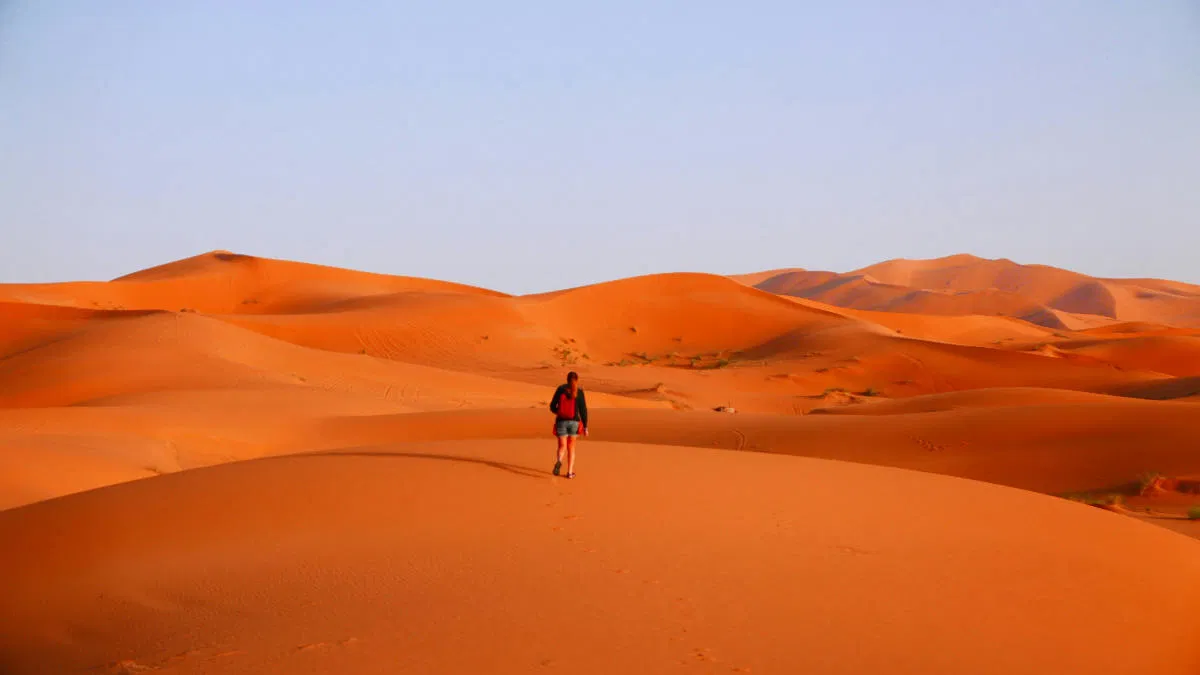
Most of the hottest countries lie within the tropics or across desert belts, particularly in Africa, the Middle East, and parts of the Pacific. These regions receive intense solar radiation year-round. The sun’s rays strike the Earth more directly, and seasonal variation in daylight is minimal.
Geography magnifies the effect. Deserts far from oceans heat rapidly under clear skies. Low-elevation basins trap hot air. Tropical islands may not experience extreme daytime peaks, but constant humidity prevents effective cooling. Together, these factors explain why the hottest countries maintain average annual temperatures above 80°F (27°C).
1. Mali
Average annual temperature: ~83.9°F (28.8°C)
Mali ranks as the hottest country in the world by annual average temperature. Much of the country lies within the Sahara Desert, while the southern regions fall within the Sahel, a semi-arid zone that remains extremely hot for most of the year.
Temperatures frequently exceed 115°F (46°C), especially during the long dry season. Rainfall is short, erratic, and limited, leaving vast landscapes exposed to prolonged drought and intense solar radiation.
Historic cities such as Timbuktu developed as trans-Saharan trade centers, built around survival in extreme heat. Camel caravans, mud-brick architecture, shaded courtyards, and narrow streets reflect centuries of adaptation. The Niger River provides Mali’s primary relief from the climate, supporting farming, fishing, and dense settlement corridors.
2. Burkina Faso
Average annual temperature: ~83.6°F (28.7°C)
Burkina Faso lies squarely in the Sahel. Heat dominates the calendar, with long dry seasons punctuated by brief but intense rains. Daytime temperatures often exceed 110°F (43°C).
The Harmattan wind blows dust from the Sahara across towns and farmland, drying the air and intensifying heat stress. Agriculture relies on drought-tolerant crops, while daily life is structured around early mornings and evenings to avoid midday sun.
Despite these conditions, Burkina Faso maintains vibrant cultural traditions, including large outdoor festivals and markets conducted in extreme heat.
3. Senegal
Average annual temperature: ~83.5°F (28.6°C)
Senegal’s interior experiences dry, Sahelian heat, while coastal regions receive limited moderation from Atlantic breezes. Summer temperatures above 100°F (38°C) are common.
Baobab trees, capable of storing massive quantities of water, dominate the landscape as natural adaptations to heat and drought. Markets, wrestling events, and festivals continue outdoors, illustrating how culture persists under intense climatic pressure.
4. Tuvalu
Average annual temperature: ~83.5°F (28.6°C)
Tuvalu experiences constant tropical heat with almost no seasonal variation. While temperatures rarely exceed 100°F (38°C), humidity is persistently high, making the heat physically exhausting.
The country’s low-lying atolls sit only a few feet above sea level. Freshwater scarcity, saltwater intrusion, and rising seas compound heat stress, making Tuvalu one of the most climate-vulnerable nations on Earth.
5. Djibouti
Average annual temperature: ~83.3°F (28.5°C)
Djibouti is among the hottest inhabited places on Earth. Low elevation, desert terrain, and volcanic geology amplify extreme heat. Areas near Lake Assal regularly exceed 115°F (46°C), with dangerously hot nights offering little relief.
Despite the climate, Djibouti holds global strategic importance at the entrance to the Red Sea. Military bases, ports, and salt extraction operate year-round under severe heat.
6. Mauritania
Average annual temperature: ~83.2°F (28.4°C)
Mauritania is dominated by the Sahara Desert. Interior temperatures often exceed 120°F (49°C), with minimal rainfall. Nomadic traditions persist, adapted to long distances between water sources.
Modern infrastructure, including massive iron-ore trains crossing the desert, illustrates how industry operates under extreme heat conditions.
7. Bahrain
Average annual temperature: ~82.8°F (28.2°C)
Bahrain experiences extreme desert heat intensified by humidity from the Persian Gulf. Summers are long and oppressive, with heat indexes reaching dangerous levels.
Traditional architecture once relied on wind towers for passive cooling. Today, air conditioning dominates, but heat still dictates work schedules and public life.
8. Palau
Average annual temperature: ~82.8°F (28.2°C)
Palau has year-round tropical heat with high humidity and frequent rainfall. Life unfolds in perpetual summer. Fishing, farming, and tourism define daily life, while rising ocean temperatures threaten coral reefs and marine ecosystems.
9. Qatar
Average annual temperature: ~82.7°F (28.2°C)
Qatar experiences some of the most extreme heat conditions in the Middle East. Summer temperatures frequently exceed 115°F (46°C), especially inland.
To cope, Qatar has engineered large-scale adaptations — air-conditioned public spaces, shaded urban design, and seasonal work adjustments. Heat remains the primary environmental constraint.
10. The Gambia
Average annual temperature: ~82.6°F (28.1°C)
The Gambia combines dry inland heat with humid coastal conditions. The Gambia River sustains agriculture and dense settlement despite the climate. Cultural life thrives through music, markets, and festivals conducted in persistent heat.
How Do Other Countries Compare?
United States
The United States does not rank among the hottest countries by average annual temperature. Its national average is approximately 52.7°F (11.5°C) due to vast geographic diversity.
However, the U.S. contains some of the hottest places on Earth. Death Valley, California, holds the highest reliably recorded temperature in world history at 134°F (56.7°C) in 1913, and reached 130°F (54.4°C) as recently as 2020. Cities such as Phoenix and Las Vegas endure months of daily temperatures above 100°F (38°C), intensified by urban heat island effects.
This illustrates a key distinction: local extremes do not define national averages.
Tanzania
Tanzania provides one of the most dramatic climate contrasts on Earth. By national average, it does not rank among the hottest countries, but many regions experience intense heat.
Lowland areas such as Dar es Salaam, Zanzibar, and central plains around Dodoma frequently exceed 95°F (35°C) with high humidity or prolonged dry heat. These conditions shape agriculture, settlement, and daily routines.
Yet Tanzania also contains Mount Kilimanjaro, Africa’s highest peak at 19,341 ft (5,895 m). Its summit remains below freezing year-round, with temperatures dropping below –20°F (–7°C) at night. Climbers pass through rainforest, heathland, alpine desert, and arctic ice within days.
Kilimanjaro’s glaciers have lost over 80% of their ice mass in the past century, making Tanzania a powerful example of how heat, altitude, and climate change intersect in a single country.
Is the World Getting Hotter?
Yes — unequivocally.
Global average temperatures have risen by approximately 2°F (1.1°C) since the late 19th century. The last decade has been the warmest on record. Heatwaves are lasting longer, nights are warming faster than days, and regions once considered temperate now experience dangerous heat stress.
Extreme heat is no longer a future projection. It is a present-day force reshaping where and how humans can live.